Your digging level
Description
Marimba music centers on the marimba—an idiophone with wooden bars and resonators—performed either by solo percussionists or in multi‑marimba ensembles. In Central America, especially Guatemala and southern Mexico, it evolved into a sophisticated salon and dance tradition (often called marimba de concierto), featuring chromatic instruments capable of European harmonic repertoire alongside local and Afro‑Latin rhythms.
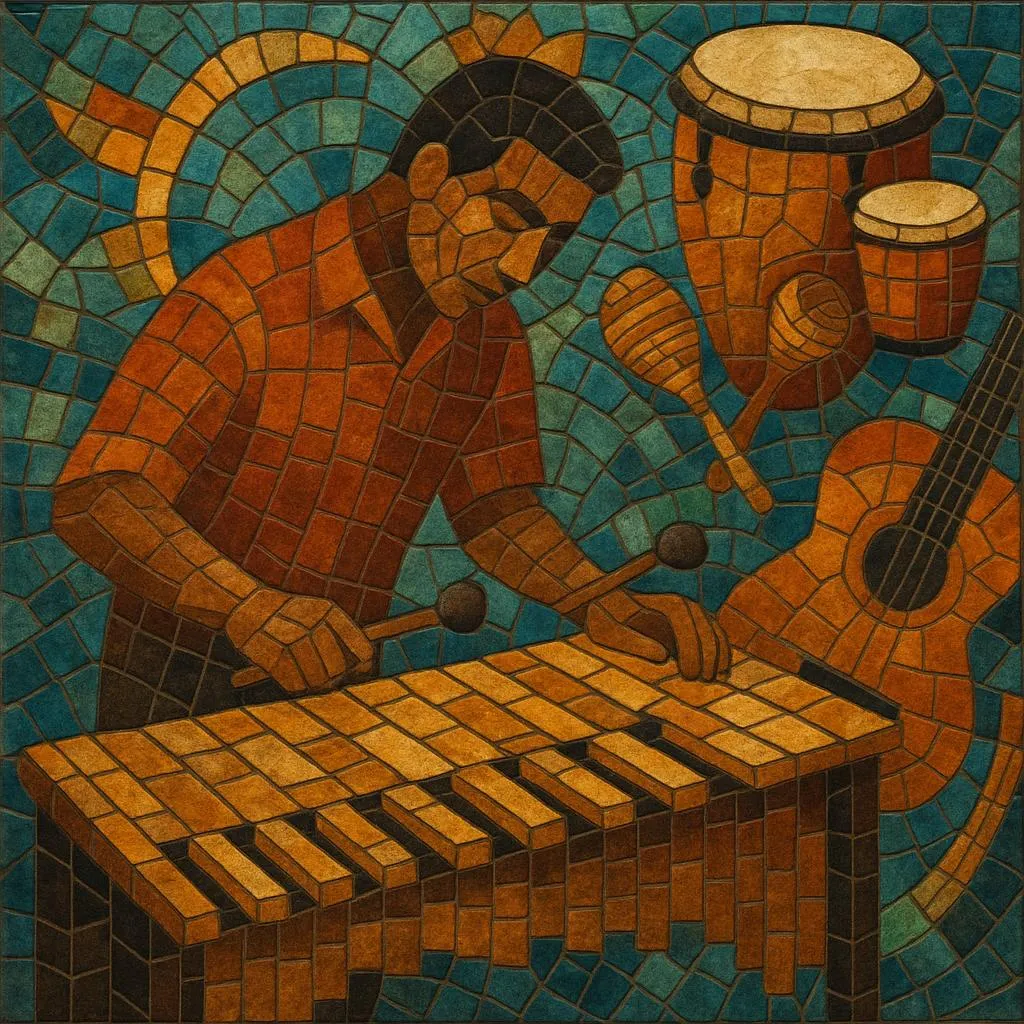
Typical ensemble settings include a family of marimbas (requinto/lead, center/alto, and bass), often supported by auxiliary percussion (drum set, güiro, bongó) and sometimes other melodic instruments. Repertoire spans valses, polkas, mazurkas, danzones, pasodobles, sones regionales, and original concert pieces. In parallel, the 20th century saw the rise of a virtuosic concert‑marimba tradition worldwide, with extended 4‑mallet techniques, large 5‑octave instruments, and an expanding contemporary classical repertoire.
History
The marimba’s ancestors trace to West and Central African xylophones with gourd resonators. Through the African diaspora, xylophonic instruments and playing practices reached Mesoamerica in the colonial period. By the 18th–19th centuries, Indigenous and mestizo musicians in Guatemala and Chiapas (Mexico) had adopted and localized the instrument.
A decisive step occurred in Guatemala in the 1890s, when Sebastián Hurtado and collaborators developed a fully chromatic marimba with wooden box resonators. This innovation enabled European harmony and modulating repertoire, catalyzing the rise of marimba de concierto and establishing the marimba as Guatemala’s national instrument.
From the early 20th century, multi‑marimba ensembles spread across Guatemala, Chiapas, and Central America, performing valses, polkas, mazurkas, danzones, pasodobles, and regional sones at salons, civic events, and on radio. Later, some groups incorporated drum set and, in related offshoots (marimba orquesta), horns and reeds for ballroom and popular dance contexts.
Post‑1950s, the marimba became a concert instrument worldwide. Builders standardized larger ranges (eventually 5 octaves), while composers and virtuosi (notably in Japan, the Americas, and Europe) created a substantial solo and chamber repertoire. Four‑mallet techniques, idiomatic rolls, chorale textures, and advanced coordination drove a modern concert‑marimba aesthetic that now coexists with Latin American ensemble traditions.
Today, marimba music spans community ensembles in Guatemala and southern Mexico, academic percussion studios worldwide, contemporary classical stages, and popular dance settings. The repertoire bridges tradition and innovation, from historical salon dances to newly commissioned concert works.