Your digging level
Description
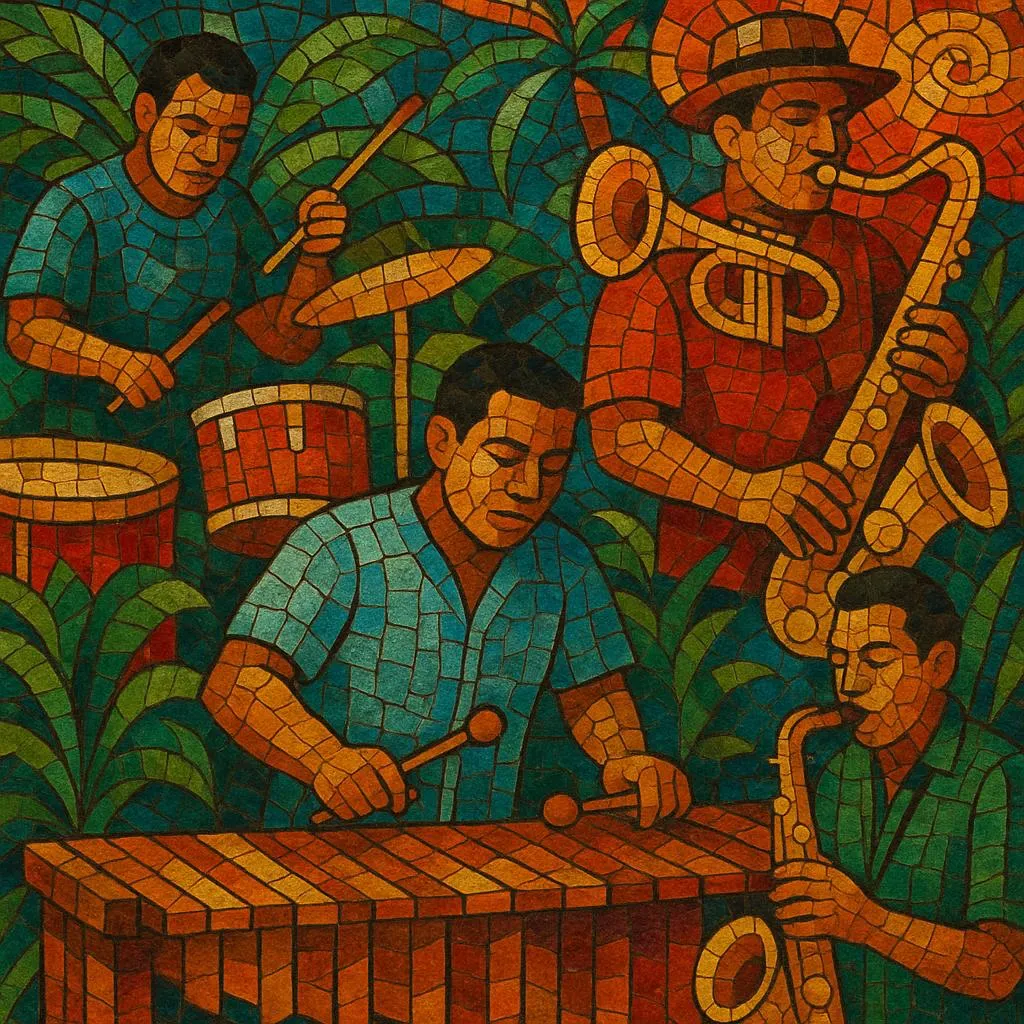
Musica tropical guatemalteca, often synonymous with the 'Marimba Orquesta' format, is a vibrant fusion genre that blends the national instrument of Guatemala, the marimba, with the instrumentation of international dance bands. Unlike traditional folk marimba, this style incorporates a full rhythm section (drums, electric bass) and a brass section (saxophones, trumpets) to perform popular tropical rhythms.
The genre is characterized by its festive, high-energy sound, serving as the primary soundtrack for 'ferias patronales' (patron saint festivals), weddings, and social gatherings across Guatemala and its diaspora. While it retains the wooden, resonant timbre of the marimba as the melodic lead, the backing rhythms are heavily adapted from Colombian Cumbia, Merengue, and other Caribbean styles, often played with a distinctively uptempo and syncopated Guatemalan swing known as 'el brinquito'.
History
The history of Musica Tropical Guatemalteca is intrinsically tied to the evolution of the marimba, Guatemala's national instrument.
While the marimba has existed in Guatemala for centuries, initially as the diatonic 'marimba sencilla' played in indigenous communities, the late 19th century saw the invention of the chromatic 'marimba doble'. This allowed musicians to play complex European and popular repertoire.
In the 1940s and 1950s, influenced by the Big Band era and visiting jazz ensembles, Guatemalan marimba groups began adding external instrumentation. Pioneers like the group 'Maderas de mi Tierra' and later 'Checha y su India Maya' began incorporating double bass (later electric bass), drums, and saxophones. This transition moved the marimba from a purely folkloric context into the modern dance hall.
During the 1960s and 1970s, as Cumbia from Colombia swept across Latin America, Guatemalan musicians adapted these new rhythms to the marimba orquesta format. This created a unique hybrid where the marimba played the role of the accordion or piano found in other tropical styles. The genre exploded in popularity, becoming the de facto pop music of the country.
Throughout the civil war and subsequent migration waves, the genre became a powerful symbol of identity for Guatemalans abroad, particularly in the United States. Modern groups like Fidel Funes added synthesizers and showmanship, cementing the genre's place in contemporary culture.
Composing or performing Musica Tropical Guatemalteca requires balancing traditional timber with modern dance rhythms.
Lead: The Marimba Doble is non-negotiable. It usually requires 3 to 4 players (piccolo, tiple, centro, bajo) covering melody, harmony, and bass lines simultaneously.
•Brass: A section of 2-3 saxophones (alto/tenor) and 1-2 trumpets. They typically play punchy stabs or counter-melodies in call-and-response with the marimba.
•Rhythm Section: Electric bass (playing cumbia patterns), drum kit (batería) often augmented with timbales, cowbells (cencerro), and güiro.
The 'Brinquito': When playing Cumbia, the feel is often faster and bouncier than the Colombian original. The bass drum often hits a steady four-on-the-floor or a heartbeat pattern, while the hi-hats accent the off-beats.
•Son Chapín: For slower, more traditional sections, use a 6/8 time signature characteristic of the 'Son Guatemalteco', emphasizing the floating feel of the marimba.
Harmony: Keep progressions simple and functional (I-IV-V), usually in major keys to maintain a festive mood.
•Arrangement: Start with a brass fanfare or a marimba roll. The verses are often instrumental melodies played by the marimba, with the brass section taking over for the chorus or 'mambo' sections.