Your digging level

For this genre
0/8
🏆
Sign in, then listen to this genre to level up

Description

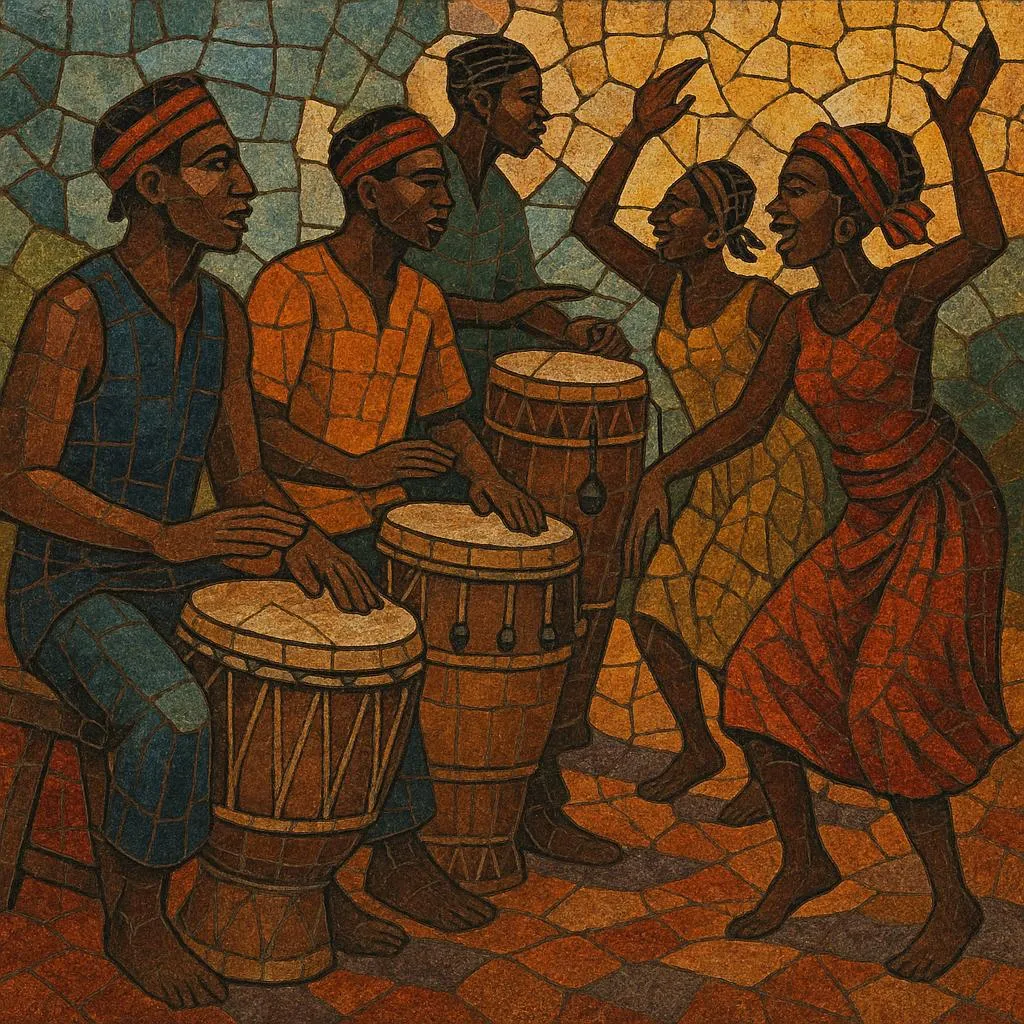
Kuku is a traditional West African drum-and-dance piece from Guinea (particularly the Forest Region around Beyla) that celebrates community return and collective joy. In oral accounts popularized by master drummer Mamady Keïta, the rhythm was traditionally played by women as they came back from fishing; today it is performed at parties and festivities and exists in multiple regional variants (including faster versions associated with neighboring groups).

Musically, Kuku is a polyrhythmic ensemble form centered on the djembe and (in modern practice) the family of bass drums known as dunun—kenkeni, sangban, and dundunba—often with an iron bell timeline. Early practice emphasized djembes alone; later arrangements codified interlocking bass‑drum parts that many ensembles now consider standard. The groove typically sits in a lilting 12/8 (or fast 4/4 with triplet feel), with a lead djembe cueing breaks and dance signals.


Sources: Spotify, Wikipedia, Discogs, RYM, MB, user feedback and other online sources

History

Origins and function

Kuku originates in the Forest Region of southeastern Guinea (around Beyla) within a Mande/Malinke cultural context. Oral histories—transmitted and taught globally by artists like Mamady Keïta—describe it as a piece played by women on their return from fishing, later becoming a general celebration rhythm. Some narratives associate parallel lineages (e.g., Manian/Konianka communities) and note cross‑border variants.

From village repertoire to staged folklore

In the mid‑20th century, Guinea’s national ballets (notably Les Ballets Africains and Ballet Djoliba) professionalized and staged village repertoires, helping codify drum parts, solo phrases, and dance dramaturgy for international audiences. Master drummers such as Famoudou Konaté—longtime soloist with Les Ballets Africains—further documented and taught these rhythms, supporting a shared pedagogy for Kuku worldwide.

Global spread and contemporary practice

From the 1980s onward, touring, workshops, and recordings expanded Kuku’s reach, and community drum circles and world‑percussion programs adopted it as a foundational ensemble piece. Modern arrangements frequently add dunun parts and standardized bell timelines that were not always present in earlier village contexts, reflecting the living, adaptive nature of the tradition.


How to make a track in this genre

Ensemble and instrumentation
•   Core: 1 lead djembe (calls/breaks/solos), 2–3 accompanying djembes with fixed patterns. •   Bass drums: kenkeni (timeline ostinato), sangban (primary timeline/accent), dundunba (low counter‑rhythm); iron bell can double the timeline. •   Traditional note: Early forms were often djembe‑only; modern pedagogy adds the full dunun set.
Rhythm and form
•   Meter/feel: lilting 12/8 (or fast 4/4 with a triplet swing). Keep a steady bell or kenkeni pattern to anchor interlocking parts. •   Texture: layer two concise accompaniment phrases on djembes; let the sangban define the cycle, with dundunba answering. •   Structure: alternate groove sections with short breaks (phrased cues from the lead djembe) that launch dancers into new figures; conclude with a clear signal break back to the main pattern.
Sound and technique
•   Djembe tones: articulate bass (open center), tone (edge), and slap (bright) to create melodic contour in the accompaniment. •   Dynamics: keep accompaniments tight and moderate; reserve peak volume for solo breaks and dancer cues.
Tempo and variants
•   Community party tempo is brisk; teaching tempos can start slower to internalize interlocks. •   Recognize regional variants (e.g., faster “Maoka” versions); choose a version and keep parts consistent across the ensemble.
Dance and call‑and‑response
•   Choreography emphasizes circular movement and celebratory gestures recalling the fishing‑return context. •   Encourage vocal responses/ululations and clear visual cues from the lead drummer to synchronize dancers and band.

Top tracks

Locked
Share your favorite track to unlock other users’ top tracks

Upcoming concerts

in this genre
Influenced by

Download our mobile app

Get the Melodigging app and start digging for new genres on the go
© 2026 Melodigging
Melodding was created as a tribute to Every Noise at Once, which inspired us to help curious minds keep digging into music's ever-evolving genres.
Buy me a coffee for Melodigging