

Your digging level
Description
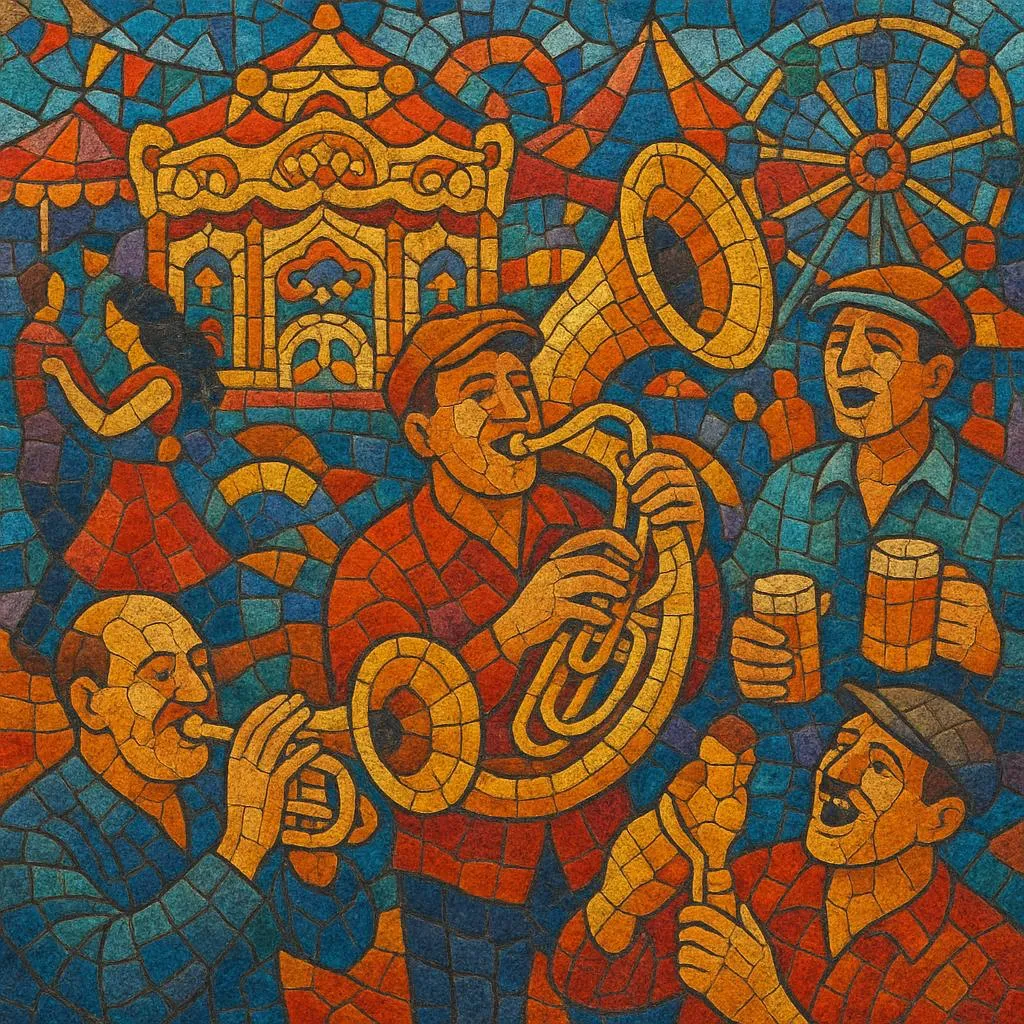
Kermis is a popular party music tradition associated with the village fairs and funfairs of the Netherlands and Flanders. It blends the upbeat oompah feel of brass bands and polkas with sing‑along schlager/levenslied hooks, waltzes and marches, and, in the modern era, thumping four‑on‑the‑floor dance backbeats.
Historically, fairground (street) organs provided the instantly recognizable timbre of kermis soundscapes, playing jaunty waltzes, polkas, and marches to attract visitors. From the mid‑20th century on, tent parties at fairs embraced accessible Dutch‑language party songs with simple, hearty refrains. Since the 1990s–2000s, kermis playlists also fold in Eurodance and festival‑EDM/hard dance elements, but they retain the genre’s core traits: major keys, brisk tempos, crowd‑participation chants, and a cheerful, communal mood.
History
Kermis fairs long predate recording, but their distinctive music culture coalesced around fairground organs in the late 1800s and early 1900s. Large mechanical organs (often Belgian or Dutch built) broadcast lively waltzes, polkas, and marches to draw crowds, fixing the association between funfair ambience and bright, oompah‑driven tunes.
After World War II, village and town kermissen increasingly featured brass bands and accordion‑led groups, alongside Dutch‑language schlager/levenslied singers. Simple, convivial refrains and danceable two‑step, waltz, and polka rhythms made the music ideal for tent parties and community dancing.
From the 1990s onward, kermis tents embraced Eurodance and later festival‑EDM/hard dance energy while keeping sing‑along choruses and major‑key optimism. Contemporary kermis sets mix fair‑organ standards and brass arrangements with party schlager, polonaise anthems, and up‑tempo club remixes. The result is a hybrid sound that still feels unmistakably fairground: loud, catchy, and built for mass participation.



