Your digging level
Description
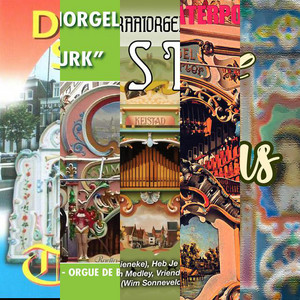
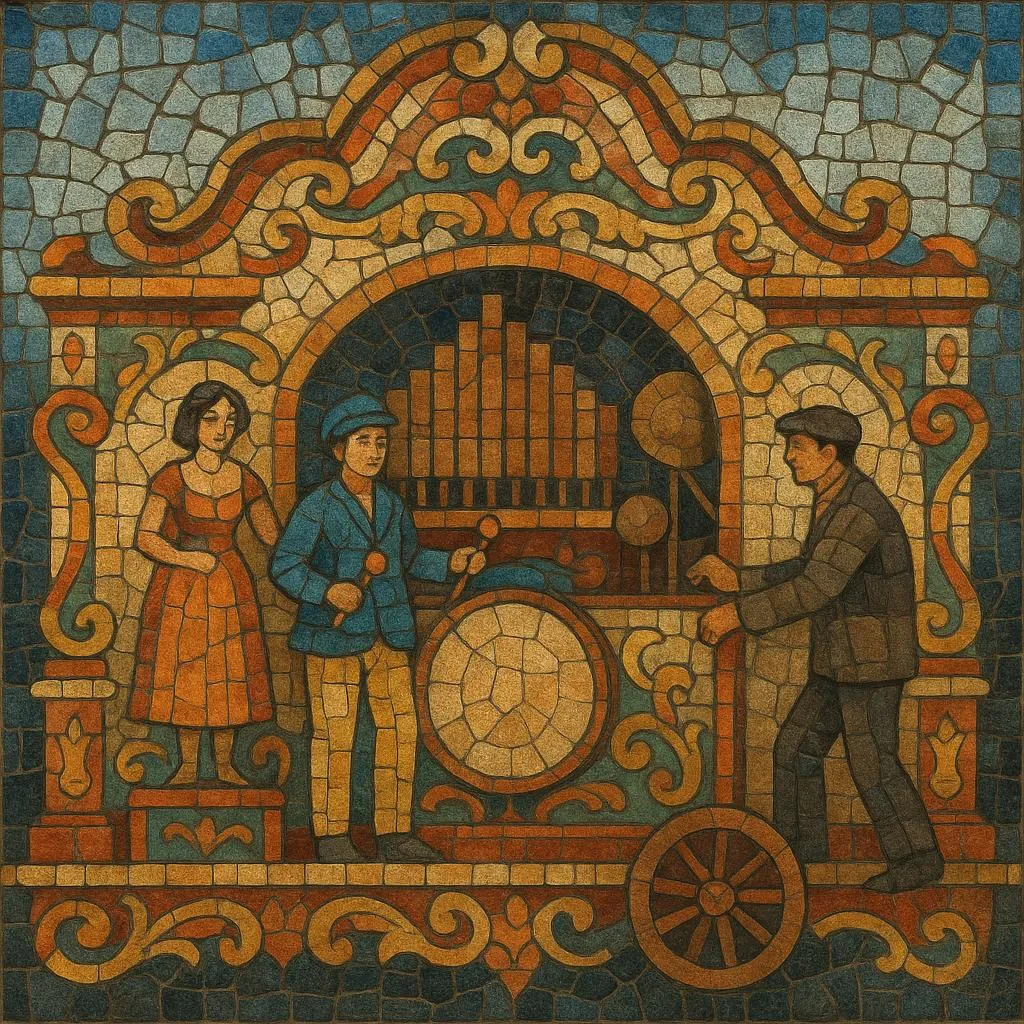
Draaiorgel refers to the Dutch street-organ tradition: large, brightly decorated mechanical organs hand- or motor-cranked in public spaces and at fairs.
Unlike church or theater organs played from a keyboard, a draaiorgel is a self‑playing instrument that reads perforated music books (or, today, MIDI retrofits) to control pipes, stops, and percussion. The typical Dutch voicing favors a bright, singing melody over rich chordal accompaniment and a stout bass—often with lively percussion—so familiar marches, waltzes, polkas, schlager, and popular tunes can carry across busy streets.
The result is a portable, festive, and unmistakably Dutch urban sound that fuses mechanical ingenuity with popular dance and light music.
History
Draaiorgels appeared in the Netherlands in the late 1800s, adapted from French and Belgian fairground/band organs (notably by Gavioli and Limonaire). Dutch entrepreneurs imported instruments and later rebuilt or locally voiced them to suit street use—lighter, highly projecting, and optimized for popular tunes. Music was encoded on robust, foldable cardboard books whose perforations directly operated valves.
In the early 20th century, draaiorgels became fixtures of Amsterdam, Rotterdam, and other cities. Rental companies kept organs in circulation, and arrangers supplied an endless stream of waltzes, polkas, marches, schottisches, tangos, and hits of the day. Builders and rebuilders such as Carl Frei helped standardize characteristic Dutch street‑organ scales and voicings, adding colorful ranks and percussion for outdoor projection.
After World War II, changing tastes, traffic, and noise regulations reduced the number of active street organs. Nonetheless, collectors, workshops (e.g., Perlee in Amsterdam), and museums (e.g., Museum Speelklok in Utrecht) preserved instruments, arrangements, and practices. Recordings and broadcasts kept the sound in public memory, while restorations maintained historical techniques.
Today, draaiorgels appear at fairs, heritage events, and on selected city routes. Many instruments remain book‑operated; others use discreet MIDI systems to protect originals and expand repertoire. Contemporary arrangers still prioritize classic dance forms and singable melodies, but also adapt film themes and modern pop, ensuring the tradition remains audible, mobile, and uniquely Dutch.