Your digging level
Description
Kansai no wave refers to the late-1970s and early-1980s post-punk/new wave underground that developed in Japan’s Kansai region (centered on Osaka, Kyoto, and Kobe). It blended the angular urgency of punk with art-school experimentalism, early drum machines, minimal synth textures, and dub-informed production tricks.
Anchored by DIY labels, most famously Osaka’s Vanity Records, the scene prized stark repetition, clipped rhythms, chilly electronics, and a confrontational, conceptual attitude. Bands often juxtaposed tight, danceable grooves with dissonant guitars, monotone or spoken-sung vocals, tape echo, and noise interventions, creating a distinctive Japanese take on post-punk modernism.
History
The Kansai region’s dense network of art schools, live houses, and zines fostered an experimental, contrarian approach to rock just as punk and post-punk ideas were arriving from the West. By the late 1970s, local musicians began adapting punk’s DIY energy to minimalist electronics, tape experiments, and conceptual performance.
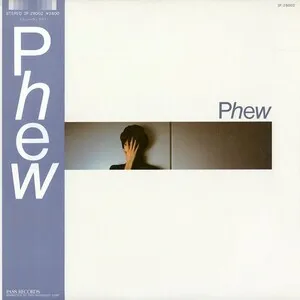
Founded in Osaka by critic and tastemaker Agi Yuzuru, Vanity Records became the gravitational center for Kansai no wave. Its catalog—featuring acts like Aunt Sally, Phew, BGM, Normal Brain, Dada, Sympathy Nervous, and R.N.A. Organism—captured a highly specific aesthetic: dry drum machines, dubby bass, brittle guitar stabs, haunted vocals, and a cool, mechanistic pulse.
Parallel hubs in Kyoto and Kobe connected art-funk, minimal synth, and post-punk with gallery culture and political theater. Groups like EP-4 injected radical media critique and choreography into live shows, highlighting the scene’s conceptual bent.
Kansai no wave overlapped with Osaka’s emerging noise and free-improv circles (e.g., Alchemy Records, live venues, cassette culture) and with local punk/hardcore. This exchange hardened the scene’s taste for abrasion, feedback, and performance provocation while preserving tight, danceable rhythm sections and minimalist song forms.
Many original releases were small-run and became cult items. From the 2000s onward, reissues and archival compilations revived international interest, situating Kansai no wave as a uniquely Japanese synthesis of post-punk, minimal synth, and conceptual art. Its influence now echoes through Japanese indie, darker strands of visual and Nagoya-kei, and the country’s noise/no wave continuum.