Your digging level for this genre

0/8
🏆
Sign in, then listen to this genre to level up

Description

Jazz mugham is a hybrid style from Azerbaijan that fuses the modal, improvisatory tradition of mugham with the harmony, rhythm, and ensemble practice of modern jazz.

Typically led by piano, saxophone, or voice (khananda), it places mugham’s modal pathways (dastgahs such as Rast, Shur, Segah, and Bayati-Shiraz) and melismatic phrasing over jazz harmonies, grooves, and forms drawn from bebop, cool, modal, and post-bop. The result balances deep, contemplative modal development with the swing, syncopation, and interactive improvisation of jazz.

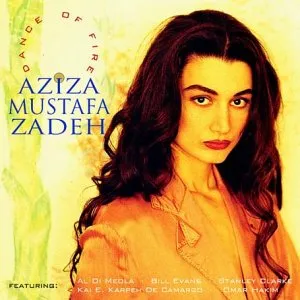
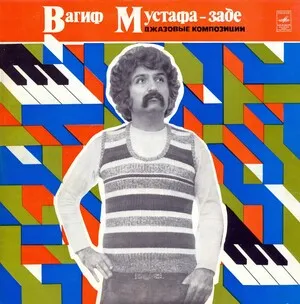
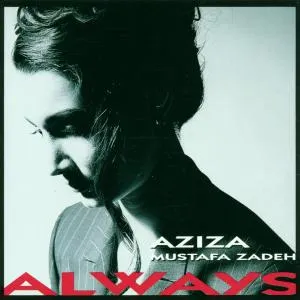
Pioneered in Baku by Vagif Mustafazadeh in the 1960s and popularized internationally by Aziza Mustafa Zadeh in the 1990s, jazz mugham has become a distinctive voice within both Azerbaijani music and the broader global-jazz conversation.

History

Origins in Baku (1960s)

Baku’s long-standing jazz culture and its central role in mugham made it fertile ground for stylistic synthesis. In the 1960s, pianist-composer Vagif Mustafazadeh began weaving mugham’s modal language and improvisatory ethos into the harmonic vocabulary and rhythmic feel of modern jazz. His approach preserved the spiritual depth and modal architecture of mugham while embracing jazz’s extended chords, swing feel, and ensemble interplay.

Development under the Soviet era (1970s–1980s)

Jazz in the USSR experienced alternating periods of restriction and tolerance. Within these constraints, Mustafazadeh’s work nonetheless gathered a devoted audience and shaped a local school of players who internalized both mugham and jazz. After Mustafazadeh’s untimely death in 1979, his legacy continued through colleagues and students who kept the idiom alive in clubs, conservatories, and recordings throughout the late Soviet period.

Globalization and renaissance (1990s–present)

In the 1990s, vocalist-pianist Aziza Mustafa Zadeh took jazz mugham to international stages, bringing the style broader recognition. A new generation of Azerbaijani artists—often conservatory-trained in both Western jazz and traditional mugham—expanded the palette with contemporary jazz harmony, new rhythmic ideas, and collaborations that included tar, kamancha, and naghara alongside piano, bass, drums, and saxophone. Festivals and recordings have since positioned jazz mugham as a flagship of Azerbaijani musical innovation.

Aesthetic and technique

Core to jazz mugham is the meeting of mugham’s modal cycles, micro-inflections, and narrative improvisation with jazz’s chordal movement, swing/straight-eighth grooves, and collective interaction. Performances often unfold as suite-like journeys: free or rubato preludes (maye) introduce the mode, followed by metrically grounded sections where jazz harmony guides development while mugham shapes the melodic contour and expressive intensity.

How to make a track in this genre

Modal foundation
•   Choose a mugham mode (e.g., Rast, Shur, Segah, Bayati-Shiraz). Study its scale degrees, pivotal tones, cadences, and characteristic modulations. •   Outline a narrative arc: start with a free, rubato maye (introductory exposition), then move to metrically grounded sections that develop the mode.
Harmony and form
•   Support the mode with jazz harmony judiciously. Use extended chords (9ths, 11ths, 13ths), modal vamps, and pedal points that respect the mode’s tonal center. •   Favor modal progressions and slowly shifting tonal colors over frequent functional ii–V–I cadences; when using ii–V–I, voice-lead to preserve the mugham color. •   Structure pieces as suite-like forms: rubato prelude → groove section → solo exchanges → cadenza or vocal/tar improvisation → reflective coda.
Rhythm and groove
•   Alternate or blend swing and straight-eighth feels. Explore asymmetric meters common to the region (5/8, 7/8, 9/8, 10/8) and combine them with jazz ride patterns. •   Use rhythmic cycles/usul as a grounding device and invite metric modulation or hemiola to intensify climaxes.
Instrumentation and timbre
•   Core jazz rhythm section: piano (or guitar), double bass, and drums; add saxophone/clarinet or trumpet for melodic lines. •   Integrate traditional timbres: tar or kamancha for modal solos; balaban or ney-like colors for sustained tones; naghara/frame drum to anchor folk rhythms. •   If microtones are desired, feature voice, tar, kamancha, or winds for bends and micro-inflections; on piano, approximate through chromatic neighbors, clusters, and ornamentation.
Improvisation and phrasing
•   Let mugham guide melodic improvisation: emphasize pivotal notes, traditional ornaments, and melismatic lines. Build intensity through registral ascent and rhythmic density. •   Encourage jazz-style call-and-response between khananda/soloist and the ensemble. Balance modal purity with harmonic color, never obscuring the mode’s identity.
Production and performance tips
•   Keep the bass clear and supportive (pedals/ostinati) to stabilize the mode. Drums should converse dynamically, using cymbal shading and hand percussion for color. •   Record with room ambience to preserve acoustic nuance; mix traditional instruments forward enough that their articulations and microtonal inflections remain vivid.

Top tracks

Locked
Share your favorite track to unlock other users’ top tracks
Influenced by
Has influenced
Challenges
Digger Battle
Let's see who can find the best track in this genre
© 2025 Melodigging
Melodding was created as a tribute to Every Noise at Once, which inspired us to help curious minds keep digging into music's ever-evolving genres.
Buy me a coffee for Melodigging