

Your digging level

For this genre
0/8
🏆
Sign in, then listen to this genre to level up

Description

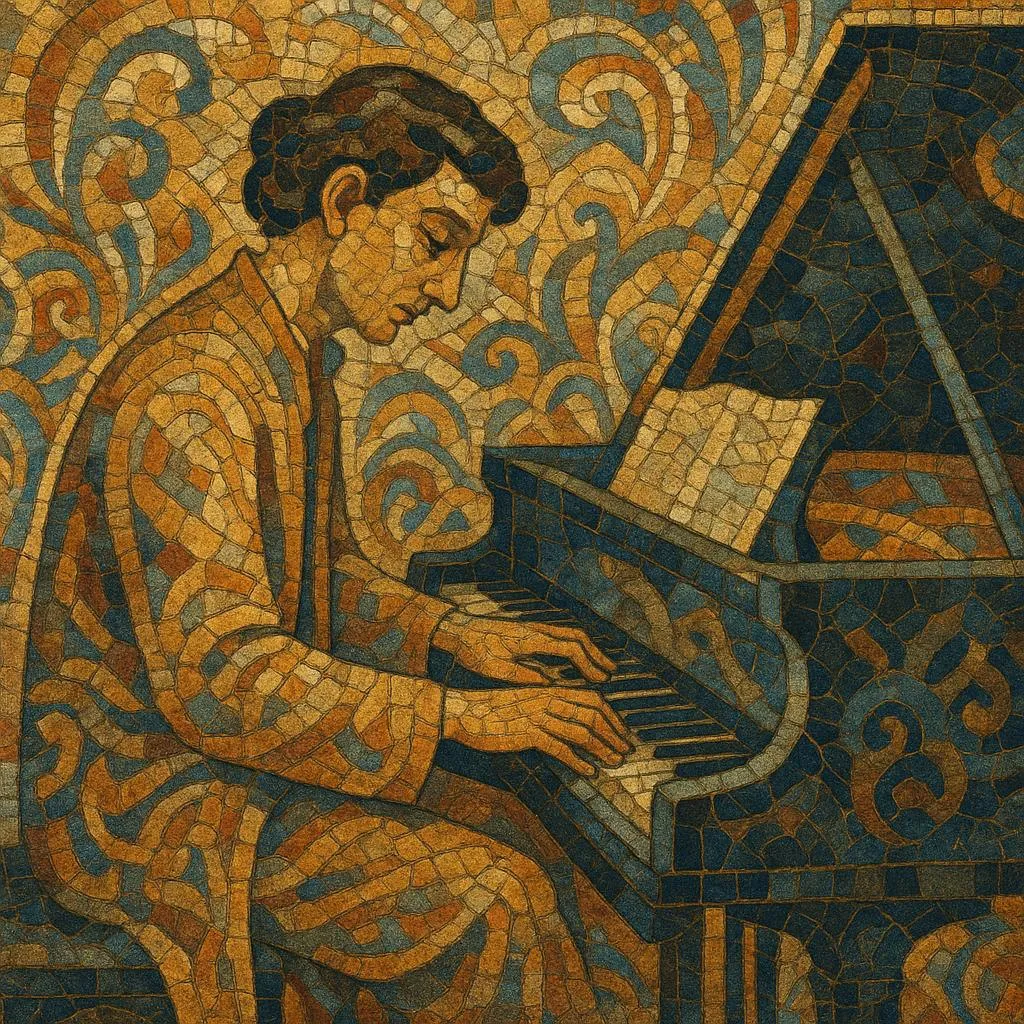
Caucasian classical piano refers to the solo and chamber piano traditions that grew out of the South Caucasus—primarily Armenia, Georgia, and Azerbaijan—where European concert practice fused with local modal systems, folk melodies, and liturgical chant.

Stylistically, the repertoire often marries late-Romantic and early-20th‑century pianism (coloristic pedaling, bravura textures, character pieces, and didactic cycles) with idioms specific to the region: Armenian folk and sacred modes, Georgian polyphonic fingerprints (drones and open-fifth sonorities), and Azerbaijani mugham-derived melismas and modal cadences.

Across the 20th century, conservatories in Tbilisi, Baku, and Yerevan produced composers and pianists who framed local musical language within Western forms—preludes, etudes, nocturnes, dances, and children’s pieces—creating a distinct regional pianistic voice within the broader classical canon.


Sources: Spotify, Wikipedia, Discogs, RYM, MB, user feedback and other online sources

History

Origins (late 19th–early 20th century)

The Caucasus first encountered Western concert pianism during the late Russian Empire through itinerant virtuosi, salon culture, and early music schools. Local composers began to adapt folk and sacred materials to the keyboard, laying the groundwork for a regionally inflected piano repertoire.

Institutional growth in the Soviet period (1920s–1960s)

With the establishment of the Tbilisi (1917), Baku (1920), and Yerevan (1921) conservatories, a professional pipeline of pianists and composer‑pianists emerged. Western classical forms (prelude, sonata, suite, etude) were encouraged, while cultural policy also valued national identity. Composers synthesized Romantic harmony and modernist color with Armenian, Georgian, and Azerbaijani materials—Armenian chant and folk modes, Georgian drone‑based textures and asymmetric dances, and Azerbaijani mugham’s modal‑improvisatory syntax reimagined within written piano works.

Late 20th century: Cosmopolitan voices (1960s–1990s)

Post‑war modernism and cross‑regional exchange expanded the palette: serial and post‑tonal gestures, neoclassicism, and meditative minimalism appeared alongside modal folk references. Character cycles for children and advanced pedagogical works—hallmarks of Soviet education—helped to codify a distinct Caucasian pianistic language from elementary to concert level.

21st century: Diaspora and revival

After independence, performers and composers from the Caucasus championed regional piano repertoire globally. New works blend contemplative textures (minimalist or sacred‑inspired) with folk modes and contemporary extended techniques. Archives and field collections continue to spur fresh piano arrangements of traditional songs, ensuring a living continuum for Caucasian classical piano.

How to make a track in this genre

Core idiom
•   Use solo piano as the primary medium; chamber pairings (e.g., violin–piano, cello–piano) can extend the color. •   Favor compact forms—preludes, nocturnes, dances, etudes, character pieces—common to 20th‑century Caucasian concert life.
Modal language and harmony
•   Armenian color: draw on folk and chant modes (e.g., tetrachords featuring augmented seconds), lamenting cadences, and stepwise, chant‑like contours. •   Georgian traits: underpin melodies with drones (open fifths), parallel fourths/fifths, and hints of heterophony evoking village polyphony. •   Azerbaijani influence: adapt mugham (e.g., Rast, Shur, Segah) by crafting modal centers, variable scale degrees, and melismatic turns—written out, notated rubato rather than improvised. •   Harmonically, blend modal centers with late‑Romantic chromatic coloring; use pedal to bloom overtones and create bell‑like resonance.
Rhythm and texture
•   Employ asymmetric meters (5/8, 7/8, 9/8) and dance grooves referencing yalli, kochari, or other regional dances. •   Alternate cantabile right‑hand lines with left‑hand drones or ostinati; intersperse toccata‑like motor rhythms with lyrical interludes.
Phrasing, ornament, and technique
•   Imitate folk instruments (duduk, tar, kamancha) through appoggiaturas, mordents, turns, and portamento‑like slurs shaped by nuanced rubato. •   Use bell sonorities (wide‑spaced chords), stacked fourths/fifths, and low pedal drones to evoke liturgical and folk resonance.
Forms and pedagogy
•   Write graded miniatures (children’s albums, instructive pieces) alongside virtuoso concert works—mirroring the conservatory tradition. •   Character titles (dance names, landscapes, liturgical allusions) help anchor regional identity.
Workflow tips
•   Start by transcribing a folk melody or chant; set it against a drone or ostinato and explore modal reharmonization. •   Introduce a contrasting middle section (toccata, fugato, or chorale texture), then return to a transformed opening theme with fuller pedaling and register expansion.

Top tracks

Locked
Share your favorite track to unlock other users’ top tracks

Upcoming concerts

in this genre
Influenced by

Download our mobile app

Get the Melodigging app and start digging for new genres on the go
© 2026 Melodigging
Melodding was created as a tribute to Every Noise at Once, which inspired us to help curious minds keep digging into music's ever-evolving genres.
Buy me a coffee for Melodigging
