Your digging level

For this genre
0/8
🏆
Sign in, then listen to this genre to level up

Description

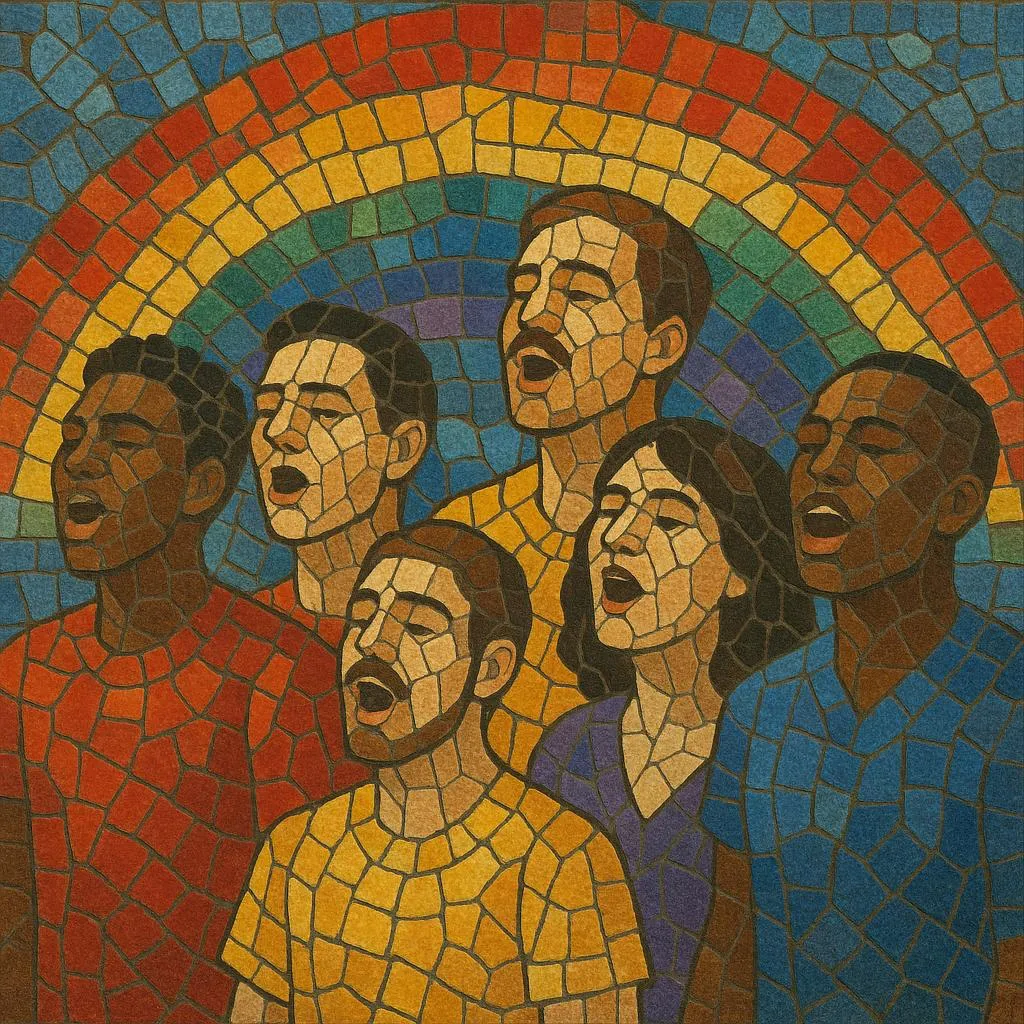
Gay chorus refers to LGBTQ+ community choirs—most prominently gay men’s choruses and mixed LGBTQ+ ensembles—that perform choral music through a lens of visibility, advocacy, and community-building.

Musically, the style blends mainstream choral technique with accessible, audience-facing repertoire: arrangements of pop and rock anthems, musical-theatre showstoppers, spirituals and gospel selections, as well as newly commissioned works on queer themes. Ensembles are typically TTBB (tenor–tenor–baritone–bass) for men’s choruses or SATB for mixed choirs, often accompanied by piano, rhythm section, or small ensembles, and frequently incorporate narration, choreography, and multimedia to frame storytelling.

Programmatically, concerts balance celebration (pride, joy, love) with remembrance and justice (AIDS memorialization, anti-discrimination, marriage equality), making the genre as much a social and cultural practice as a musical one.


Sources: Spotify, Wikipedia, Discogs, RYM, MB, user feedback and other online sources

History

Early roots (1970s)

Following the post‑Stonewall era, LGBTQ+ singers formed community-based choirs as spaces of solidarity and public visibility. In the United States, the late 1970s saw the emergence of the first openly gay men’s choruses, whose public appearances (often at civic vigils and community events) signaled a new role for choral singing in LGBTQ+ cultural life.

Expansion and advocacy (1980s)

The AIDS crisis transformed the mission of gay choruses: concerts became sites of mourning, fundraising, and activism. Repertoire expanded to include memorial works and topical commissions, while the organizations professionalized administration, touring, and recording. The creation of umbrella networks (e.g., GALA Choruses in North America, parallel associations overseas) connected hundreds of ensembles and fostered a commissioning ecosystem.

Globalization and commissioning (1990s–2000s)

By the 1990s, ensembles had spread across North America, Europe, Oceania, and beyond. A robust tradition of commissioning emerged—new works addressing queer identity, chosen family, public health, and civil rights—while arrangements of pop and musical theatre repertoire cemented a signature concert format: thematically curated programs combining humor, spectacle, and reflection.

Visibility in the equality era (2010s–present)

As legal and cultural milestones (marriage equality, anti‑discrimination protections) advanced, choruses retained their dual focus: celebration and advocacy. Digital media expanded reach via streaming releases and virtual choirs, while collaborations with symphonies, theater companies, and pop artists diversified stages and audiences. Today, gay chorus remains a living commission-driven tradition and a key institution in LGBTQ+ cultural life.

How to make a track in this genre

Ensemble and voicing
•   Write primarily for TTBB (men’s chorus) or SATB (mixed LGBTQ+ choir), allowing frequent divisi for lush, cinematic sonorities. •   Plan for piano accompaniment as a baseline; add rhythm section (drums, bass, guitar/keys) for pop and musical-theatre material, or small chamber forces for classical-leaning pieces.
Harmony and texture
•   Favor close, pop-informed voicings (add2/add9, sus, extended tertian chords) and warm cluster sonorities to create uplift. •   Use stepwise voice-leading and singable ranges; keep inner voices active to maintain momentum. •   Employ modulations (often a late upward half/whole step) to deliver emotional “lift” at climaxes.
Rhythm and groove
•   Align prosody with backbeat-oriented feels for pop/theatre numbers; write crisp tutti rhythms for impact and antiphonal passages for call‑and‑response. •   For ballads, use rubato introductions, then settle into steady grooves to support text clarity.
Text and themes
•   Center texts around visibility, resilience, chosen family, remembrance, and joy. Inclusive, first-person plural language encourages communal identification. •   Balance humor and gravitas within a single program; intersperse narrative vignettes or spoken monologues to frame context.
Form and dramaturgy
•   Think in sets: thematic arcs that move from celebration to reflection and back to affirmation. •   Medleys and mashups are common; thread recurring motifs or reprise material to unify a concert’s story.
Arrangement and staging
•   Craft featured solos and small-group moments while ensuring satisfying full-chorus payoffs. •   Leave space for staging: dance breaks, simple choreography, or multimedia projections that support narrative and community messaging.
Rehearsal and practicality
•   Provide rehearsal tracks and clear piano reductions; mark breath plans and dynamic architecture. •   Write with volunteer/community forces in mind: clear part-writing, moderate tessitura, and achievable rhythmic vocabularies.

Top tracks

Locked
Share your favorite track to unlock other users’ top tracks

Upcoming concerts

in this genre
Influenced by
Has influenced

Download our mobile app

Get the Melodigging app and start digging for new genres on the go
© 2026 Melodigging
Melodding was created as a tribute to Every Noise at Once, which inspired us to help curious minds keep digging into music's ever-evolving genres.
Buy me a coffee for Melodigging