Your digging level

For this genre
0/8
🏆
Sign in, then listen to this genre to level up

Description

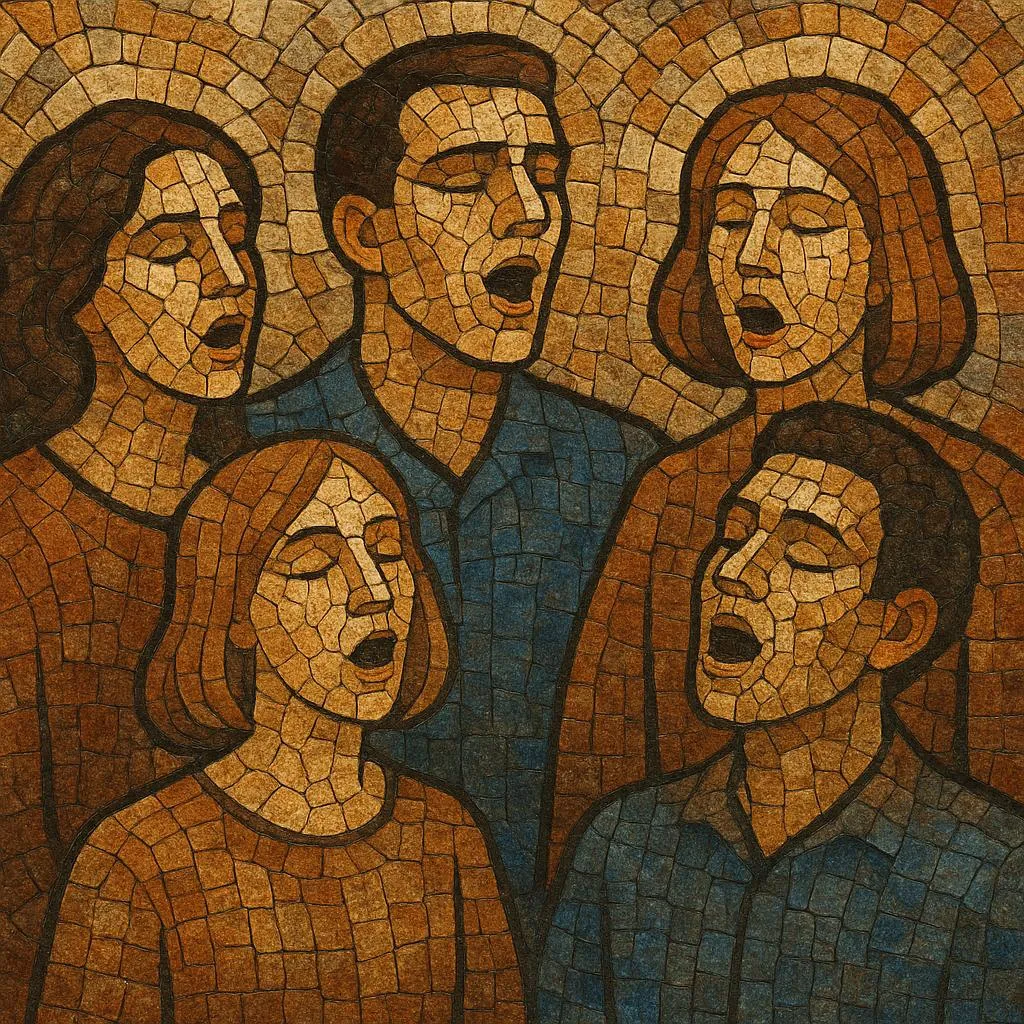
A cappella is vocal music performed without instrumental accompaniment, by soloists or ensembles. The term, Italian for “in the manner of the chapel,” originally distinguished Renaissance polyphonic practice from Baroque concertato styles where instruments often doubled voices.

Over the 19th century—amid a revival of Renaissance polyphony and a mistaken assumption that such music was always sung unaccompanied—the term solidified to mean any unaccompanied vocal performance. Today a cappella spans sacred and secular idioms, from chant and polyphony to doo‑wop, vocal jazz, collegiate and professional pop groups, and contemporary styles featuring vocal percussion and microphone technique.

Very rarely, the term has also been used as a synonym for alla breve (cut time), though this usage is uncommon in modern practice.

Sources: Spotify, Wikipedia, Discogs, RYM, MB, user feedback and other online sources

History

Origins and Early Practice (Renaissance and before)
•   The roots of a cappella lie in medieval and Renaissance sacred traditions, especially Gregorian and Byzantine chant (monophonic and unaccompanied) and later polyphonic Masses and motets. •   In the 15th–16th centuries, chapel choirs across Italy and beyond cultivated complex polyphony for liturgy and devotions—often with instruments tacitly doubling lines, though the "in the chapel" practice created a strong model for purely vocal realization.
The Term and Its 19th‑Century Reframing
•   The Italian phrase a cappella originally contrasted Renaissance polyphony with Baroque concertato textures. •   During the 19th‑century antiquarian revival (e.g., the Cecilian movement), editors and choirmasters championed “pure” vocal renditions of Renaissance repertory. This codified the modern meaning of a cappella as unaccompanied choral/vocal music, even when historical performance sometimes included instruments.
20th‑Century Diversification
•   In the early–mid 20th century, unaccompanied traditions flourished in both sacred and secular spheres: Anglican cathedral choirs; American shape‑note and Sacred Harp singing; African and African‑diasporic vocal ensembles; and barbershop and doo‑wop (street‑corner harmony) all showcased the expressive power of voices alone. •   Vocal jazz groups (e.g., The Swingle Singers, Take 6) adapted instrumental jazz language to voices, popularizing scat, close harmony, and studio‑enhanced precision.
Contemporary A Cappella
•   From the late 20th century onward, collegiate and professional groups expanded the idiom with vocal percussion (beatboxing), amplified live sound, and studio production. Arrangements emulate full band textures (drums, bass, pads, riffs) using only voices. •   Media, competitions, and streaming platforms propelled global popularity (e.g., Pentatonix), while early‑music specialists maintained historically informed a cappella performance. Today the style encompasses sacred chant to radio‑ready pop covers—united by the absence of instruments.

How to make a track in this genre

Core Principles
•   Write for voices only: every texture (bass, harmony, rhythm, melody, “pads,” and “riffs”) must be sung. Avoid expecting sustained non‑vocal timbres or impossible ranges. •   Balance clarity and blend: arrange lines so text is intelligible, vertical sonorities lock in tune, and vowels align across parts.
Texture and Roles
•   Melody and Lead: give a clear lead line with comfortable tessitura; rotate leads for color. •   Harmony: use close‑position triads and extended jazz chords as needed; manage voice‑leading to minimize leaps and tuning issues. •   Bass: assign a true vocal bass line (often doubling or implying root movement). Keep ranges idiomatic; mix sustained fundamentals with rhythmic figures. •   Rhythm Section by Voice: use vocal percussion/beatboxing to emulate kick, snare, hi‑hat patterns; cue fills and transitions. In classical styles, replace drums with rhythmic syllables or motoric ostinati.
Harmony and Voice‑Leading
•   Pop/doo‑wop: common cycles like I–vi–IV–V, ii–V–I, or I–V–vi–IV; reinforce cadences with strong bass motion. •   Jazz‑influenced: employ 7ths/9ths/13ths, guide‑tone lines, and smooth contrary motion; watch for tuning on tensions. •   Early‑music style: modal writing, careful treatment of dissonance (passing/neighbor tones), and cadences (e.g., Landini at the period).
Lyrics and Syllables
•   Texted passages should have unified vowels and crisp consonants for ensemble clarity. •   Non‑lexical syllables (do‑bah, dm‑dm, va‑va) can carry inner‑line grooves and brass‑like stabs; tailor syllables to articulation (plosives for attacks, nasals for legato).
Arrangement and Form
•   Craft contrasts (a cappella relies on timbral and registral variety): alternate tutti blocks with small‑group spots, call‑and‑response, breakdowns, and key changes. •   Use dynamic plans (pp to ff), registral swaps, and countermelodies to sustain interest without instruments.
Rehearsal and Performance
•   Intonation: prioritize just intonation where feasible; rehearse sustained chords with drones; align vowels. •   Mic technique: for contemporary styles, close‑miking, beatbox mic isolation, and live looping can extend palette. •   Recording: layer doubles for thickness, use subtle tuning and timing edits, but retain natural vocal identity.

Top tracks

Locked
Share your favorite track to unlock other users’ top tracks

Upcoming concerts

in this genre
Influenced by
Has influenced

Download our mobile app

Get the Melodigging app and start digging for new genres on the go
© 2026 Melodigging
Melodding was created as a tribute to Every Noise at Once, which inspired us to help curious minds keep digging into music's ever-evolving genres.
Buy me a coffee for Melodigging