

Your digging level
Description
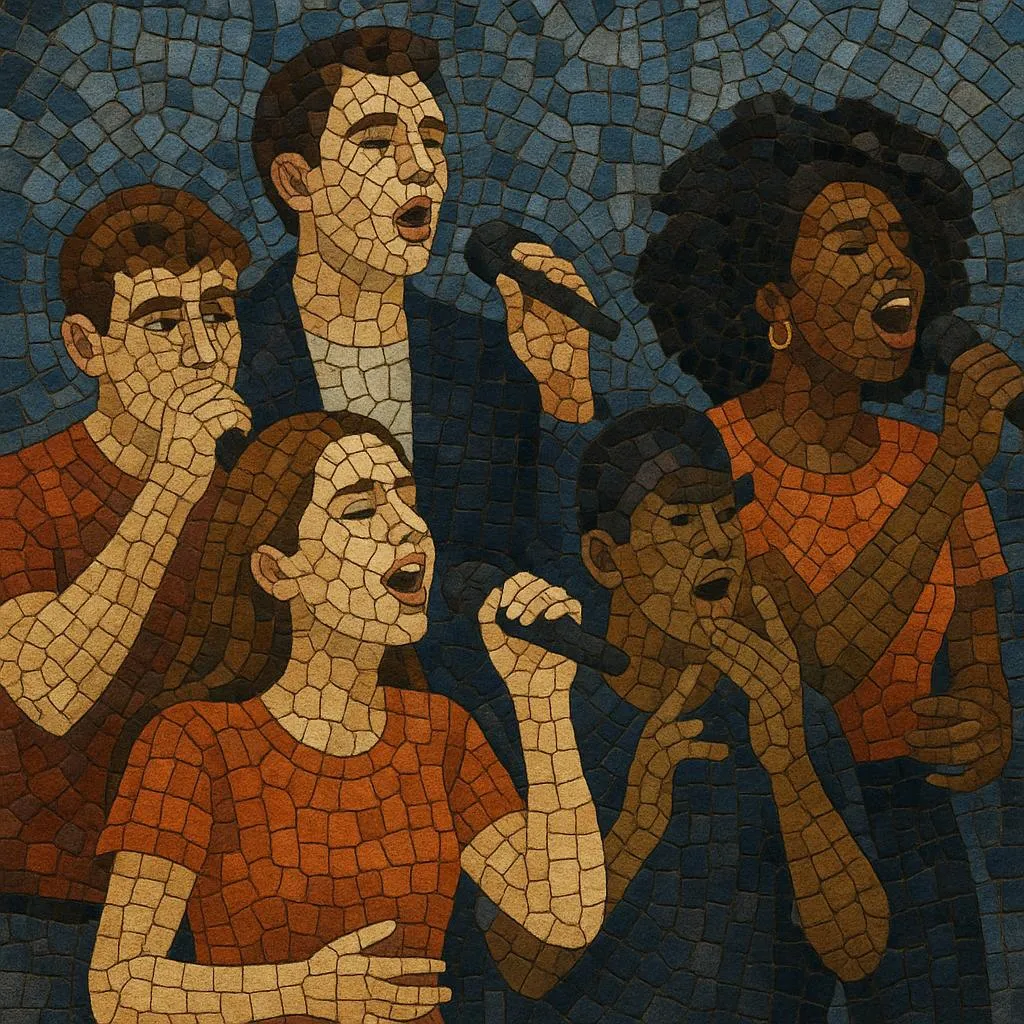
Collegiate a cappella refers to student-run, college‑affiliated vocal ensembles that perform entirely without instruments. While the umbrella term “a cappella” simply means unaccompanied singing, in the collegiate context it typically denotes pop‑centric, contemporary arrangements sung by mixed or single‑voice student groups.
Rooted in the early 20th‑century U.S. glee‑club and close‑harmony traditions, collegiate a cappella evolved to feature lead vocals, background “block” harmonies, a dedicated vocal bass, and vocal percussion (beatboxing) that emulates a rhythm section. Repertoires span chart pop, R&B, hip‑hop, rock, and show tunes, often arranged to foreground groove, texture, and crowd engagement.
These ensembles are student‑organized, operated, and directed; they record, tour, and compete (e.g., ICCA), and have increasingly spread beyond the United States to the United Kingdom and Ireland, helping to popularize modern a cappella as a distinct pop‑performance style.
History
Collegiate a cappella traces to American glee‑club culture and close‑harmony singing on university campuses, notably the Yale Whiffenpoofs (founded 1909). These early groups emphasized traditional part‑song repertoire, college songs, spirituals, and light classics, performed without instruments and under student leadership.
Post‑war doo‑wop, barbershop, and vocal jazz aesthetics informed a shift toward popular music on campus. By the late 1980s and early 1990s, student arrangers increasingly adapted contemporary radio hits, adding a prominent vocal bass line and emerging vocal percussion to mimic band textures—codifying the modern pop‑centric collegiate a cappella sound.
The founding of the Contemporary A Cappella Society (CASA, 1991) and the International Championship of Collegiate A Cappella (ICCA, mid‑1990s) professionalized the ecosystem—spurring standards in arranging, recording, and live production. Groups like the Tufts Beelzebubs popularized high‑energy pop arrangements and contributed arrangements/vocals to TV (“Glee,” 2009), while Indiana University’s Straight No Chaser’s viral success (“12 Days of Christmas”) showcased the style’s mass appeal.
Media such as NBC’s “The Sing‑Off” and the “Pitch Perfect” films (2012–) propelled collegiate a cappella to mainstream awareness and accelerated adoption in the U.K. and Ireland (e.g., Voice Festival U.K.). Advances in home recording and vocal production further refined the genre’s studio sound (tight tuning, rhythmic editing, layered textures), while competitions and festivals expanded internationally. Today, collegiate a cappella balances campus tradition with contemporary pop, hip‑hop, and R&B, remaining a student‑led incubator for vocal arranging and performance craft.


