Your digging level
Description
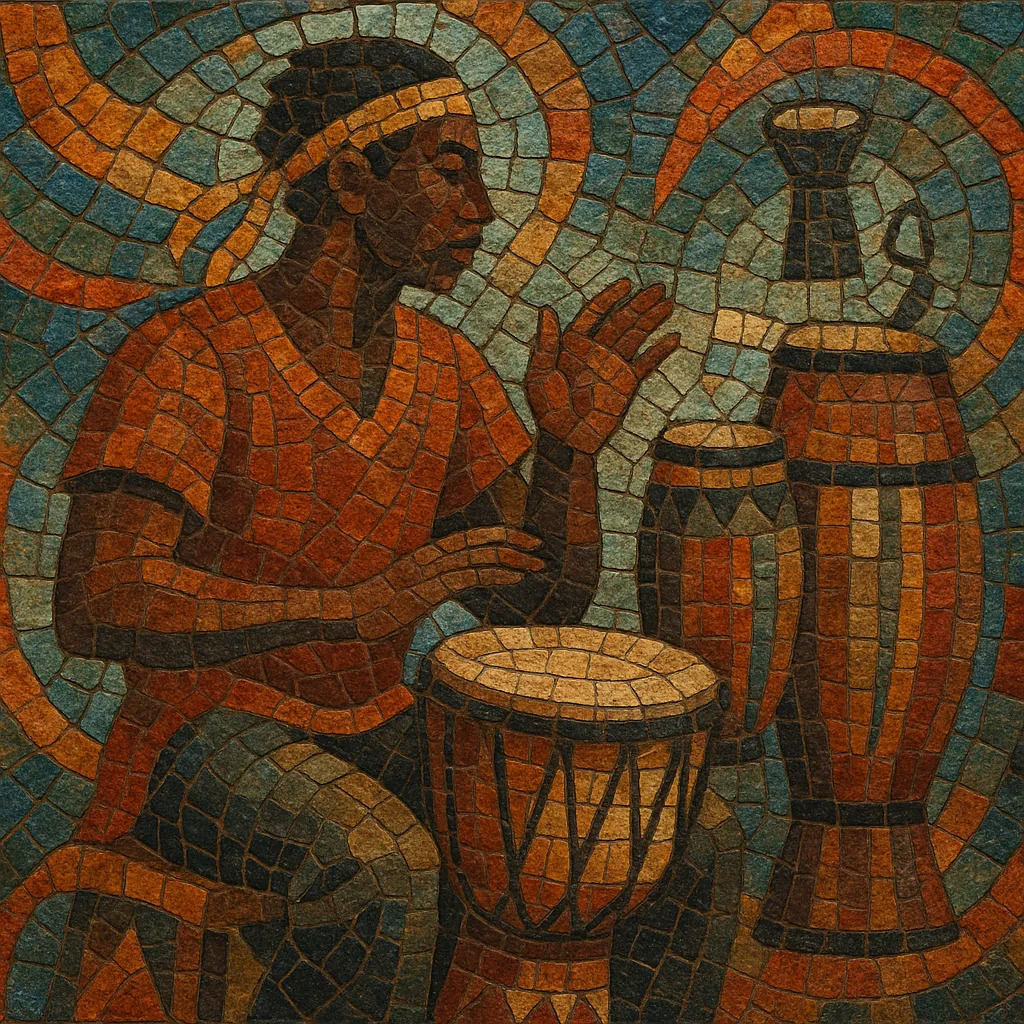
Djembe refers to the West African drum-centered music tradition built around the goblet-shaped djembe and its bass-drum family (dununba, sangban, and kenkeni). It is a polyrhythmic, participatory style that accompanies dance, rites of passage, agricultural cycles, and communal celebrations among Mandé peoples.
Characteristic playing features are three core tones on the djembe—bass, open tone, and slap—combined into interlocking patterns that create a dense, swinging groove in either 12/8 (ternary) or 4/4 (binary) feels. A lead drummer (djembefola) uses breaks, calls, and improvisations to cue dancers and ensemble changes, while bell patterns on the dunun stabilize the timeline. The result is physically propulsive, call‑and‑response music that is at once communal, ceremonial, and highly virtuosic.
History
Djembe music emerged among Mandé communities in the western Sahel (today’s Mali and Guinea) during the medieval period, with roots commonly traced to the Mali Empire. The instrument and repertoire were embedded in village life—animating weddings, initiations, harvests, and social gatherings—where drum ensembles supported dance and ceremonial exchange. The djembefola (lead drummer) coordinated with dunun players and singers, guiding the community through call-and-response and signaling sectional changes with breaks.
Over centuries, distinct regional rhythms (often named after dances, occasions, or ethnic groups) formed a large repertoire—such as Kassa, Soli, Makru, Kuku, Dundunba, and Moribayassa. These pieces carry specific steps, tempos, and feels, and are taught orally, emphasizing feel, social context, and embodied knowledge rather than notation.
In the mid‑20th century, national ballet companies like Les Ballets Africains (Guinea) adapted village forms for the stage, standardizing ensembles and arranging pieces for touring audiences. Master drummers including Ladji Camara, Famoudou Konaté, and later Mamady Keïta helped define solo language, pedagogy, and ensemble balance, bringing djembe to conservatories, workshops, and festivals worldwide.
From the 1960s onward—through diaspora communities, recordings, and touring troupes—djembe drumming took root in Europe, the Americas, and Asia. The film “Djembefola” (1991) spotlighted Mamady Keïta’s role in globalizing the tradition. Today, transmission blends apprenticeship with international workshops and classes, while many practitioners emphasize cultural context, proper technique, and respect for the music’s communal function.