Your digging level
Description
Burkinabe traditional is the umbrella for the diverse indigenous music of Burkina Faso’s many peoples, especially the Mossi, Fulani (Peul), Bissa, Gourounsi, Lobi, and Jula/Mandé communities.
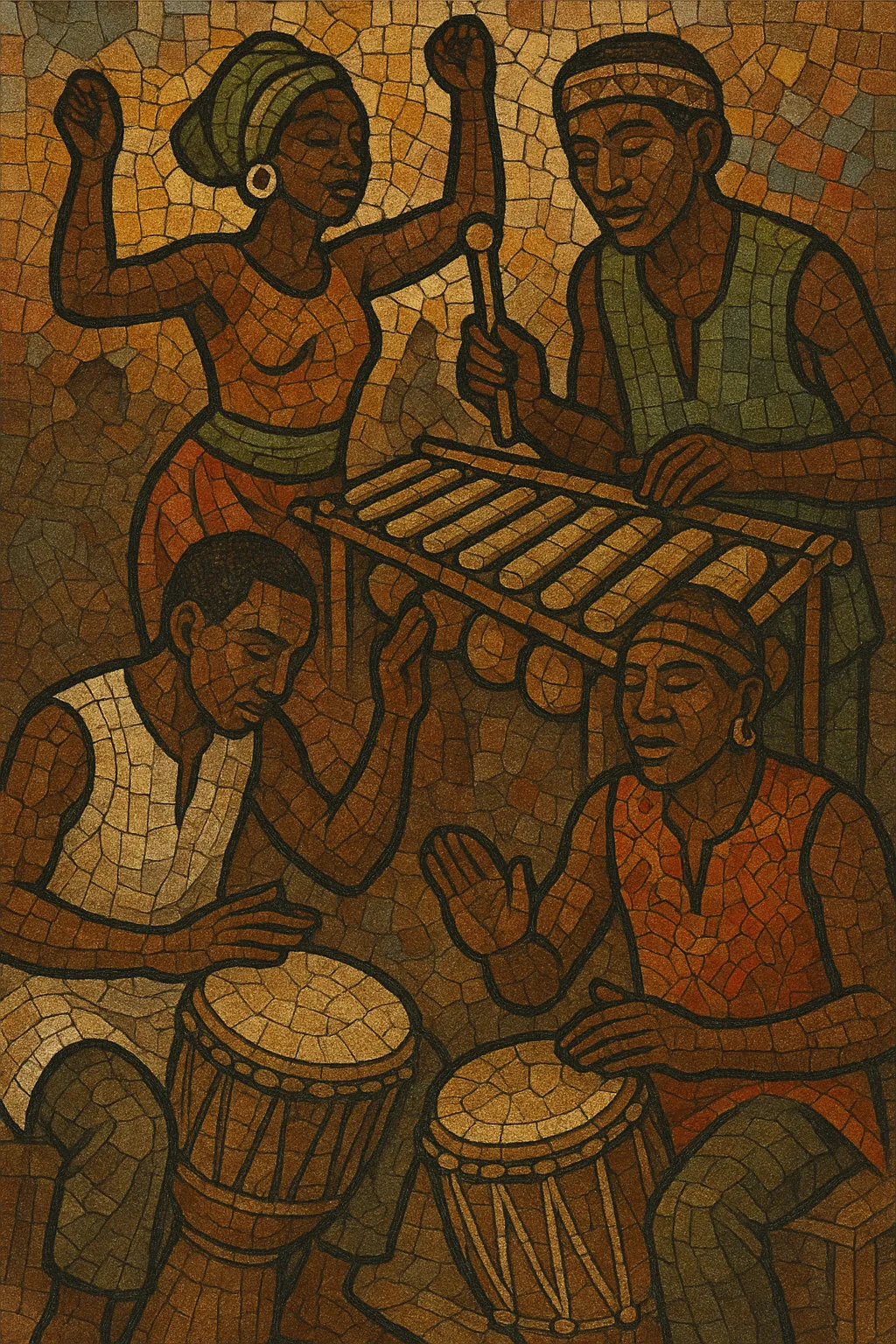
It is characterized by interlocking balafon patterns, powerful drum ensembles (bendré, djembe, and dunun), call‑and‑response vocals, praise poetry from the griot tradition, and lively dance rhythms such as warba.
Melodies often use pentatonic or hexatonic scales, and textures are typically heterophonic or unison with ornamental variation. Performances accompany life‑cycle events, court ceremonies, harvests, and communal festivities, keeping oral history and social values alive.
History
Burkinabe traditional music emerges from precolonial court, village, and pastoral contexts, with the Mossi kingdoms and Mandé-speaking communities shaping courtly praise song, ceremonial drumming, and oral historiography. Griots safeguarded genealogies and moral instruction through praise poetry, while smith and hunter lineages maintained instrumental craft and repertory (balafon, ngoni).
Idiophones and drums—balafon, bendré (calabash drum), djembe and dunun—anchor interlocking rhythms used for processional dances (e.g., warba) and rites of passage. Lutes (ngoni), harps (kora in Jula/Mandé zones), flutes (tambin/Peul), and spike fiddles (goje) support solo singing and chorus response. Songs transmit proverbs, local histories, and praise, with performance integrated into weddings, harvests, naming ceremonies, and court events.
During the colonial and post‑independence periods, urban centers like Ouagadougou and Bobo‑Dioulasso brought village repertories to new stages and radio. Traditional ensembles adapted to amplified settings, while touring troupes and national ballets codified regional dances and pieces for concert presentation.
From the late 20th century onward, Burkinabe artists revitalized traditional repertories, fusing them with afrobeat, jazz, and folk. Festivals and cultural centers support transmission to younger generations, while recording projects document regional styles. The result is a living tradition that sustains ceremonial functions yet evolves through creative exchange.