Your digging level

For this genre
0/8
🏆
Sign in, then listen to this genre to level up

Description

Deep disco house is a club-focused fusion of deep house’s moody harmony and groove with disco’s live‑band feel, string swells, and bass‑guitar swagger. It favors warm, analog textures, filtered samples, and soulful vocals, but keeps the arrangement long and DJ‑friendly.

Expect a steady four‑on‑the‑floor kick (typically 116–123 BPM), syncopated hi‑hats and claps, rubbery bass lines, Rhodes or piano chords (often minor 7/9 voicings), and tasteful use of disco strings, guitar chops, and hand percussion. Compared to straight disco house, the sound is deeper, more hypnotic and heads‑down, with extended sections for mixing and subtle dynamic rises rather than big festival drops.

Sources: Spotify, Wikipedia, Discogs, RYM, MB, user feedback and other online sources

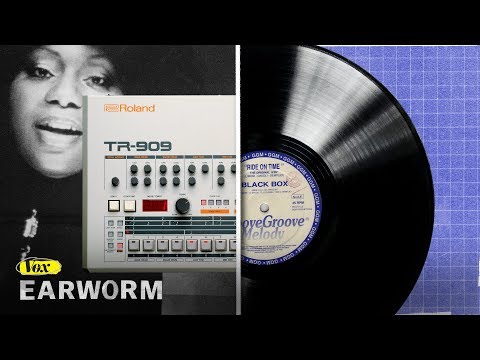
The ingredients of a classic house track
Vox

History

Roots and precursors (1990s–2000s)

Deep disco house grows out of two parallel legacies. First is classic 1970s disco and late‑1970s/early‑1980s post‑disco, whose live bass, strings, and percussion became the blueprint for sampling. Second is Chicago/UK deep house in the 1990s, which emphasized jazzy harmony, mellow pads, and long, rolling grooves. Mid‑to‑late‑1990s French filter house (aka “disco house”) showed how looping and filtering disco records could power modern dance floors, while the 2000s nu‑disco scene reintroduced musicianship and boogie/funk aesthetics.

Consolidation (early–mid 2010s)

As the nu‑disco revival matured, a subset of producers pushed a deeper, more hypnotic sound that kept disco’s musicality but adopted deep house’s harmonic palette and arrangement logic. Boutique labels and edit‑forward imprints (e.g., Toy Tonics, Razor‑N‑Tape, Local Talk, Delusions of Grandeur) championed warm, tape‑saturated textures, dusty sample chops, and understated grooves suitable for intimate clubs. The style’s identity solidified around 116–123 BPM, extended intros/outros, and soulful vocal phrases used more like instruments than pop hooks.

Popular diffusion (late 2010s–present)

A wave of European artists—particularly from the UK, Germany, France, and the Netherlands—brought the sound to broader audiences through Boiler Room sets, deep‑leaning festival stages, and high‑profile remixes. While some acts crossed into mainstream charts, the core of deep disco house remains a DJ‑driven, crate‑digging culture that values tasteful sampling, harmonic richness, and long‑form dancefloor storytelling.

How to make a track in this genre

Tempo, groove, and form
•   Target 116–123 BPM with a four‑on‑the‑floor kick. Use gentle swing (55–60%) and ghosted off‑beat hats for bounce. •   Structure in long 16–32 bar sections with DJ‑friendly intros/outros, subtle breakdowns, and filter‑based tension builds rather than big drops.
Harmony and melody
•   Favor deep‑house‑style chords: minor 7, dominant 9, and lush extensions on Rhodes, Juno pads, or sampled keys. •   Employ short vocal phrases (one‑shots or 2–4 bar loops) as melodic hooks; use call‑and‑response with guitar licks or string lines.
Bass and drums
•   Anchor with a rounded, live‑style electric bass (fingered or picked), or a sampled disco bass loop; accentuate octave jumps and syncopation. •   Drums: punchy but warm kick, open hats on the off‑beat, claps layered with hand‑claps. Add congas, shakers, or tambourine for disco feel.
Sound sources and sampling
•   Sample tasteful snippets from 1970s/early‑1980s disco, boogie, and jazz‑funk—short enough to avoid monotony. Combine with original parts (bass, keys, guitar) for a hybrid approach. •   Use filtering (low‑pass/hi‑pass sweeps), tape saturation, light vinyl noise, and gentle bus compression to glue the loop.
Arrangement and mixing
•   Begin with drums and bass for the DJ. Introduce chords and filtered loops gradually; bring vocals or strings in for the main peak. •   Sidechain pads/loops lightly to the kick; parallel compress drums for weight. Keep highs smooth, mids warm, and sub clean. •   Aim for -10 to -8 LUFS integrated loudness for club play without crushing transients.
Lyric themes (if using full vocals)
•   Soulful, romantic, and nightlife motifs. Keep lines concise; repetition should support the groove rather than dominate it.
How To Make French Disco House
Super Disco Club
Never Dull Makes a Disco House Beat From Scratch
DJ Mag
How To Make House/Nu Disco Bangers (like Prospa)
The Producer School
Track From Scratch - How To Make Disco House - Part 1 - House Music Course - Samples Available
Carl Booth Music

Best playlists

The Sound of Deep Disco House
Every Noise at Once
Deep Disco House
Deep Disco House
Chosic
Best of Deep Disco House
volt.fm
Deep House 2025 🎧 Chill Out & Lounge Music Mix
Deep Disco
Deep House Music 2026 | Best of Deep Disco Mix 174
Deep Disco Records

Top tracks

Locked
Share your favorite track to unlock other users’ top tracks

Upcoming concerts

in this genre
Influenced by
Has influenced

Download our mobile app

Get the Melodigging app and start digging for new genres on the go
© 2026 Melodigging
Melodding was created as a tribute to Every Noise at Once, which inspired us to help curious minds keep digging into music's ever-evolving genres.
Buy me a coffee for Melodigging