Your digging level
Description
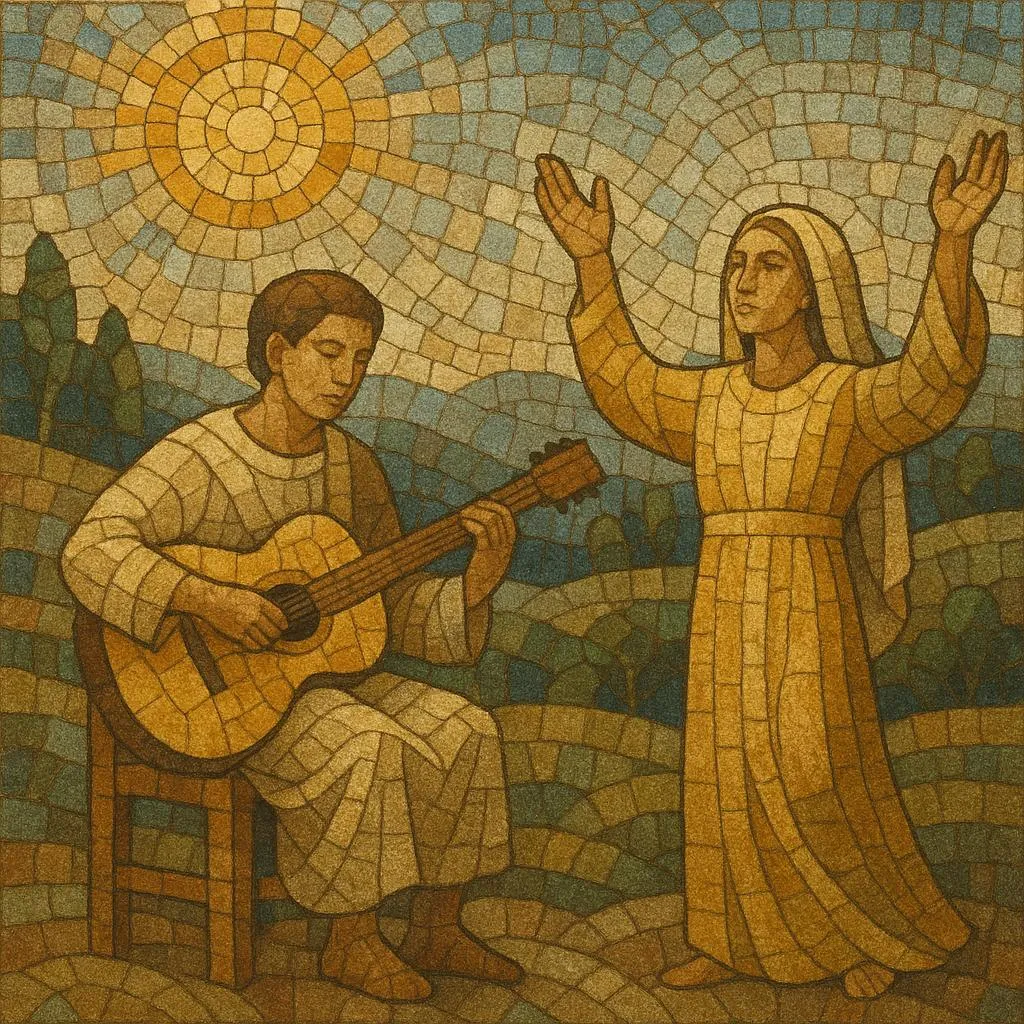
Classic praise is the congregational, soft‑rock/folk‑pop strand of contemporary Christian worship that took shape in the late 1970s and flowered through the 1980s and 1990s. It centers on simple, Scripture‑saturated “praise choruses” intended for the whole church to sing together.
Musically it favors approachable melodies in major keys, steady 4/4 or 6/8 meters, I–V–vi–IV style progressions, and gentle dynamic builds from acoustic guitar or piano to a full band. Lyrically it uses direct, vertical address to God (second‑person “You”), short refrains, and easily memorizable lines designed for call‑and‑response or repeated congregational singing.
In sound and presentation it bridges 1970s Jesus‑movement folk and 1980s adult‑contemporary pop: clean electric guitars, pads or simple synths, bass and drums, often capped by a key change for an anthemic final chorus. Its aesthetic has become a touchstone for churches that identify with the formative years of modern worship.

History
Classic praise emerges from the Jesus Movement on the U.S. West Coast, where informal house‑church and Calvary Chapel gatherings replaced hymnals with guitars and short “praise choruses.” These songs distilled biblical phrases into memorable refrains, prioritizing congregational singability over complex harmony. Early worship labels and church music ministries began documenting and distributing these songs, seeding a reproducible repertory across evangelical churches.
Through the 1980s, dedicated worship labels and church networks recorded live services and published songbooks, normalizing a band‑led liturgy: acoustic guitar or piano introducing a chorus, rhythm section providing a gentle pop backbeat, and the congregation as the primary “choir.” Overhead projectors and cassette/LP releases accelerated dissemination, while conferences trained worship leaders and codified the verse‑chorus‑bridge format.
In the 1990s the style spread internationally. Large church movements and songwriters in the UK, North America, and Australasia contributed widely adopted choruses, many recorded live with congregations, creating a signature ambience of communal participation. Production values rose toward adult‑contemporary polish—string pads, reverb‑washed electric guitars, and climactic key changes—without losing the core aim: songs the whole room could sing on first hearing.
While later waves of worship embraced stadium rock, ambient textures, and electronic production, the classic praise songbook remains a staple in many congregations and choirs. Its melodic clarity, Scripture‑forward lyrics, and pastoral keys continue to inform modern worship craft, from pop‑worship arrangements to instrumental and global adaptations.



Best playlists