Your digging level
Description
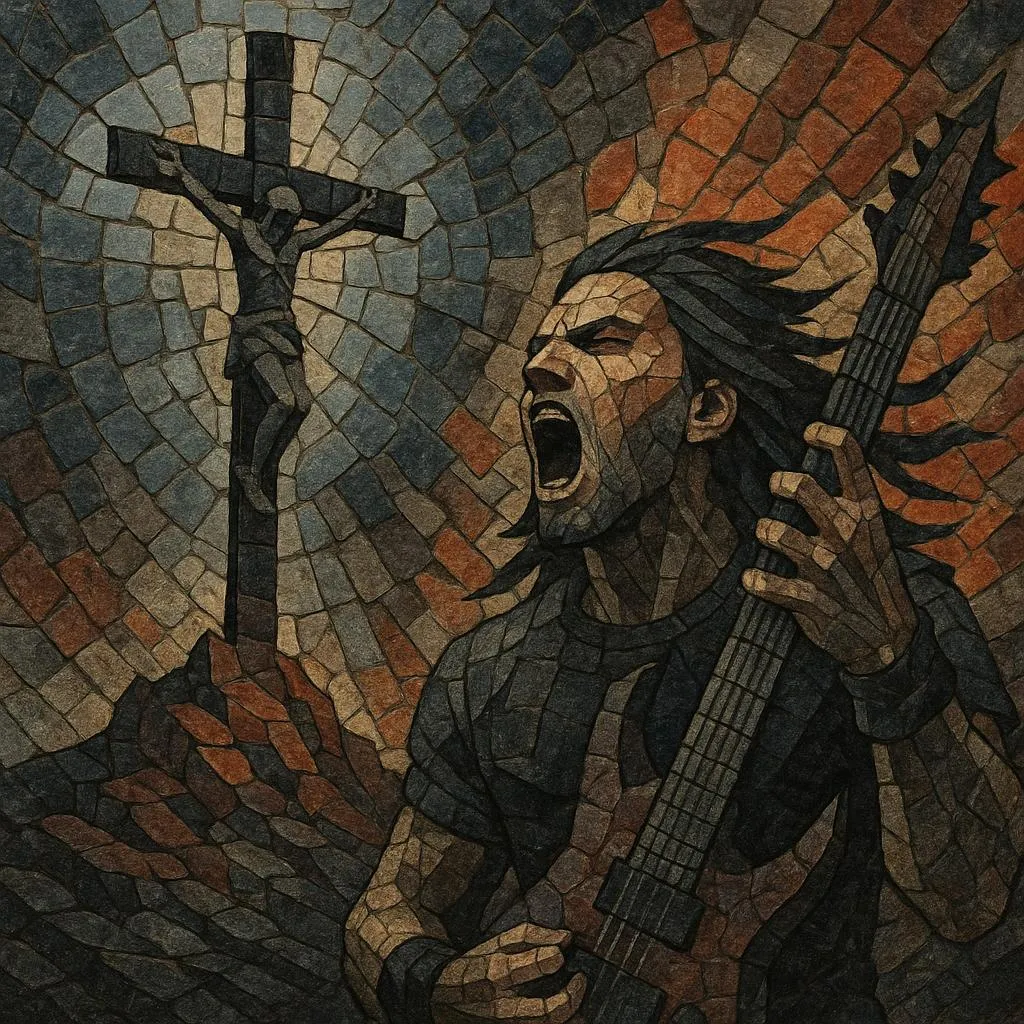
Christian metalcore is a faith-based branch of metalcore that combines the genre’s heavy, breakdown-driven sound with explicitly Christian themes.
Musically, it keeps the core metalcore toolkit—palm-muted riffing, syncopated breakdowns, alternating harsh and clean vocals, and tight, modern production—while often leaning into melodic hooks and anthemic choruses.
Lyrically, it tends to focus on spiritual struggle, redemption, perseverance, worshipful affirmation, and testimony, sometimes framed as personal battles with doubt, sin, or suffering rather than overt preaching.


History
Christian metalcore emerged primarily in the United States as metalcore itself gained mainstream traction.
It grew out of the overlap between Christian rock/metal scenes and the hardcore/metalcore touring circuits, with bands playing the same venues and festivals as secular peers while presenting explicitly Christian identities and messages.
During the 2000s, Christian metalcore became strongly associated with the broader “Christian heavy music” ecosystem—church-affiliated youth scenes, Christian labels and distributors, and dedicated festivals.
At the same time, many bands were sonically indistinguishable from mainstream metalcore acts, helping the style reach listeners beyond explicitly religious audiences.
In the 2010s, the genre diversified into sub-styles such as more melodic, modern metalcore with big clean choruses, djent-influenced riffing, and polished, radio-ready production.
Some bands also shifted toward broader spiritual language or reduced explicit religious branding while keeping the ethical and thematic roots.
Today, Christian metalcore persists as a recognizable lane within both metalcore and Christian heavy music.
It continues to evolve alongside modern metalcore trends (tighter low-end, electronic layers, and hook-forward songwriting) while maintaining a focus on faith, hope, and inner conflict.