Your digging level
Description
Christian deathcore is a faith-oriented branch of deathcore that fuses the genre’s ultra-heavy sonic palette—blast beats, down-tuned chugs, breakdowns, and guttural/harsh vocals—with explicitly Christian themes.
Where standard deathcore leans into nihilism or horror, Christian deathcore contrasts its sonic brutality with lyrics about hope, redemption, spiritual warfare, and Biblical narratives. Musically it shares the same toolset as its parent style: baritone/extended-range guitars in very low tunings, double-kick flurries, tremolo-picked riffs, dissonant chord stacks, and dramatic tempo-contrast between high-velocity sections and crushing, halftime breakdowns.
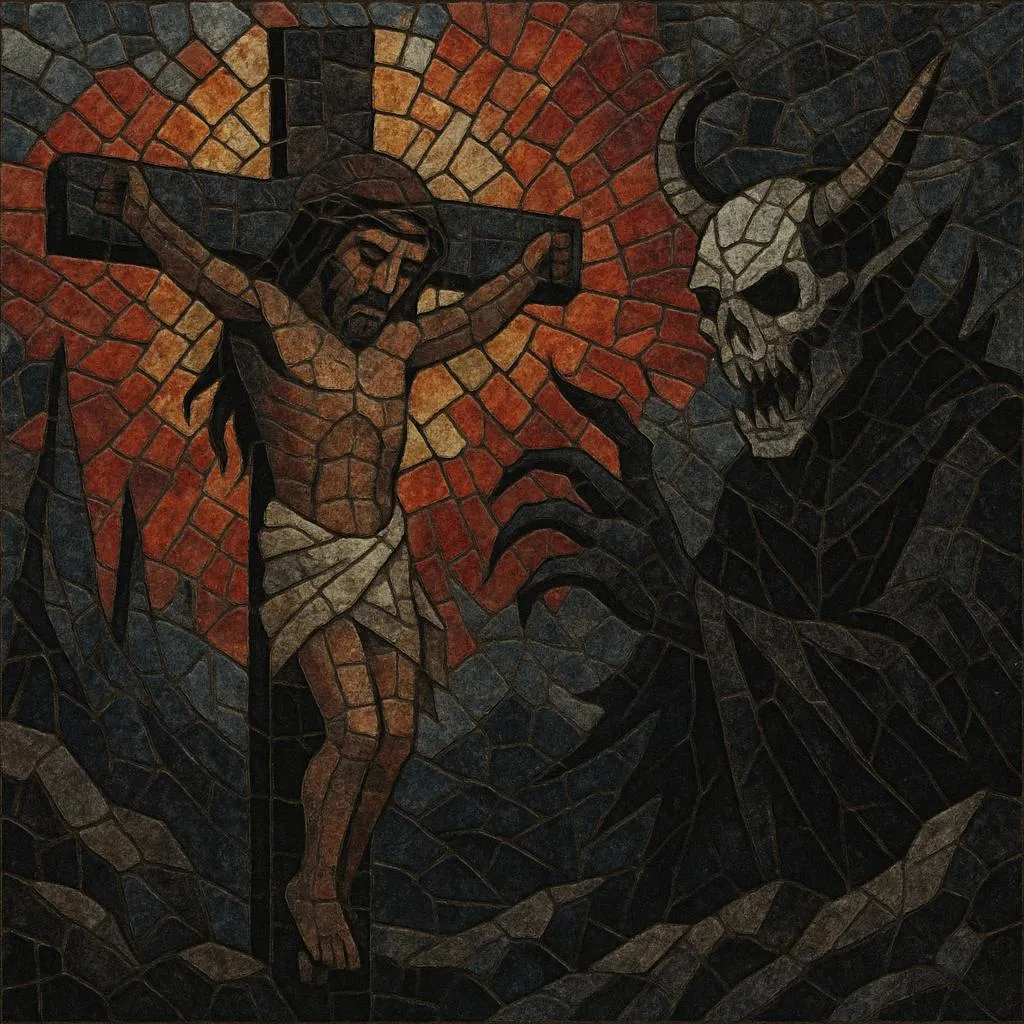
The result is a cathartic, aggressive sound that channels extremity toward messages of faith and perseverance, often creating a powerful juxtaposition between darkness in the timbre and light in the text.


History
Christian deathcore emerged in North America during the broader deathcore surge of the mid‑2000s. As deathcore itself crystallized out of metalcore and death metal, a subset of faith-based bands adopted the style’s sonic extremity but reframed its lyrical focus around Christian doctrine and testimony. Early touring circuits, church-affiliated venues, and independent metal ministries helped these acts find audiences that welcomed extreme music paired with explicitly Christian messages.
With the rise of social media platforms and specialized metal festivals, Christian deathcore bands began to gain visibility alongside secular peers. Labels and promoters who already supported Christian metal and metalcore incorporated the heavier deathcore-leaning acts, enabling national tours and international distribution. Hallmarks such as ultra-low tunings, pig-squeals/false-cord vocals, and theatrical breakdowns were paired with lyrics about grace, repentance, and spiritual warfare, making the juxtaposition a defining aesthetic.
Through the 2010s, the style diversified: some bands incorporated technical and progressive elements (odd meters, extended harmonies), while others leaned further into brutal or slam‑inflected approaches. Production standards rose—tight editing, layered screams, sub‑reinforced breakdowns—while live shows emphasized communal energy and ministry alongside the usual mosh‑centric intensity. Today, Christian deathcore remains a niche but stable lane within heavy music, supported by online communities, DIY networks, and faith‑based festivals.
The genre’s cultural significance lies in its inversion of expectations: using the most abrasive sounds in metal to articulate hope, accountability, and redemption. This tension—brutality of sound vs. uplift of message—continues to define its identity.