Your digging level
Description
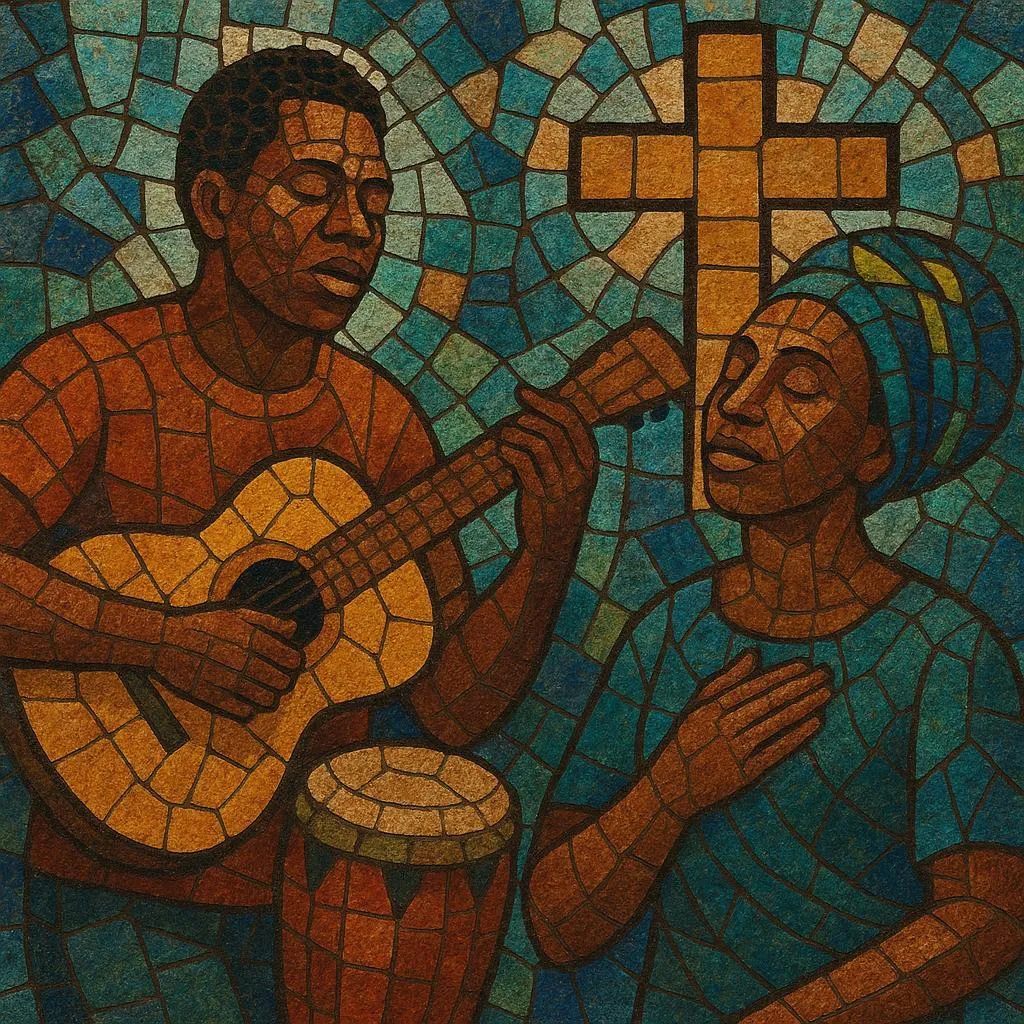
Christian Afrobeat is a faith-centered adaptation of Afrobeat/Afrobeats aesthetics that pairs syncopated West African grooves with explicitly Christian lyrics.
Built on buoyant drum-machine patterns, polyrhythmic percussion, rubbery bass lines, and bright highlife‑style guitars or synth stabs, the style keeps the dance floor energy of contemporary Afrobeats while foregrounding worship, testimony, and scriptural references. Vocals commonly switch between English, Nigerian Pidgin, and local languages, with catchy call‑and‑response hooks designed for congregational sing‑along as much as for radio play.
Sonically it is glossy and radio‑ready—808s, playful percussion (shekere, congas), shimmering guitar arpeggios, and melody‑led toplines—yet its message is overtly devotional: gratitude, praise, grace, and perseverance through faith.
History
Christian Afrobeat emerges from two parallel currents: the mainstream globalization of Afrobeats (the contemporary Nigerian/Ghanaian pop sound) and the steady growth of African gospel and contemporary Christian music across West Africa. As Afrobeats began to dominate regional airwaves in the late 2000s and early 2010s, gospel artists and church‑based music ministries adopted its rhythmic language to reach younger audiences while keeping overtly Christian messages.
Nigeria, with its massive urban youth populations and vibrant Christian music industry, became the genre’s epicenter. Producers adapted Afrobeats’ mid‑tempo bounce, highlife guitar riffs, and hook‑centric songwriting for praise settings, youth fellowships, campus ministries, and Christian concerts. Digital studios and affordable DAWs enabled a new cohort of singer‑songwriters and beat‑makers to craft radio‑friendly tracks that could sit alongside secular hits but remain lyrically grounded in scripture and testimony.
Streaming platforms, YouTube, TikTok, and cross‑continental collaborations amplified the sound beyond West Africa. Diaspora artists in the UK, Europe, and North America fused contemporary CCM and R&B sensibilities with Afrobeats production, creating a stylish hybrid that travels well across church spaces, festivals, and playlists. The style also helped catalyze adjacent Christian dance subgenres (e.g., gospel amapiano and gospel gqom) across southern Africa.
Today Christian Afrobeat serves as a bridge between congregational worship and urban pop culture—retaining the kinetic joy and community feel of West African dance music while delivering devotional content. Its success has encouraged churches and youth ministries to embrace contemporary African rhythms in worship sets, and it continues to evolve with amapiano log‑drums, drill inflections, and pop‑worship choruses.