Your digging level
Description
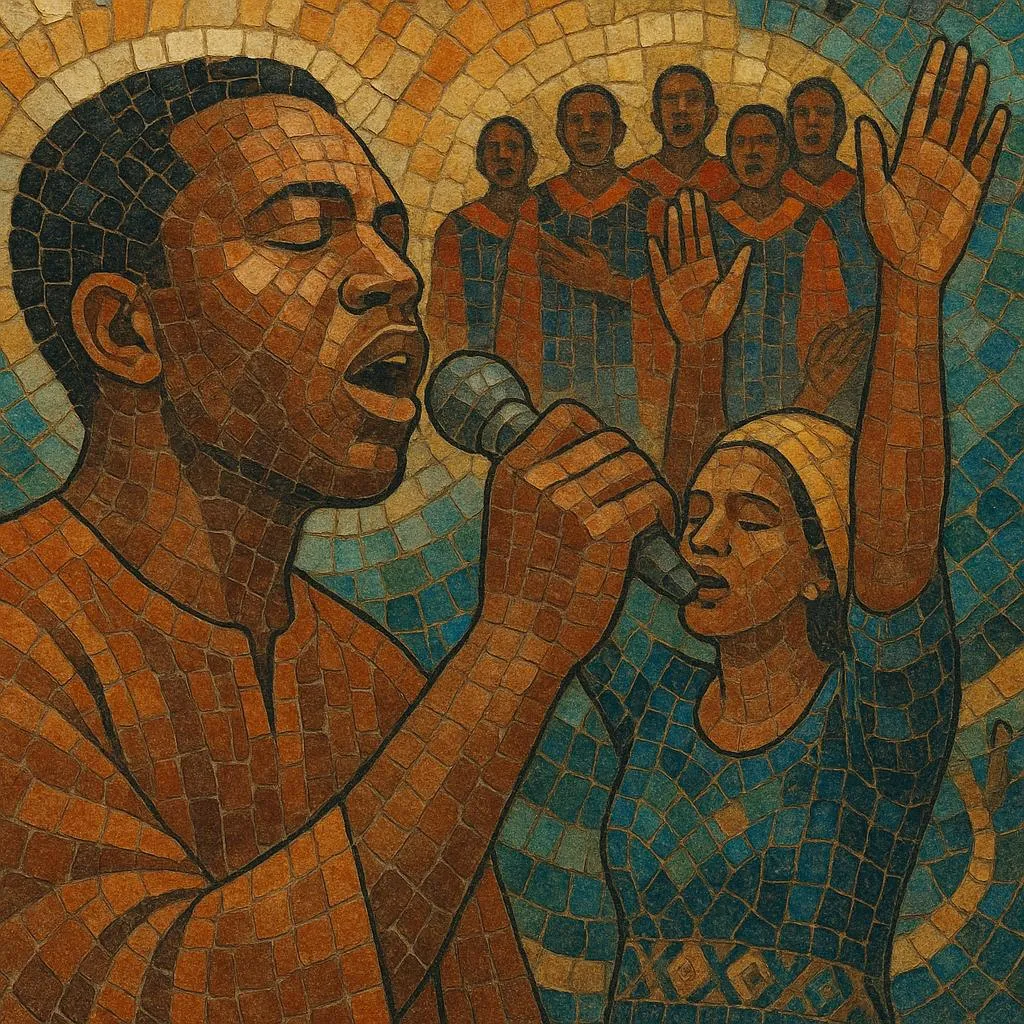
Naija worship is the contemporary Nigerian stream of Christian worship music that blends modern praise-and-worship songwriting with West African rhythmic sensibilities, local languages, and call-and-response congregational practice.
Built for live church settings as well as radio and streaming, it typically features soaring vocal leads, rich choral backing, devotional lyrics centered on adoration and testimony, and slowly building arrangements that crest in extended vamps. English often interweaves with Yoruba, Igbo, Hausa, and Nigerian Pidgin, while rhythm sections and percussion add a distinctly Nigerian pulse even in ballad tempos.
History
Nigerian gospel had already flourished through the 1990s, but the 2000s saw a distinct congregational “worship” wave take shape. Large Pentecostal/charismatic churches (e.g., RCCG, House on the Rock, Christ Embassy/LoveWorld) fostered in-house music ministries, professional bands, and recording pipelines. This institutional support, plus improving local studios, helped formalize a repertoire of slow-to-mid-tempo adoration songs designed for corporate singing and altar calls.
Through the 2010s, Naija worship refined a signature: piano- and pad-led ballads, expressive lead vocals, call-and-response with choirs, and climactic key changes. English lyrics intertwined with Yoruba/Igbo/Hausa refrains, anchoring songs in both global and local devotion. Mega-events like “The Experience” (Lagos) drew vast audiences and catalyzed collaboration across church networks, accelerating professionalization and export.
Streaming and social platforms carried Naija worship worldwide. Nigerian worship leaders began featuring on international stages and cross-continental collaborations, while global churches and choirs adopted Nigerian choruses. Production quality rose, mixing contemporary worship aesthetics with subtle Afrobeat/afropop percussive sway—making the sound accessible abroad while retaining indigenous identity.
Typical songs favor transparent theology (adoration, sovereignty, dependence on God) and uncomplicated melodies suited to congregations. Arrangements often build over long codas/vamps where spontaneous ("free") worship, call-and-response, and prayerful exhortation unfold. Behind the scenes, a vibrant ecosystem—church academies, music directors, live-recording crews, and faith-based media—sustains the genre.

![Calling My Name (I'm A Soldier) [Live]](https://i.scdn.co/image/ab67616d0000b273990e3e587421c1841eda64c9)