Your digging level

For this genre
0/8
🏆
Sign in, then listen to this genre to level up

Description

“Cambridge choir” refers to the collegiate chapel-choir tradition centered on the University of Cambridge, especially the choirs of King’s, St John’s, Trinity, Clare, and other colleges.

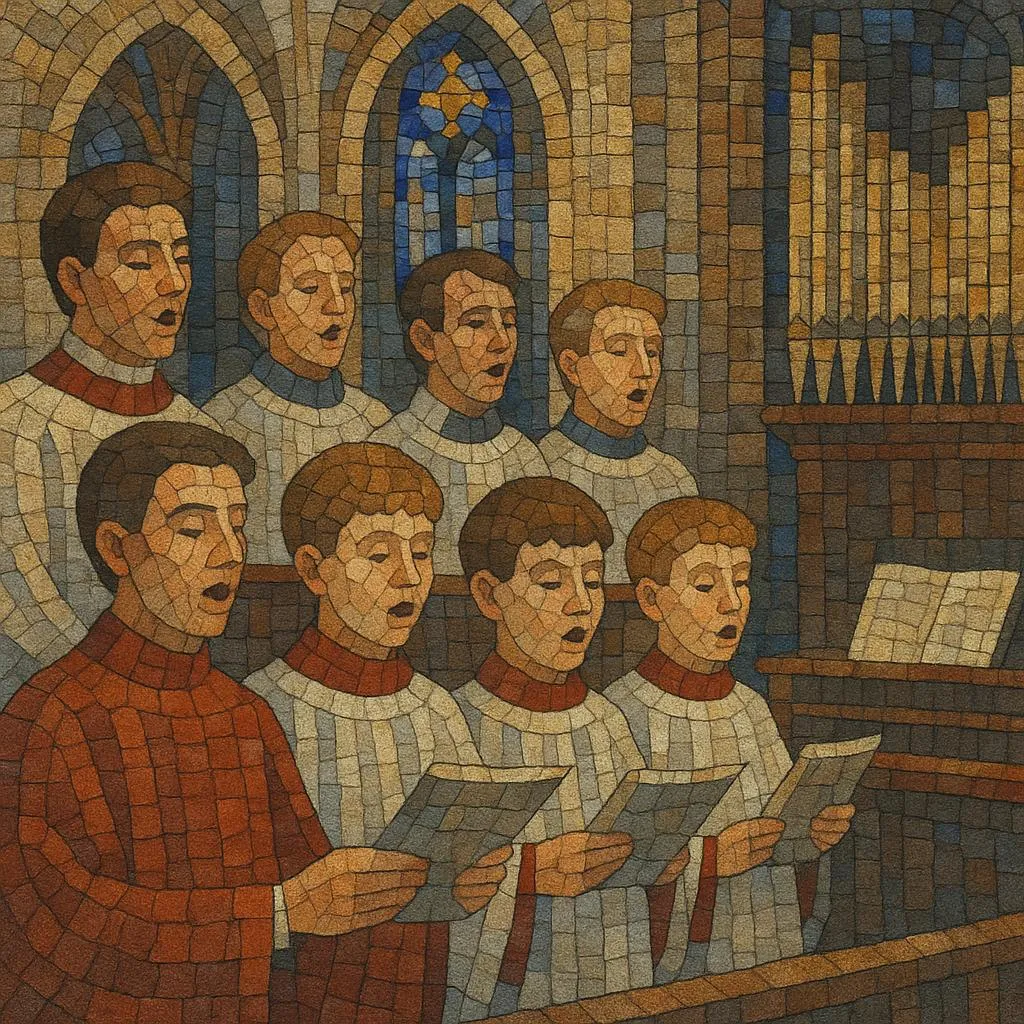
It is characterized by an exceptionally blended choral sound; a clear, pure treble line (historically boys, now often mixed or girls’ choirs too); disciplined straight-tone singing with expressive but economical vibrato; immaculate tuning and diction; and a repertoire that runs from late-medieval and Renaissance polyphony through Anglican service music, Romantic and 20th‑century English choral works, to newly commissioned pieces.

The sound-world is shaped by highly reverberant college chapels, refined organ accompaniment, and a liturgical performance context (especially Choral Evensong). The annual Festival of Nine Lessons and Carols at King’s College—broadcast worldwide—has made the Cambridge choral style synonymous with Christmas carol singing.

Sources: Spotify, Wikipedia, Discogs, RYM, MB, user feedback and other online sources

History

Medieval and Early Foundations
•   The Cambridge collegiate choral tradition traces back to the 15th century, notably with the foundation of King’s College (1441) and its chapel choir, conceived to sing the daily office. •   Early practice drew on plainchant and English polyphony, later embracing continental Renaissance techniques (Tallis, Byrd) that became core to the repertory and training of collegiate singers.
19th–Early 20th Century Consolidation
•   The Anglican choral revival and professionalization of cathedral/collegiate choirs in the 19th century standardized daily liturgical singing, psalm-chanting, and anthem/canticle cycles. •   Cambridge became a hub for English choral composition and pedagogy: C. V. Stanford (Professor of Music at Cambridge) and his students shaped the Edwardian/late-Romantic English choral idiom, later extended by composers such as Vaughan Williams and Herbert Howells (whose Collegium Regale canticles were written for King’s).
Broadcasting and the Global Profile
•   The Festival of Nine Lessons and Carols at King’s College (instituted in 1918; first BBC broadcast 1928) projected the Cambridge sound worldwide, cementing performance conventions for carol arrangements, descants, and organ accompaniment. •   From the mid‑20th century, choirs of St John’s, Trinity, Clare, and others undertook extensive discographies (EMI, Hyperion, Chandos, Collegium), defining benchmark interpretations of Renaissance polyphony and modern Anglican repertoire, and commissioning new works (e.g., Jonathan Harvey, John Rutter, Judith Weir, Robin Holloway).
Contemporary Practice
•   Cambridge choirs today are mixed (men & women), boys' or girls’ treble-led, and often maintain multiple ensembles (e.g., St John’s Voices, St Catharine’s Girls’ Choir), while sustaining rigorous liturgical schedules (Evensong) alongside tours and recordings. •   The style continues to evolve through commissions, historically informed performance of early music, and inclusive training (choral scholarships) that feed professional choral and conducting careers across the UK and abroad.

How to make a track in this genre

Ensemble and Forces
•   Write primarily for SATB choir with a prominent treble (soprano) line; depending on the college, this may be boys, girls, or mixed sopranos. •   Lower parts often feature countertenors (A), tenors (T), and basses (B); include organ accompaniment for Anglican canticles/anthems and allow for a cappella polyphony.
Harmony, Voice-Leading, and Texture
•   Favor modal or diatonic harmony enriched by gentle added tones; incorporate the English choral “glow” via close spacing in inner voices and careful doubling to support treble lines. •   Write long-breathed legato phrases; avoid excessive vibrato—Cambridge blend relies on straight-tone clarity with expressive shaping. •   For early music, employ imitative counterpoint and clear points of imitation; for modern works, use luminous cluster sonorities sparingly and maintain singable lines.
Text, Form, and Repertoire Types
•   Typical liturgical forms: Responses, Psalms (Anglican chant with pointed text), Magnificat & Nunc dimittis settings (Evensong), anthems, introits, and carols. •   English is standard for Anglican services; Latin is common for Renaissance works. Prioritize text declamation and intelligibility. •   For carols, craft memorable melodies, one or two contrasting verses, and a final-verse descant over a reharmonized organ texture.
Rhythm, Diction, and Acoustics
•   Keep tempi poised to suit a resonant chapel acoustic; allow phrase-ends to bloom without blurring consonants. •   Write in service of pristine diction (received-pronunciation inflection is typical); align consonant releases across parts.
Organ and Chapel Sound
•   Use organ to underpin tune and shape dynamics; write pedal points and registration cues that support treble brightness and choral crescendos. •   Exploit antiphonal effects (alternating choir halves) and spatial cadence points that suit reverberant spaces.
Rehearsal and Presentation
•   Provide clear notational cues for breaths, divisi, and cut-offs. Mark dynamics with fine gradations; Cambridge conductors prize micro-shaping of lines. •   Balance historical awareness (for Renaissance works) with modern precision; include optional descants and alternative verses to adapt for liturgy or concert.

Top tracks

Locked
Share your favorite track to unlock other users’ top tracks

Upcoming concerts

in this genre
Influenced by
Has influenced

Download our mobile app

Get the Melodigging app and start digging for new genres on the go
© 2026 Melodigging
Melodding was created as a tribute to Every Noise at Once, which inspired us to help curious minds keep digging into music's ever-evolving genres.
Buy me a coffee for Melodigging