Your digging level

For this genre
0/8
🏆
Sign in, then listen to this genre to level up

Description

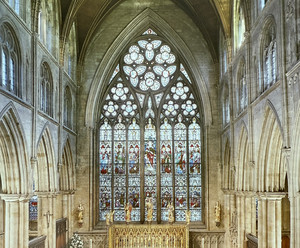
Anglican church music is music written for Christian worship in Anglican services, forming part of the liturgy.

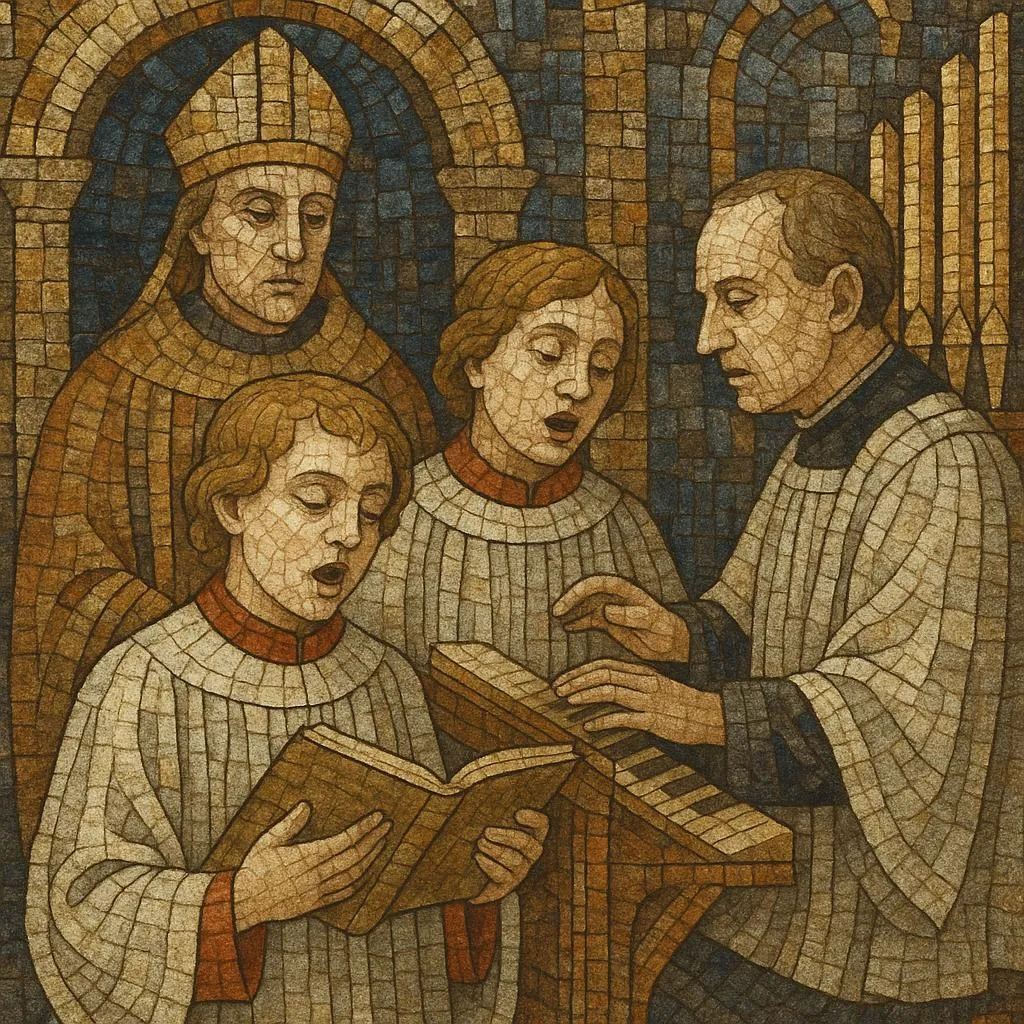
It is predominantly choral, sung by cathedral, collegiate, and parish choirs either a cappella or accompanied by the pipe organ. Core forms include settings of the canticles (e.g., Magnificat and Nunc dimittis for Evensong), Preces and Responses, service music for Holy Communion, anthems (full and verse), hymns, and psalmody (often to Anglican chant).

Stylistically, it spans from Tudor polyphony through Baroque verse anthems to Romantic and modern idioms, but it consistently prioritizes clear text declamation, singable lines for treble voices, and an acoustic that favors blended choral sonority.


Sources: Spotify, Wikipedia, Discogs, Rate Your Music, MusicBrainz, and other online sources

History

Origins (16th century)

Anglican church music emerged during the English Reformation in the 1500s, shaped by the Book of Common Prayer (1549) and the transition to worship in English. Early masterpieces by Thomas Tallis and William Byrd established models for service settings, anthems, and psalmody, drawing on late medieval plainchant and Renaissance polyphony while embracing intelligible text in the vernacular.

Tudor–Stuart consolidation

Composers such as Orlando Gibbons and Henry Purcell developed both the “full anthem” (for full choir) and the “verse anthem” (alternating solos with choir, often with organ or consort). The daily office of Matins and Evensong, as well as Holy Communion, generated a rich repertoire of canticles (Te Deum/Jubilate; Magnificat/Nunc dimittis) and Preces and Responses, defining Anglican liturgical sound.

Georgian–Victorian revival

In the 18th and 19th centuries, cathedral choirs and organs were restored and expanded. Samuel Sebastian Wesley advocated higher standards of church music, while John Stainer, Charles Villiers Stanford, Hubert Parry, and Charles Wood revitalized the anthem and service settings with Romantic harmony and strong melodic writing. Hymnody blossomed in parish life alongside cathedral traditions.

20th century to the present

Herbert Howells, Ralph Vaughan Williams, and Benjamin Britten enriched the idiom with modal color, pastoral harmony, and modern clarity. Broadcasts (e.g., the Festival of Nine Lessons and Carols) and organizations like the RSCM helped globalize the style across the Anglican Communion. Late-20th- and 21st‑century composers (e.g., John Rutter, John Tavener, Judith Weir, Cecilia McDowall, Roxanna Panufnik, James MacMillan) continue to add new Evensong canticles, anthems, and psalm settings, while many choirs now include girls’ and mixed treble lines alongside traditional boy trebles.

Core musical features

Across eras, Anglican church music emphasizes clarity of English text, singable treble-led textures, organ-supported resonance, and a balance of homophony for proclamation with polyphony for reflection—distinctive traits that make its choral sound both recognizable and enduring.

How to make a track in this genre

Forces and voicing
•   Write for SATB choir (often with divided parts). Treble lines may be sung by boys, girls, or mixed sopranos; altos may be boys, countertenors, or altos. •   Organ accompaniment is common; a cappella writing is equally idiomatic for Responses, motet-like anthems, and certain psalms.
Forms and liturgical functions
•   Evensong: compose Preces and Responses (short versicles/responses), and settings of the Magnificat and Nunc dimittis. Consider writing a set “in X” (e.g., “Collegium Regale”) with consistent tonal character. •   Holy Communion: set the Gloria, Sanctus/Benedictus, Agnus Dei (English or Latin), matching Anglican text rhythms. •   Anthem: choose a biblical or devotional text; a “full anthem” uses the full choir throughout; a “verse anthem” alternates solos/duets with choral responses, with organ interludes. •   Psalmody: point the text and set to Anglican chant (single or double); melodic reciting tone with cadential formulas that respect natural speech accents.
Harmonic and stylistic language
•   For Tudor/“cathedral” color, use modal harmony (Dorian/Mixolydian) and gentle false relations; for Romantic idiom, employ rich diatonicism with modal inflections and expressive suspensions; for modern idiom, keep tonal centers clear with occasional quartal or added‑note sonorities. •   Balance homophony (clear text) with polyphony (reflective commentary). Keep lines singable, with stepwise motion in trebles and supportive inner-voice counterpoint.
Texture, rhythm, and text underlay
•   Follow English prosody closely; align stresses with musical accents. Use varied note values to clarify punctuation and meaning. •   Write organ parts that support pitch and pacing: quiet registration under chant; fuller registrations for climaxes; tasteful interludes and Amens.
Practical tips
•   Compose with the acoustic in mind: sustained phrases, clear cadences, and registrational variety suit reverberant spaces. •   Provide idiomatic ranges, sensitive dynamics, and rehearsal-friendly part-writing. Offer optional descants and congregational hymn harmonizations to integrate choir and assembly.

Top tracks

Locked
Share your favorite track to unlock other users’ top tracks
Influenced by
Has influenced
Challenges
Digger Battle
Let's see who can find the best track in this genre

Download our mobile app

Get the Melodigging app and start digging for new genres on the go
© 2026 Melodigging
Melodding was created as a tribute to Every Noise at Once, which inspired us to help curious minds keep digging into music's ever-evolving genres.
Buy me a coffee for Melodigging