Your digging level
Description
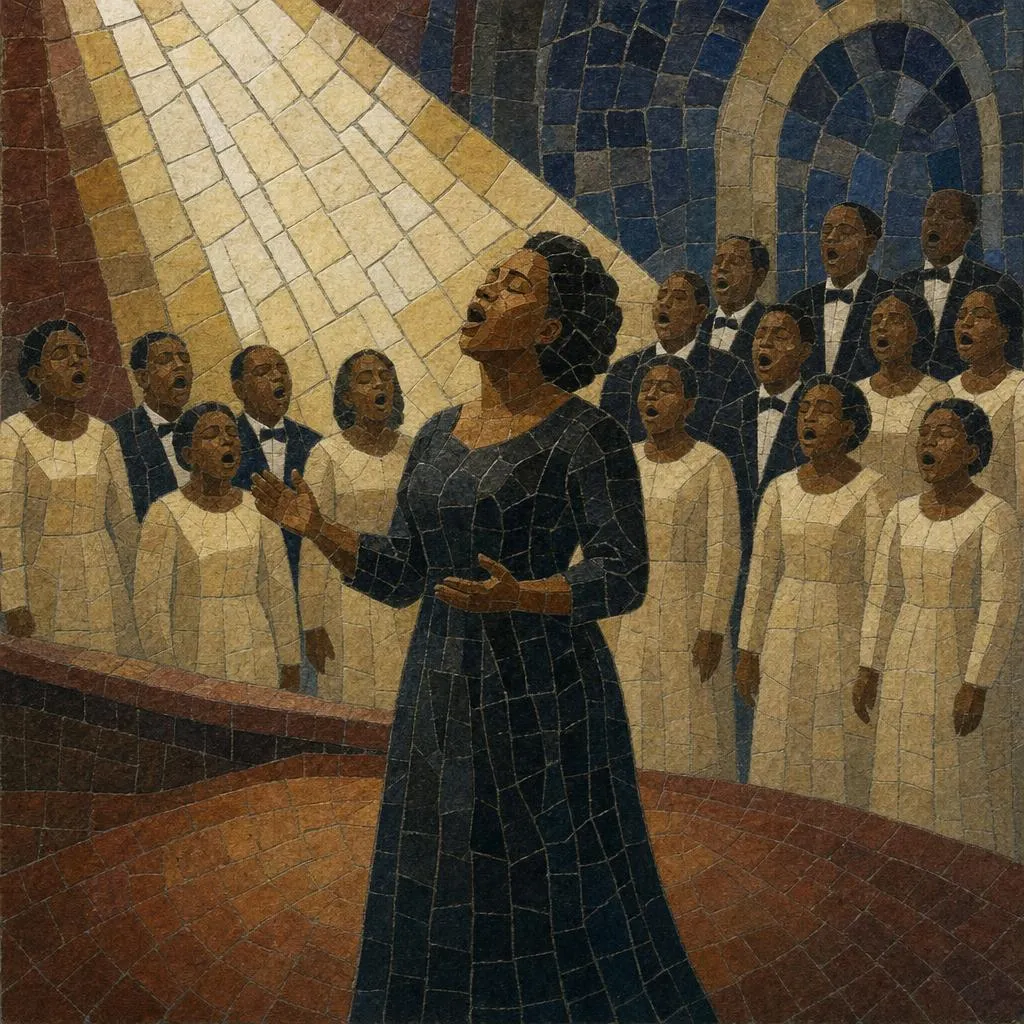
Concert spiritual is a staged or recital-based presentation style of African American spirituals developed for formal concert performance.
It transforms formerly communal, sacred, and often orally transmitted spiritual songs into arranged repertoire suitable for choirs, vocal ensembles, solo recital, and the concert hall.
The genre typically preserves the melodic and textual core of spirituals while adding composed harmonization, dynamic shaping, voice leading, and recital aesthetics drawn from classical and choral traditions.
Its sound can range from relatively plain, hymn-like settings to highly expressive art arrangements featuring dramatic contrasts, rich harmony, and disciplined ensemble singing.
Concert spiritual played a major role in bringing African American sacred folk repertoire to national and international audiences, especially through university jubilee and concert choirs.
History
Concert spiritual emerged in the late 19th century when African American spirituals began to move from worship, labor, and community contexts into formal public performance. The decisive turning point came with the success of arranged spiritual repertory performed by trained vocal ensembles, especially historically Black college and university groups.
A central milestone was the touring activity of the Fisk Jubilee Singers beginning in the 1870s. Their performances introduced spirituals to concert audiences in the United States and abroad, helping establish the idea that these songs could function not only as sacred folk expression but also as serious artistic repertoire.
As the repertoire entered recital and choral settings, arrangers began shaping spirituals for mixed choir, men's chorus, women's chorus, and solo voice with piano. These settings often combined elements of European harmonic practice with African American melodic phrasing, call-and-response traces, rhythmic flexibility, and deep textual expressivity.
By the early 20th century, composers and arrangers such as Harry T. Burleigh and later Hall Johnson, R. Nathaniel Dett, and William L. Dawson helped define the concert spiritual as a respected art form. Their work elevated spirituals in conservatory, church, and recital culture while preserving their emotional gravity and historical significance.
During the 20th century, concert spiritual became a major part of choral and solo vocal repertory. University choirs, Black church-trained singers, classical vocal recitalists, and touring ensembles all contributed to its spread.
The genre developed in two main directions: one toward polished choral arrangements for large ensembles, and another toward solo art-song interpretation, where spirituals were presented alongside classical repertoire in recitals. This dual identity helped secure the genre's place in both educational and professional performance contexts.
Concert spiritual remains an important bridge between folk sacred tradition and classical performance practice. It preserves spirituals as living repertoire while also carrying the memory of enslavement, resistance, faith, coded expression, and communal endurance.
Today the genre is especially significant in choral music, vocal pedagogy, Black musical history, and sacred performance traditions. It continues to be performed by choirs, gospel-rooted ensembles, and classical singers around the world.
Start with a traditional African American spiritual melody or write a melody modeled on that tradition.
The melody should feel singable, memorable, and spiritually direct. Strong phrases, repeated lines, and clear emotional focus are more important than complex ornamentation.
Treat the song as sacred, dramatic, and communal in spirit, even when arranging it for formal performance.
Use pentatonic-inflected or hymn-like melodic movement where appropriate, with expressive repetition and flexible phrasing.
Allow room for breath, rhetorical emphasis, and text painting. The line should sound natural when sung and should support both intimacy and emotional weight.
If arranging an existing spiritual, preserve the melodic identity rather than over-composing it.
Harmonize the melody with clear choral voice leading and strong cadences.
Triadic harmony is common, but richer late-Romantic color, suspensions, modal inflections, and expressive chromaticism may be added depending on the arrangement style.
Avoid making the harmony feel purely academic; it should support the spiritual intensity of the text and melody.
Keep the rhythmic profile grounded and singable.
Many concert spirituals use moderate rubato, stately pulse, march-like gravity, or subtle swing derived from folk practice. Syncopation can be present, but it is usually controlled rather than dance-dominant.
Contrast is important: alternate homophonic solidity with freer declamation, call-and-response textures, or climactic repetition.
The most common settings are:
• a cappella choir • choir with piano • solo voice with piano • vocal ensembleIn choral writing, use dynamic contrast between unison, block harmony, and divided parts.
Piano accompaniment should be supportive and expressive, often doubling, outlining harmony, or adding resonance without overshadowing the voice.
Texts usually center on faith, deliverance, suffering, hope, biblical imagery, journeying, freedom, and salvation.
If writing new lyrics in the style, keep them concise, image-rich, and spiritually direct. Repetition is highly effective.
Performers should prioritize diction, emotional sincerity, and historical awareness. The music should not sound detached; it should communicate testimony, lament, endurance, and hope.
Use disciplined vocal blend, careful dynamics, and a strong sense of textual storytelling.
Choirs should shape crescendos and releases with great care, and soloists should balance classical technique with speech-like immediacy.
The style works best when performers respect both its concert polish and its roots in African American sacred tradition.