Your digging level
Description
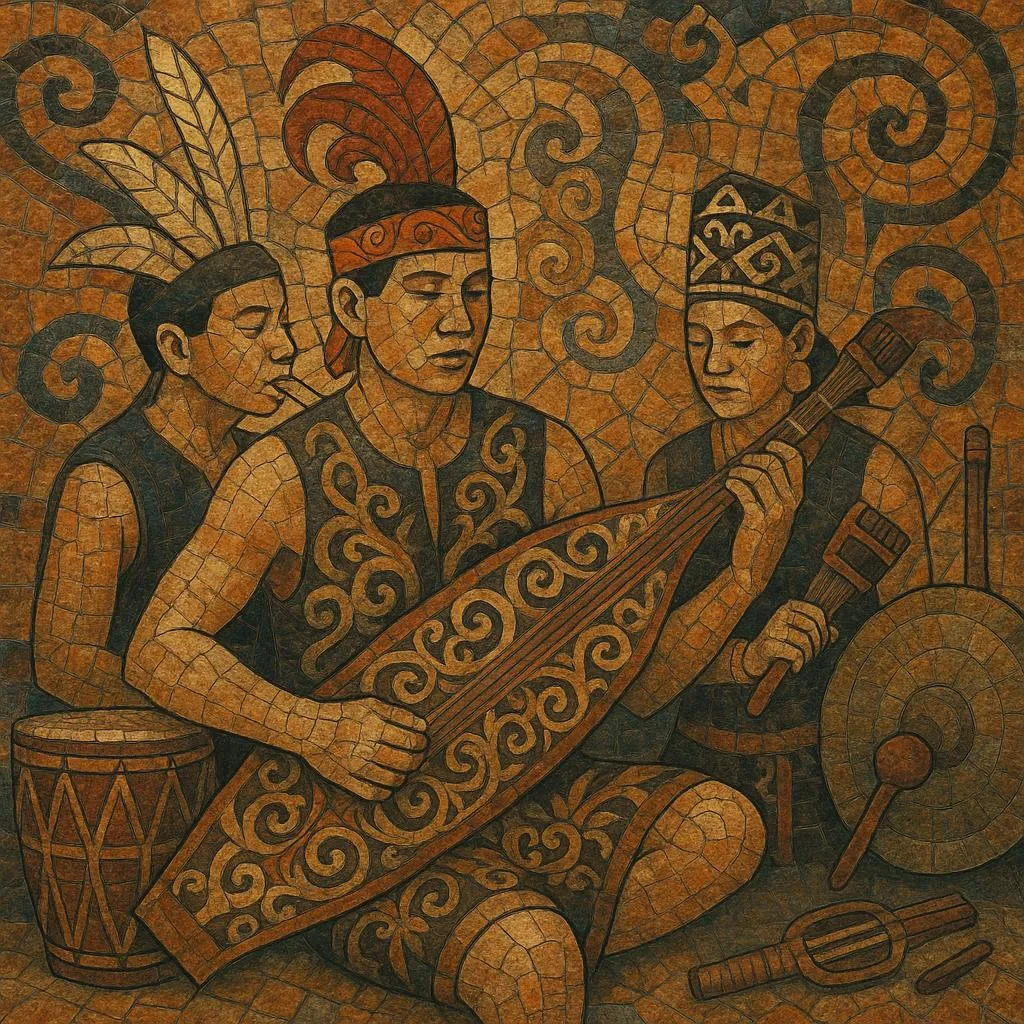
Borneo traditional is an umbrella term for the ritual, ceremonial, and community music of the island of Borneo—especially among Dayak and Orang Ulu peoples (Kenyah, Kayan, Penan, Iban), as well as Bidayuh, Kadazan-Dusun, Melanau, and Bruneian Malay communities.
Its most recognizable sound is the sape’ (a long-necked boat lute) playing pentatonic or heptatonic modes in hypnotic, cyclical patterns. Interlocking ensembles of bossed gongs (agung/agong, kulintangan), hand-played drums (gendang), bamboo idiophones (such as pratuokng), end-blown flutes (suling), mouth-organs (sompoton), and nose-flutes (turali) create layered textures for dance, trance, and storytelling.
Melody often unfolds in modal cells, rhythm ranges from free rubato to propulsive duple meters for communal dances, and timbre is warm, woody, and metallic. Music accompanies lifecycle rites, harvest festivals, healing, and warrior or welcoming dances, linking people, place, and ancestral cosmologies.
History
Borneo’s indigenous music predates written history and is embedded in animist cosmologies, longhouse life, and shifting cultivation cycles. Instruments such as the sape’, agung/kulintangan gongs, bamboo xylophones, and flutes supported healing rites, welcoming ceremonies, and dances like the Kenyah/Kayan datun julud and Iban ngajat. Music also served as oral record—carrying genealogies, migration histories, and moral instruction.
From the 16th–19th centuries, trade routes and court cultures around the Malay world brought new melodic turns and instruments, while later Christian and Muslim conversions added hymnody, paraliturgical repertoires, and new performance contexts. Despite missionization and schooling policies, village ensembles and ritual specialists continued transmitting core repertoires.
Urbanization and resource extraction in the mid–late 20th century threatened transmission. Beginning in the 1990s, cultural policy, heritage education, and world-music circuits catalyzed revival: master artists began teaching publicly, local and regional festivals showcased sape’ and gong traditions, and youth adapted forms for stage and recording.
Today, Borneo traditional lives in dual spheres: (1) community ritual and festival use, taught through apprenticeship and communal practice; (2) staged, studio, and hybrid settings, where sape’ and gong textures blend with contemporary harmony, production, and dance, extending the tradition without severing its roots.