Your digging level
Description
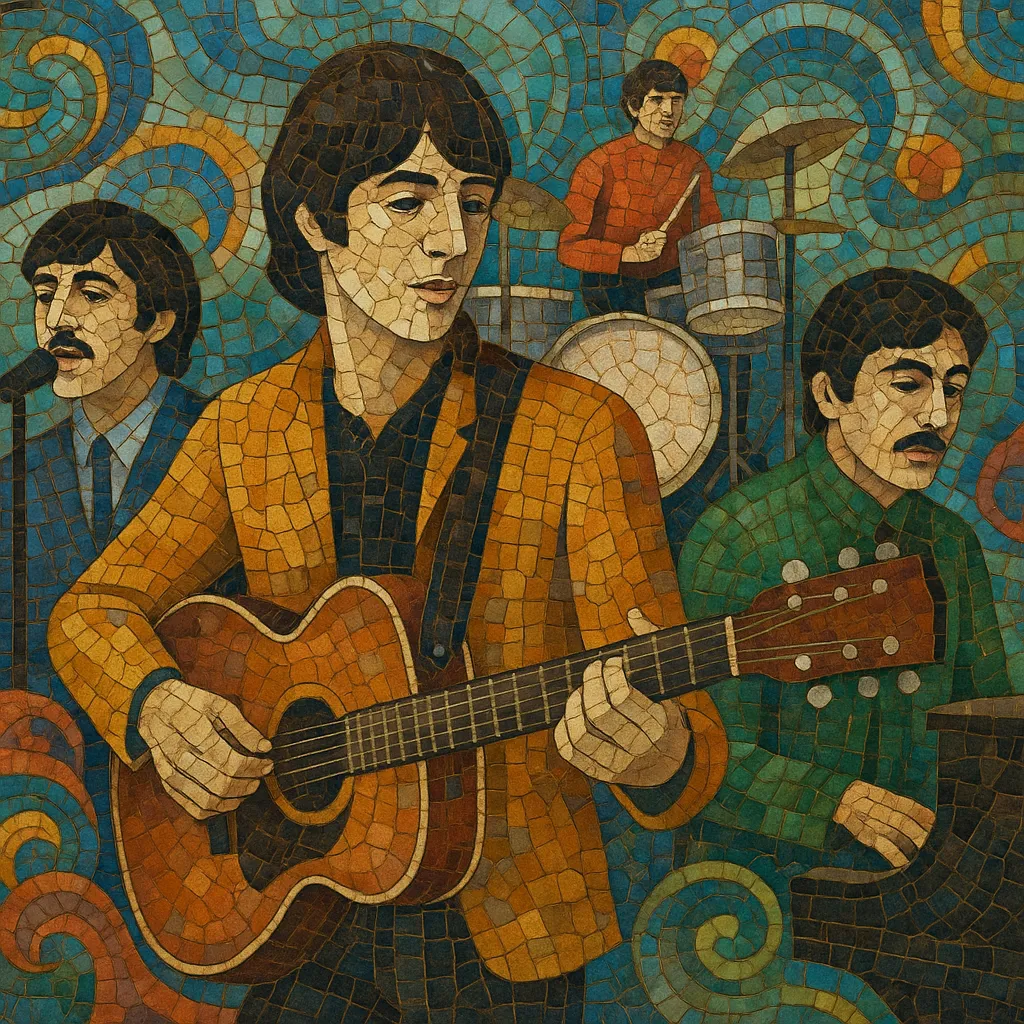
Beatlesque is a pop/rock descriptor for artists who emulate or extend the melodic craft, vocal blend, and studio imagination associated with The Beatles.
Typical hallmarks include tuneful, instantly memorable hooks; two- and three-part harmonies; a strong, melodic bass that often countermelodies the vocal; and concise song forms with distinctive bridges or "middle eights." Arrangements may feature jangly guitars, piano, handclaps, tambourine, string or horn pods, and occasional baroque or psychedelic colors (Mellotron, harpsichord, sitar-like guitar textures).
Harmonically, Beatlesque writing favors key surprises (borrowed iv in major, bVII, secondary dominants, quick tonicizations), deft modulations for the bridge or final chorus, and voice-leading that keeps chords moving smoothly. Production commonly nods to 1960s techniques: double-tracked vocals (ADT), tasteful compression, close-miked, tea‑towel drum tones, tape or varispeed effects, and playful sound design. Lyrically it ranges from romantic and everyday to witty, whimsical, and mildly surreal.
History
The sound we call "Beatlesque" begins with The Beatles themselves. Across 1963–1969 they fused rock and roll, beat music, Motown, music hall, baroque touches, and studio experimentation into a concise, hook-first pop language. Their songwriting signatures—memorable melodies, inventive bridges, clever chord turns, and rich harmonies—became a shared vocabulary for peers and followers.
After the breakup, artists explicitly building on that template gave the style clearer contours. Badfinger (on Apple Records), Emitt Rhodes, Big Star, and Electric Light Orchestra distilled Beatles-like melody, harmony, and production sheen. Critics increasingly used the term "Beatlesque" to flag these affinities, while studio craft (ADT-like doubling, string quartets, Mellotron) became shorthand for the aesthetic.
The language spread through smart guitar-pop and artful indie: XTC and Squeeze folded in baroque and psychedelic pop moves; Jellyfish revived technicolor arrangements; and Britpop acts—most famously Oasis—recentered big choruses, Lennon/McCartney-style contrasts, and retro-modern production. Chamber-pop and jangle-pop scenes embraced strings, close harmonies, and jangly Rickenbacker textures.
Beatlesque writing persists wherever songcraft is prized. Fountains of Wayne, Teenage Fanclub, and Klaatu (earlier) kept the flame, while newer psych-pop and indie-pop acts borrow both harmonic playfulness and production cues (tape saturation, varispeed, Mellotron plugins). The term now denotes a set of melodic, harmonic, and arrangement habits rather than a single scene, remaining a benchmark for tuneful, sophisticated pop.