Your digging level

For this genre
0/8
🏆
Sign in, then listen to this genre to level up

Description

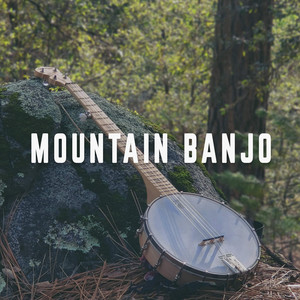
Banjo music is music in which the banjo is the primary or exclusive focus—either as a solo instrument or featured prominently within an ensemble.

It spans solo classical-style repertoire, old-time clawhammer pieces, bluegrass three‑finger breakdowns, folk ballad accompaniment, and tenor‑banjo rhythm in early jazz. Any type of banjo can be used (five‑string, four‑string/tenor, plectrum, six‑string guitar‑banjo, open‑back, or resonator), and the style may involve either fingerpicking or flatpicking.

Across its many substyles, banjo music is unified by characteristic timbre (a bright, percussive attack with rapid decay), idiomatic rolls or frailing patterns, and strong dance‑derived rhythms.


Sources: Spotify, Wikipedia, Discogs, RYM, MB, user feedback and other online sources

History

Origins (17th–19th centuries)

The banjo has roots in West African lutes (such as the akonting and ngoni). Enslaved Africans brought these traditions to the Caribbean and the United States, where gourd‑bodied, skin‑headed banjo ancestors appeared by the 18th century. By the early 1800s, the banjo spread beyond Black communities through minstrelsy, entering commercial stages and household parlors.

Classic banjo and parlor eras (mid‑1800s–1910s)

In the late 19th century, a notated “classic banjo” repertoire (often fingerstyle on gut strings) flourished alongside parlor and ragtime idioms. Four‑string (tenor and plectrum) banjos rose in popularity, becoming rhythm and chord instruments in dance bands and early jazz (Dixieland).

Old‑time and early country (1900s–1930s)

In the Appalachian region, the five‑string banjo was central to old‑time music. Clawhammer/frailing techniques accompanied fiddle tunes and ballads, laying the rhythmic and melodic foundation for later country styles. Recording technology helped circulate regional banjo traditions nationwide.

Bluegrass revolution (1940s–1960s)

Earl Scruggs popularized a driving three‑finger style (forward/backward rolls, syncopated accents) within Bill Monroe’s Blue Grass Boys, transforming banjo music’s speed, precision, and ensemble role. Don Reno and later Bill Keith expanded single‑string and melodic techniques.

Folk revival and beyond (1950s–1970s)

Pete Seeger’s long‑neck banjo and accessible teaching brought the instrument to a mass audience, linking banjo music to protest song, urban folk scenes, and global tours. Tenor banjo traditions also evolved in Irish dance music.

Newgrass, jazz, and crossovers (1980s–present)

Artists like Béla Fleck, Tony Trischka, and Alison Brown pushed banjo into jazz, classical, world, and experimental contexts—while old‑time and bluegrass communities deepened traditional practice. Today, banjo music thrives from solo recital halls to string‑band festivals, Irish sessions, and genre‑blurring projects.

How to make a track in this genre

Instruments and setup
•   Choose the banjo type that matches your substyle: five‑string open‑back (old‑time), five‑string resonator (bluegrass), tenor or plectrum (Dixieland/Irish), long‑neck (folk). •   Common tunings: gDGBD (Open G), gDGCD (Sawmill/Modal), gCGCD (Double C; capo 2 for Double D), aDADE (Old‑time D), CGDA or GDAE for tenor banjo. •   Set head tension for clarity and sustain; use fingerpicks (bluegrass) or bare nails (clawhammer). Spikes/capo help reach A/B or D/E quickly.
Technique and rhythm
•   Old‑time: Use clawhammer (down‑stroke) with “bum‑ditty” or “bump‑a‑dit‑ty” patterns; emphasize melody on downstrokes and add brush/thumb‑fifth‑string drones. •   Bluegrass: Develop three‑finger rolls (forward, backward, alternating), syncopation, and drive; incorporate slides, hammer‑ons, pull‑offs, chokes. Learn single‑string and melodic (Keith‑style) passages for fiddle tunes. •   Tenor/plectrum: Use flatpick strums and chord melody for 2‑beat or 4‑beat swing in early jazz, or triplet ornaments in Irish dance tunes.
Harmony, melody, and form
•   Start with I–IV–V progressions; modal pieces often center on Mixolydian or Dorian. •   Old‑time and Irish tunes often follow AABB (16 or 32 bars). Bluegrass arrangements cycle vocal verses/choruses with instrumental “breaks.” •   Write idiomatic melodies that use open strings, fifth‑string drones, and position shifts for brightness.
Arrangement and ensemble
•   String band core: banjo, fiddle, guitar, mandolin, upright bass (optional: dobro). Trade leads and keep strong backbeat or boom‑chuck. •   Jazz/tenor settings: lock with bass and drums; provide steady comping and chord‑melody fills.
Lyrics and storytelling
•   If adding vocals, favor narrative ballads, work songs, and rural themes (old‑time/folk), or tight, high‑energy choruses (bluegrass). Keep phrasing clear over driving banjo patterns.
Recording tips
•   Mic the banjo near the head–neck junction with a small‑diaphragm condenser; add a second mic off the rim for body. Control brightness with mic angle and head tension; avoid excessive compression to keep transients alive.

Top tracks

Locked
Share your favorite track to unlock other users’ top tracks

Upcoming concerts

in this genre
Influenced by
Has influenced

Download our mobile app

Get the Melodigging app and start digging for new genres on the go
© 2026 Melodigging
Melodding was created as a tribute to Every Noise at Once, which inspired us to help curious minds keep digging into music's ever-evolving genres.
Buy me a coffee for Melodigging