

Your digging level
Description
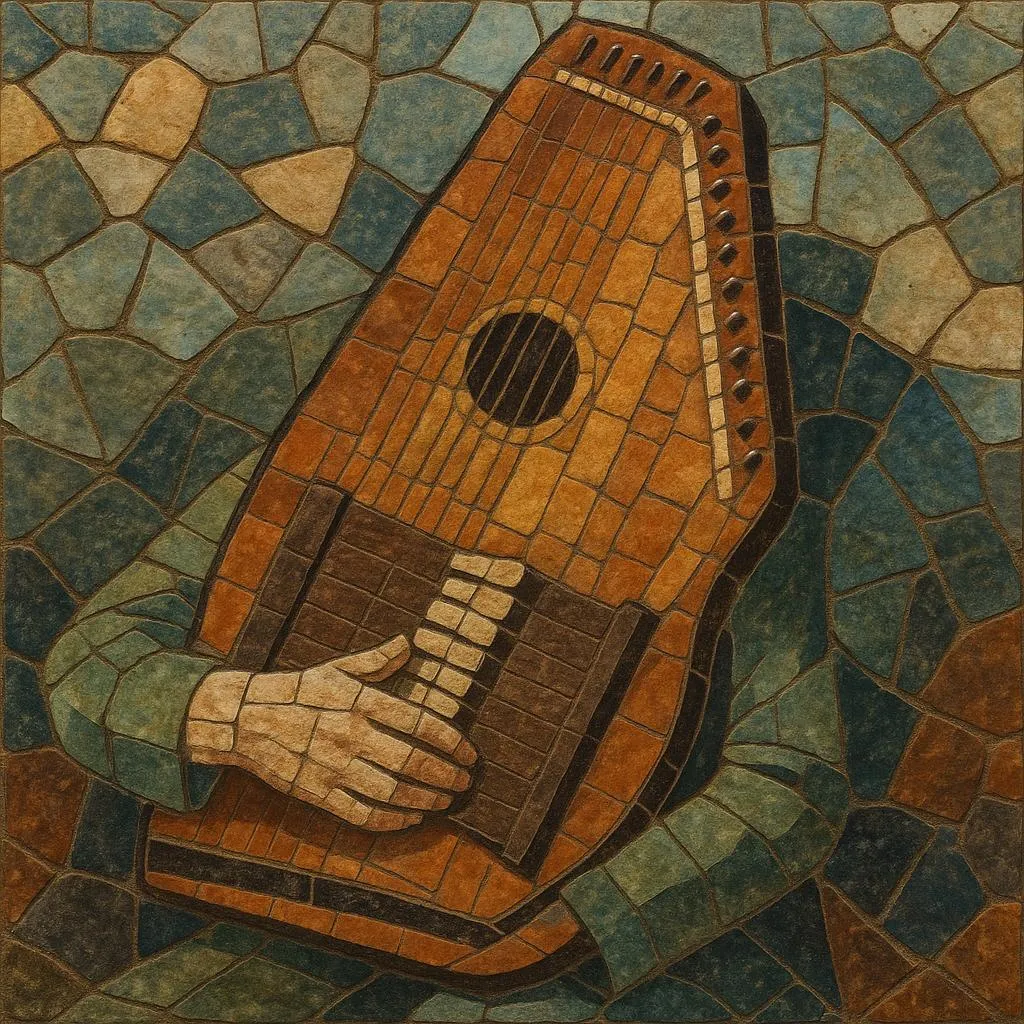
Autoharp is both an instrument-centered style and a performance tradition within American folk, country, and old-time music built around the zither-like autoharp and its chord bars. In this genre, the characteristic sound comes from damping all but a chosen chord with felt bars, then strumming or picking to produce a shimmering, bell-like accompaniment or a chord-melody lead.
Common contexts include solo singing with autoharp, small acoustic ensembles with guitar, fiddle, and banjo, and gospel or parlor-style hymn singing. The harmonic language is diatonic and triadic (I–IV–V, with occasional ii and vi), the rhythms are usually 2/4, 3/4, or 4/4, and arrangements favor clear melody lines supported by gently rolling or brushed chords.
History
The autoharp was patented in the United States in the 1880s and quickly became a popular parlor and school instrument because it made chordal accompaniment accessible to non-specialists. By the 1890s–1900s, it appeared in community singing, gospel hymnody, and early rural string-band settings across the American South and Midwest.
As commercial recording took off, Appalachian and old-time artists integrated the autoharp into ballads, hymns, and breakdowns. Members of seminal family groups used it to provide steady rhythmic strums and chordal pads that supported narrative singing, helping to define a gentle, home-spun counterpart to the brighter timbres of fiddle and banjo.
During the mid-century folk revival, the autoharp re-emerged as a featured lead instrument. Innovators developed right-hand techniques—brush-strums, arpeggiated rolls, and drag-notes—that allowed chord-melody playing and more fluid accompaniment. The instrument became a staple of coffeehouse folk, educational programs, and festival workshops, cementing an identifiable "autoharp style" within the broader folk ecosystem.
Luthiers expanded chord-bar layouts and pickup options, enabling chromatic sets and stage-ready amplification. Today, the autoharp thrives in acoustic roots scenes, gospel and hymn sings, and singer-songwriter contexts. Festivals and contests celebrate regional techniques and repertoire, while contemporary artists apply the instrument’s luminous chord beds to Americana, indie folk, and devotional music.




