Genres
Artists
Albums
Make Music
Sign in
Sign in
Artists
Exotica
Artists
Exotica
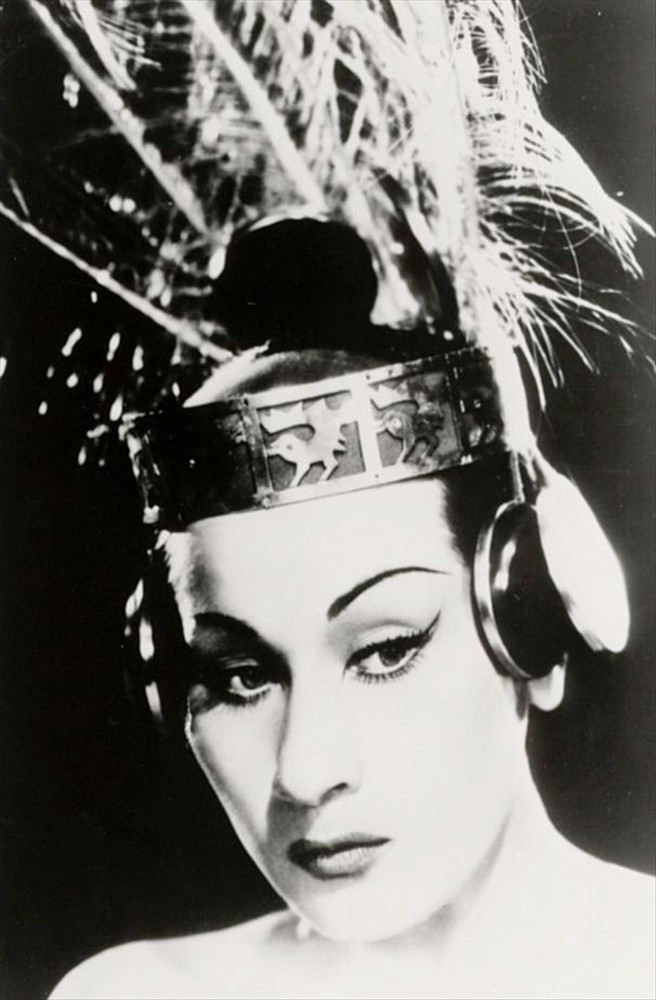
Yma Sumac
1952–2007
·
6 albums
Listen
2
/5
Genres
Nyc Pop
NYC pop is a contemporary, hook-forward strain of alternative pop centered on artists living and working in New York City. It blends the sheen of electropop and dance-pop with the songwriting sensibilities of indie pop and indie rock, often pairing bright synths, rhythmic guitars, and punchy drums with large, chantable choruses. Lyrically, it frequently references urban life, ambition, relationships, and self-discovery, capturing the speed, romance, and pressure-cooker energy of the city. Production is glossy but retains an indie edge: live instruments sit beside modern electronic textures, with crisp vocal stacking and ear-catching toplines designed for both radio and festival stages.
Discover
Listen
Exotica
Exotica is a mid‑century style of mood music that blends jazz harmony, easy‑listening orchestration, and a collage of global percussion and timbral signifiers meant to evoke imaginary tropical, Polynesian, Asian, African, and Latin locales. Characterized by vibraphone and marimba leads, lush strings, woodwinds, wordless vocals, bird calls, gongs, and abundant reverberation, it creates a cinematic “armchair travel” experience. Rather than documenting specific traditions, exotica assembles stylized sound cues—Afro‑Cuban grooves, Polynesian drum patterns, pentatonic and whole‑tone colors—into atmospheric mini‑dramas. The genre flourished alongside postwar tiki culture and hi‑fi/stereo demonstrations, prioritizing vivid spatial staging and evocative orchestration over virtuoso soloing.
Discover
Listen
Lounge
Lounge music is a style of easy listening designed to evoke a sense of place and atmosphere—tropical islands, jungles, elegant cocktail bars, or even outer space. It prizes a chilled, urbane mood achieved through light instrumentation, lush arrangements, and crooning or wordless vocals. Rooted in earlier light music and crooner traditions, classic lounge blossomed in the 1950s and 1960s alongside hi‑fi and stereo “space age” culture. It draws from Dixieland and small‑combo jazz, Latin dance rhythms (mambo, cha‑cha, bossa inflections), novelty/gimmick songs, and occasional experimental studio techniques. The spectrum ranges from exotica and beautiful‑music instrumentals to suave, jazzy vocal numbers—and in modern eras, it can intersect with downtempo and electronica while keeping its retro, escapist ambiance.
Discover
Listen
Space Age Pop
Space age pop is a mid‑century style of highly produced “hi‑fi” lounge and easy listening that embraced postwar futurism, stereo spectacle, and exotic color. It blends plush orchestras, jazz harmonies, and Latin/"exotica" percussion with novel timbres such as vibraphone, celeste, theremin, ondes Martenot, and early electronic/echo effects. Arrangers focused on dazzling stereo staging, crisp percussion, and sparkling instrumental details meant to show off new home sound systems. Melodies are tuneful and sophisticated, harmonies are rich (9ths, 11ths, 13ths), and rhythms often draw from mambo, cha‑cha‑cha, and bossa‑tinged grooves. The mood ranges from dreamy and romantic to playful and futuristic—an aural image of the “Jet Age,” tiki bars, and optimistic science fiction.
Discover
Listen
Easy Listening
Easy listening is a lush, melodic, and unobtrusive style of popular orchestral music designed to be pleasant in the foreground and effortless in the background. It favors smooth textures, lyrical melodies, and gentle rhythms over virtuosic display or dense complexity. Typical arrangements feature string sections, woodwinds, soft brass, vibraphone, harp, piano, subtle Latin or light swing percussion, and sometimes wordless choirs. Repertoire often consists of standards, film and television themes, and instrumental covers of contemporary hits, presented with polished studio production and wide stereo imaging. The mood ranges from romantic and sentimental to breezy and exotic, prioritizing warmth, clarity, and relaxed pacing. Improvisation, if present, is restrained, with harmony that leans on jazzy extensions while staying consonant and approachable.
Discover
Listen
Pop
Pop is a broad, hook-driven style of popular music designed for wide appeal. It emphasizes memorable melodies, concise song structures, polished vocals, and production intended for radio, charts, and mass media. While pop continually absorbs elements from other styles, its core remains singable choruses, accessible harmonies, and rhythmic clarity. Typical forms include verse–pre-chorus–chorus, frequent use of bridges and middle-eights, and ear-catching intros and outros. Pop is not defined by a single instrumentation. It flexibly incorporates acoustic and electric instruments, drum machines, synthesizers, and increasingly digital production techniques, always in service of the song and the hook.
Discover
Listen
Mambo
Mambo is a Cuban dance music style that crystallized in the late 1930s from danzón and son montuno, then exploded internationally in the 1940s and 1950s. It is characterized by layered syncopations under the Afro‑Cuban clave, driving bass tumbaos, piano montunos, and powerful antiphonal horn riffs known as moñas or "mambo" sections. In its classic big‑band form, mambo blends Cuban rhythmic vocabulary with jazz and swing arranging, featuring trumpets, trombones, and saxophones over a rhythm section of congas, bongos, timbales, cowbell, bass, and piano. The result is high‑energy, riff‑driven music built for social dancing and floor‑filling excitement.
Discover
Listen
Folk
Folk is a song-centered acoustic tradition rooted in community storytelling, everyday life, and social history. It emphasizes clear melodies, simple harmonies, and lyrics that foreground narrative, protest, and personal testimony. As a modern recorded genre, folk coalesced in the early-to-mid 20th century in the United States out of older ballad, work song, and rural dance traditions. It typically features acoustic instruments (guitar, banjo, fiddle, mandolin, harmonica), strophic song forms, and participatory singing (choruses, call-and-response).
Discover
Listen
Jazz
Jazz is an improvisation-centered music tradition that emerged from African American communities in the early 20th century. It blends blues feeling, ragtime syncopation, European harmonic practice, and brass band instrumentation into a flexible, conversational art. Defining features include swing rhythm (a triplet-based pulse), call-and-response phrasing, blue notes, and extended harmonies built on 7ths, 9ths, 11ths, and 13ths. Jazz is as much a way of making music—spontaneous interaction, variation, and personal sound—as it is a set of forms and tunes. Across its history, jazz has continually hybridized, from New Orleans ensembles and big-band swing to bebop, cool and hard bop, modal and free jazz, fusion, and contemporary cross-genre experiments. Its influence permeates global popular and art music.
Discover
Listen
Cuban Music
Cuban music is the rich, syncretic musical tradition of Cuba, shaped by the meeting of Spanish/European song forms and West/Central African rhythms. Its heartbeat is the clave—a two-measure rhythmic cell (3–2 or 2–3) that organizes percussion, melody, and harmony across styles. From the contradanza and habanera of the 19th century to danzón, rumba, and son cubano in the early 20th century—and later mambo, cha-cha-chá, nueva trova, songo, and timba—Cuban music has continually reinvented itself while retaining its core Afro‑Cuban rhythmic language. Typical instruments include the tres (Cuban guitar), bongó, congas, timbales, güiro, maracas, cowbell, bass, piano (playing guajeos/montunos), and bright horn sections. Beyond the island, Cuban music has profoundly influenced global popular music—fueling the rise of salsa and Latin jazz and reshaping dance music worldwide—while continuing to honor deep connections to Yoruba/Lukumí religious drumming and Spanish lyrical traditions.
Discover
Listen
Peruvian Music
Peruvian music is a richly syncretic umbrella that blends Indigenous Andean traditions, Spanish/Iberian song and dance forms, and West/Central African rhythms and instruments brought during the colonial era. Across Peru’s diverse regions, coastal música criolla (e.g., valses and marinera) emphasizes guitars, intricate strumming, and poetic décimas; Afro‑Peruvian styles (festejo, landó) center on polyrhythms, call‑and‑response, and hallmark percussion such as the cajón, cajita, and quijada de burro; highland Andean genres (huayno, harawi, yaraví, huaylarsh) foreground quena and zampoña (siku) flutes, charango, harp, and pentatonic melodies; and the Amazon basin pioneered psychedelic/organ‑driven cumbia amazónica and later chicha—electrified hybrids that carry Andean melody into an urban dance setting. Performed in Spanish and Indigenous languages (Quechua, Aymara, and Amazonian tongues), Peruvian music moves between communal dance, ritual functions, and intimate song, balancing nostalgia and celebration with rhythmic vitality.
Discover
Listen
Indigenous Andean Music
Indigenous Andean music refers to the ceremonial, communal, and dance music of Quechua, Aymara, and other native peoples of the Andean highlands of present-day Peru, Bolivia, Ecuador, northern Chile, and northwestern Argentina. It is characterized by panpipe ensembles (siku/zampoña, antara), end-blown flutes (quena, pinkillu), block flutes (tarka), large double-headed drums (wankara/bombo), and—since the colonial period—the charango. Ensembles often play in interlocking pairs (ira/arca), creating hocketed melodies, dense heterophony, and a powerful collective sound suitable for processions and open-air festivals. Melodically, pentatonic and hexatonic scales are common, with flexible, non-equal-tempered tunings. Rhythms favor duple meters (2/4) and 6/8 feels, with frequent sesquialtera (3:2) interplay that drives circle and line dances. Vocals tend toward group singing, call-and-response, and timbres that prioritize projection in outdoor contexts. The music is inseparable from agricultural cycles, community identity (ayllu), and ritual calendars.
Discover
Listen
Show all 12 genres
Albums
2007
1
/5
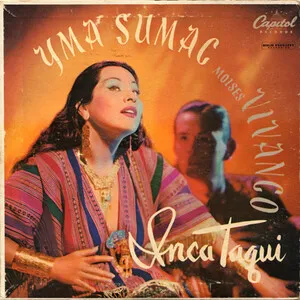
Inca Taqui
Yma Sumac & Moises Vivanco
Exotica
Indigenous Andean Music
1996
1
/5
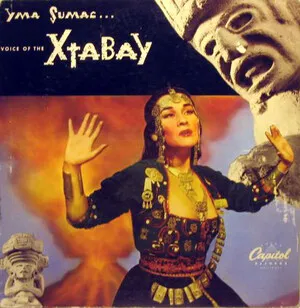
Voice of the Xtabay
Yma Sumac
Exotica
Folk
Jazz
1959
2
/5
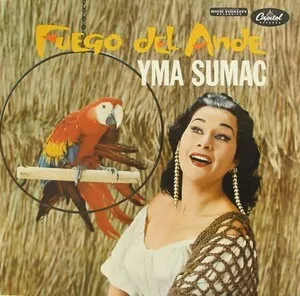
Fuego del Ande
Yma Sumac
Peruvian Music
1957
1
/5
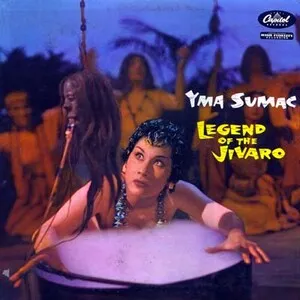
Legend of the Jivaro
Yma Sumac
Exotica
1954
2
/5
Mambo!
Yma Sumac
Mambo
Exotica
Easy Listening
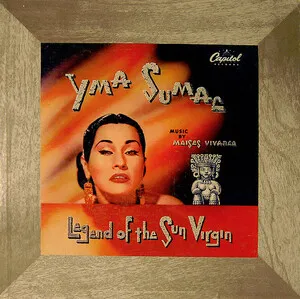
1952
1
/5
Legend of the Sun Virgin
Yma Sumac
Exotica
Similar artists
3
/5
Les Baxter
Exotica
Light Music
Adult Standards
3
/5
Pérez Prado
Mambo
Space Age Pop
Latin Jazz
2
/5
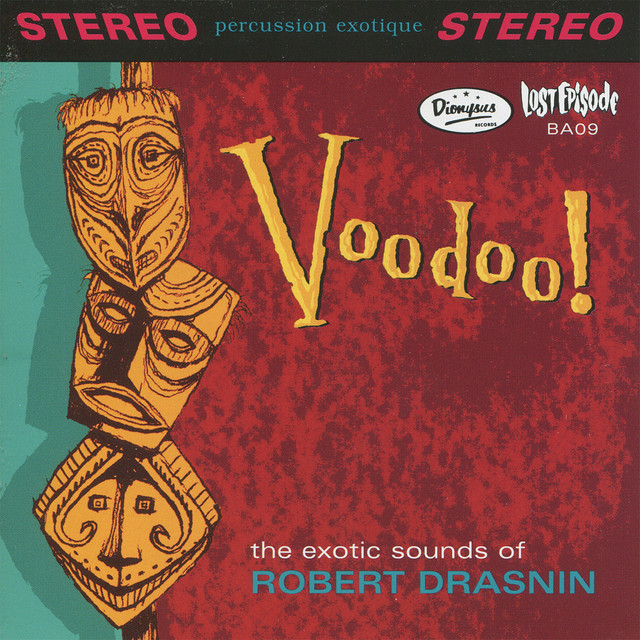
Robert Drasnin
Exotica
Lounge
Space Age Pop
2
/5
Xavier Cugat
Rumba Cubana
Rhumba
Rumba
2
/5
Esquivel!
Space Age Pop
Lounge
Adult Standards
3
/5
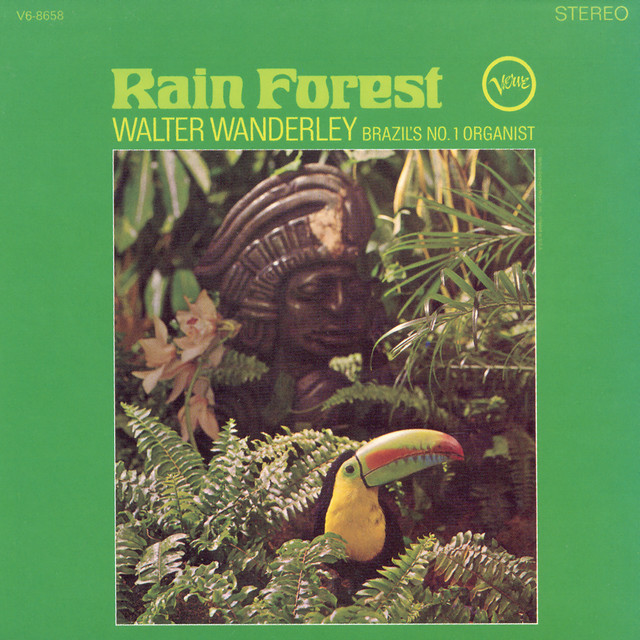
Walter Wanderley
Bossa Nova
Space Age Pop
Brazilian Jazz
3
/5
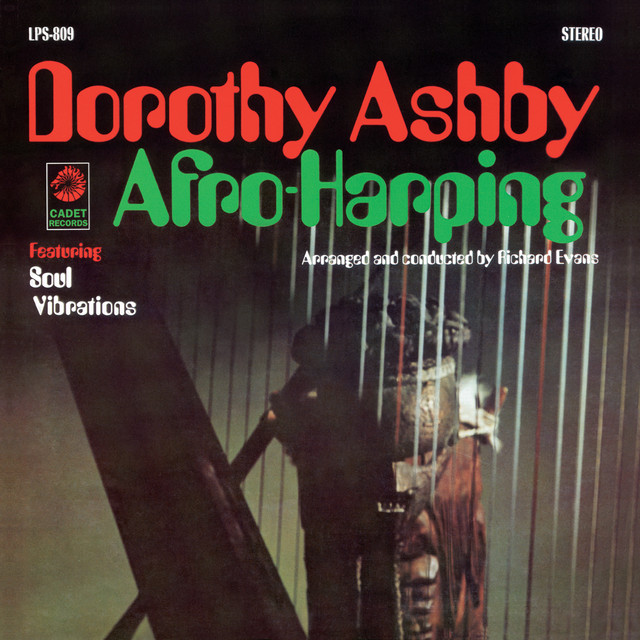
Dorothy Ashby
Space Age Pop
Exotica
Easy Listening
2
/5
Martin Denny
Exotica
Easy Listening
Lounge
3
/5
Cal Tjader
Exotica
Jazz
Mambo
3
/5
Santo & Johnny
Space Age Pop
Surf Rock
Exotica
Download our mobile app
Get the Melodigging app and start digging for new genres on the go
Download on the App Store
Get it on Google Play
© 2026 Melodigging
Give feedback
Legal
Melodding was created as a tribute to
Every Noise at Once
, which inspired us to help curious minds keep digging into music's ever-evolving genres.