Genres
Artists
Albums
Make Music
Sign in
Sign in
Artists
Sufi
Artists
Sufi
Troupe de la Musique Folkorique Egyptienne
2010
·
1 album
Listen
1
/5
Genres
Traditional Folk
Traditional folk is a broad umbrella for orally transmitted songs and dance tunes that circulated in rural and working-class communities before the age of mass recording. Repertoires include narrative ballads, laments, love songs, work songs, lullabies, and instrumental dance sets such as reels, jigs, hornpipes, and marches. Stylistically, traditional folk favors strophic forms, pentatonic or modal melodies (often Dorian and Mixolydian), limited harmonic movement, and strong, memorable tunes designed for communal singing and dancing. Performances range from unaccompanied solo voice to small ensembles built around fiddle, flute/whistle, pipes, concertina/accordion, guitar, banjo, and frame drum. Ornamentation, variation by verse, and flexible tempo are integral, reflecting an oral tradition where songs live through continual reinterpretation. Although it is pan‑regional, the modern idea of “traditional folk” coalesced in the 19th century through collectors and revivalists who documented vernacular music and framed it as cultural heritage.
Discover
Listen
Ancient Music
Ancient music refers to the musical practices of the literate civilizations of antiquity (e.g., Mesopotamia, Egypt, Greece, Rome, the Levant, Persia, India, and China) before the medieval period. It is largely monophonic, text-driven, and modal, and survives today through a small corpus of notated fragments, theoretical treatises, iconography, and instrument remains. Its sound world is characterized by modal pitch systems (e.g., ancient Greek harmoniai built from tetrachords), rhythm tied to poetic meter, and timbres from lyres, harps, auloi (double-reed pipes), flutes, rattles/sistra, frame drums, and early lutes. Because authentic performance practice must be reconstructed, modern revivals rely on scholarship in archaeology, philology, and organology as much as on musical craft.
Discover
Listen
Sufi
Sufi is a devotional musical tradition rooted in Islamic mysticism that seeks to induce remembrance of the Divine (dhikr) and transport performers and listeners toward spiritual ecstasy (wajd). It is not a single uniform style, but a family of practices that vary across regions—most notably Persian/Iranian, Anatolian/Turkish (Mevlevi), Arab, and South Asian (qawwali, kafi). Musically, Sufi repertoire tends to revolve around repetitive, mantra-like refrains, call-and-response between lead and chorus, and gradual intensification over cyclical rhythms. Melodic language draws from regional modal systems such as the Persian dastgāh, Ottoman/Turkish makam, and South Asian raga, and is often supported by drones. Texts are central: poetry by mystic masters like Rumi, Hafez, Bullhe Shah, and Amir Khusrau is sung in Persian, Urdu, Punjabi, Arabic, Turkish, and other languages. Instrumentation varies by locale—harmonium, tabla/dholak, tanpura, and clapping in South Asia; ney, kudüm, bendir, and tanbur in Turkey; oud and frame drums across the Arab world—yet the unifying aim is spiritual uplift and inner transformation.
Discover
Listen
Ancient Egyptian Music
Ancient Egyptian music refers to the soundworld and performance practices of Egypt from the Early Dynastic and Old Kingdom periods through the Ptolemaic era (ca. 3000–30 BCE). It was integral to ritual, kingship, festivals, funerary rites, banquets, and daily life. Iconography and texts show ensembles of singers, dancers, and instrumentalists serving temples and courts, as well as professional entertainers in domestic feasts. Characteristic instruments include arched and angular harps, lyres, long‑necked lutes (introduced later from the Levant), end‑blown flutes and double pipes, double‑reed pipes, natural trumpets, frame and goblet drums, hand clappers, and two emblematic ritual rattles: the sistrum and the menat. Textures were largely monophonic or heterophonic with drones, and rhythm was strongly cyclic. While no definitive notation survives, melodic practice was likely modal, with small intervals, stepwise motion, and ornamental inflection guided by voice and instrument.
Discover
Listen
Albums
2010
1
/5
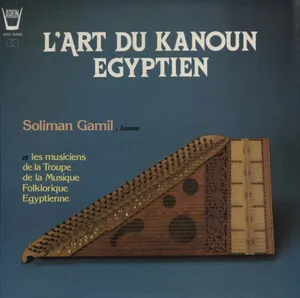
L'art du qānûn egyptien
Soliman Gamil
Ancient Egyptian Music
Ancient Music
Similar artists
1
/5
Soliman Gamil
Ancient Egyptian Music
Ancient Music
Egyptian Music
1
/5
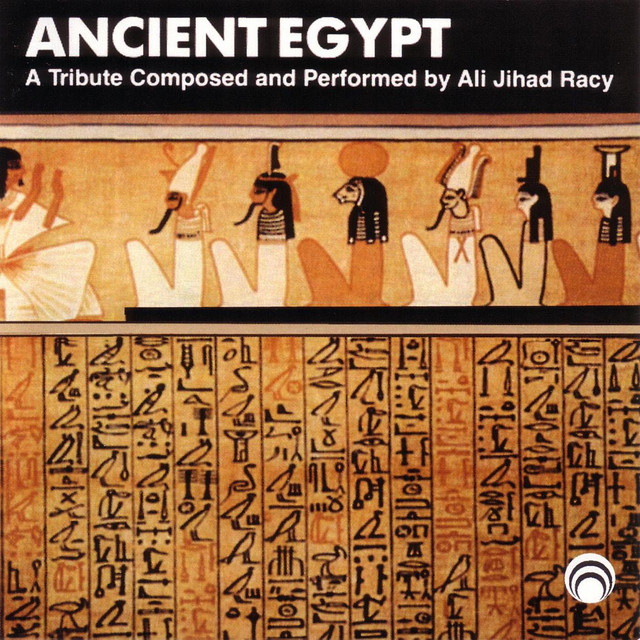
Ali Jihad Racy
Ancient Mediterranean
Sufi
Ancient Egyptian Music
2
/5
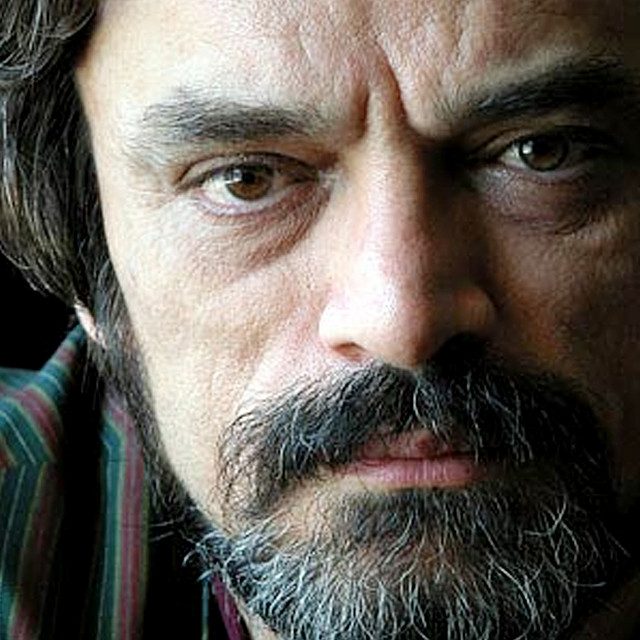
Hossein Alizadeh
Sufi
Traditional Folk
Traditional Music
2
/5
Ahmet Özhan
Arabesk
Sufi
Traditional Folk
2
/5
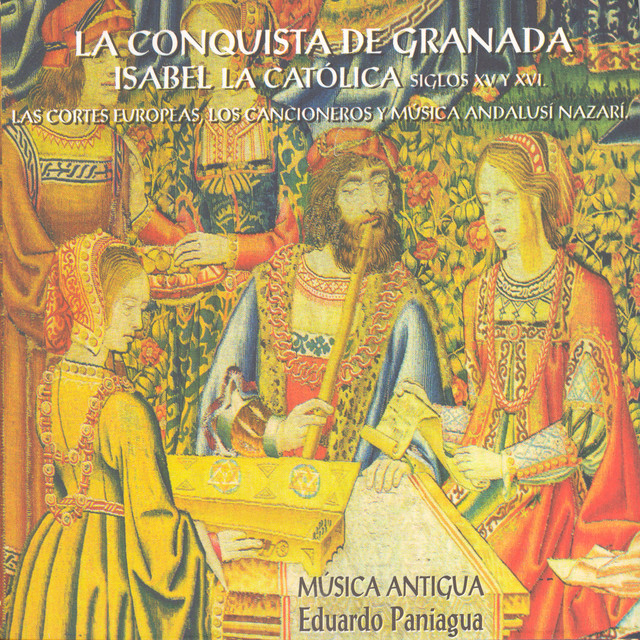
Eduardo Paniagua
Medieval
Medieval Lyric Poetry
Spanish Classical Music
2
/5
Filip Holm
Sufi
Traditional Folk
1
/5
Rıfat Çalışkan
Sufi
Traditional Folk
1
/5
Hamavayan Ensemble
Sufi
Traditional Folk
Traditional Music
1
/5
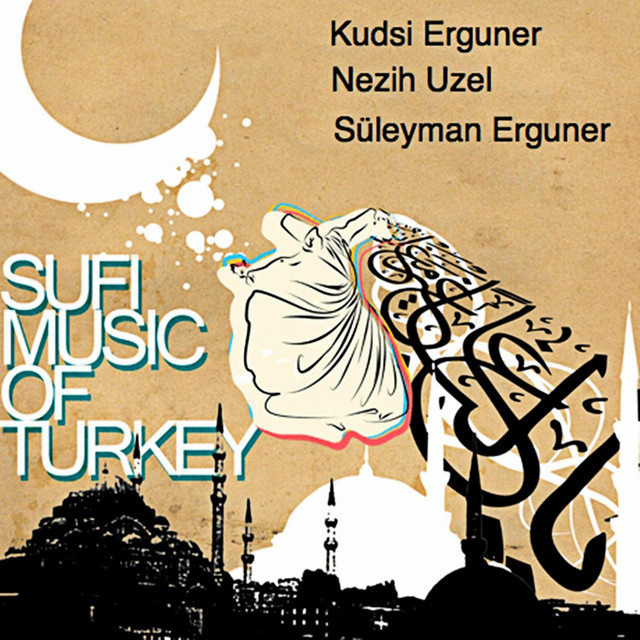
Süleyman Erguner
Sufi
Traditional Folk
Traditional Music
1
/5
The Master Musicians Of Jajouka
Arabic Folk Music
Gnawa
Spoken Word
Download our mobile app
Get the Melodigging app and start digging for new genres on the go
Download on the App Store
Get it on Google Play
© 2026 Melodigging
Give feedback
Legal
Melodding was created as a tribute to
Every Noise at Once
, which inspired us to help curious minds keep digging into music's ever-evolving genres.