Genres
Artists
Albums
Make Music
Sign in
Sign in
Artists
Gregorian Chant
Artists
Gregorian Chant
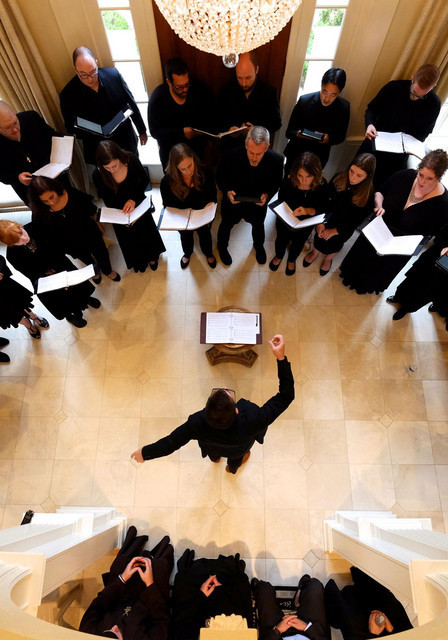
St. Tikhon's Mission Choir
2013
·
1 album
Listen
2
/5
Genres
Requiem
A requiem is a musical setting of the Roman Catholic Mass for the Dead (Missa pro defunctis). Historically rooted in Latin liturgy, it sets movements such as the Introit, Kyrie, (historically) the Sequence Dies irae, Offertory, Sanctus, Agnus Dei, and Communion, and often includes additional responsories like Libera me and In paradisum. While the earliest requiems were monophonic chants, the genre became a showcase for polyphonic and later symphonic choral writing. Renaissance composers wrote austere, modal settings; Classical and Romantic composers expanded the forces and dramatic scope; and 20th–21st century composers reimagined the form with new languages, from neo-modal and impressionistic harmonies to avant‑garde sonorities. Today, requiems appear both in liturgy and as concert works, symbolizing collective mourning, remembrance, and spiritual reflection.
Discover
Listen
Gregorian Chant
Gregorian chant is the central Western tradition of plainchant: a monophonic, unaccompanied sacred song in Latin (and occasionally Greek) used in the Roman Catholic liturgy. It employs free rhythm guided by the prosody of the text rather than by strict meter, and is sung in unison by clerics or scholas. Its melodies are organized by the system of eight church modes, with characteristic finalis (final), tenor/reciting tones, and melodic formulas. Repertoires include the Proper and Ordinary of the Mass (e.g., Introit, Gradual, Alleluia, Offertory, Communion, Kyrie, Gloria, Credo, Sanctus, Agnus Dei) and the Divine Office (e.g., Antiphons, Responsories, Hymns, Psalms). Although legend credits Pope Gregory I, modern scholarship sees Gregorian chant as a Carolingian synthesis of Old Roman and Gallican chants, standardized across Frankish realms and later the broader Latin West.
Discover
Listen
Orthodox Chant
Orthodox chant is the monophonic sacred singing tradition of the Eastern Orthodox Church and its related Eastern Christian rites. Rooted in the liturgy and theology of the Byzantine world, it emphasizes the primacy of text, sung in unaccompanied human voice, to convey prayer and scripture. Musically, Orthodox chant is modal, drawing on the Octoechos (a system of eight echoi/modes) that govern melodic formulas, cadences, and melodic range. Rhythmic flow follows the accent and syntax of the liturgical text rather than fixed meter; the music breathes with speech. In Greek practice since the post‑Byzantine period, an ison (a sustained drone) supports the principal melody; in many Slavic traditions, chant proceeds in unison without drone, while Georgian practice is uniquely polyphonic. Stylistically, Orthodox chant is at once austere and ornate: syllabic psalmody and hymn tones sit alongside highly melismatic psaltic art for festal moments. It is sung a cappella by choirs or solo chanters (psaltai/cantors) in Greek, Church Slavonic, Arabic, Georgian, and numerous local languages.
Discover
Listen
Albums
2013
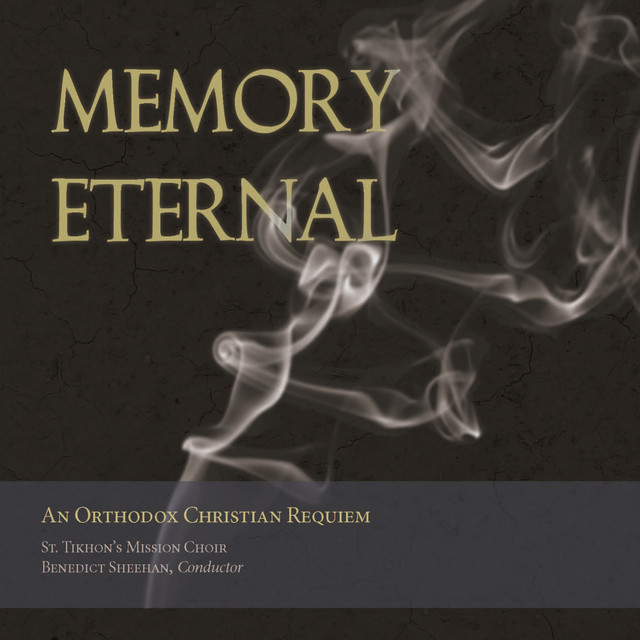
Memory Eternal: An Orthodox Christian Requiem
St. Tikhon's Mission Choir, Benedict Sheehan
Orthodox Chant
Similar artists
2
/5
The Saint Tikhon Choir
Choral
Gregorian Chant
Hymns
3
/5
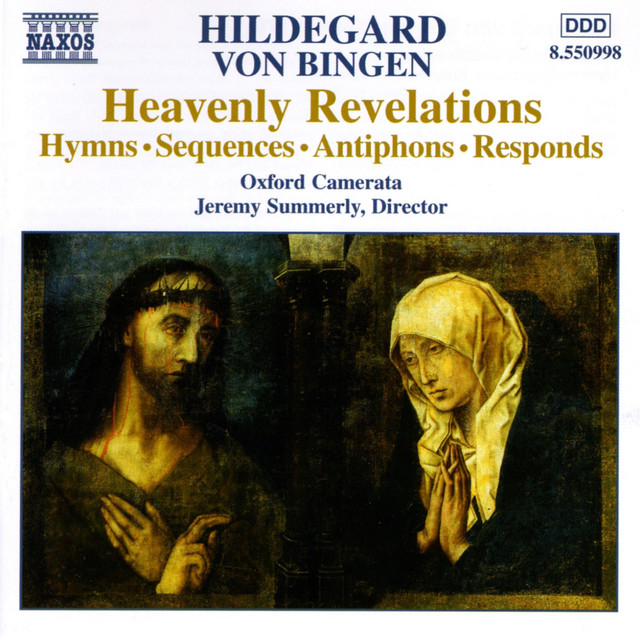
Oxford Camerata
Renaissance
Classical
Gregorian Chant
3
/5
Peter Phillips
Renaissance
Choral
Requiem
3
/5
The Tallis Scholars
Renaissance
Choral
Classical
3
/5
Tenebrae
Choral
Gregorian Chant
Renaissance
3
/5
Nigel Short
Choral
Gregorian Chant
Requiem
3
/5
Paul Hillier
Choral
Minimalism
Classical
2
/5
The Hilliard Ensemble
Madrigal
Gregorian Chant
Renaissance
2
/5
Paul McCreesh
Choral
Gregorian Chant
Requiem
2
/5
Tomás Luis de Victoria
Requiem
Choral
Renaissance
Download our mobile app
Get the Melodigging app and start digging for new genres on the go
Download on the App Store
Get it on Google Play
© 2026 Melodigging
Give feedback
Legal
Melodding was created as a tribute to
Every Noise at Once
, which inspired us to help curious minds keep digging into music's ever-evolving genres.