Genres
Artists
Albums
Make Music
Sign in
Sign in
Artists
Choral
Artists
Choral
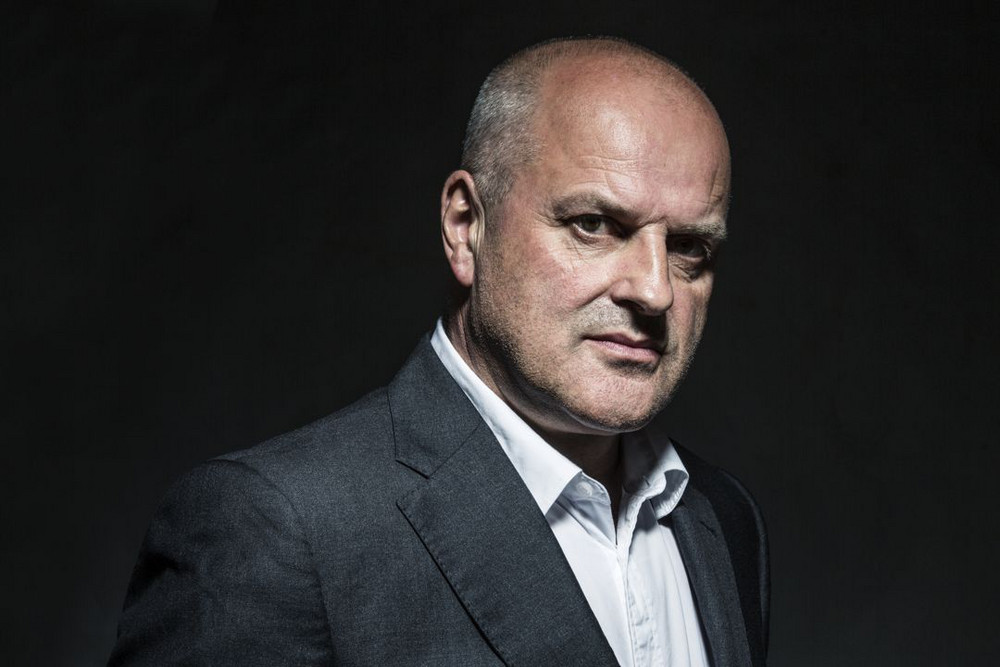
Paul McCreesh
2000
·
1 album
Listen
2
/5
Genres
Requiem
A requiem is a musical setting of the Roman Catholic Mass for the Dead (Missa pro defunctis). Historically rooted in Latin liturgy, it sets movements such as the Introit, Kyrie, (historically) the Sequence Dies irae, Offertory, Sanctus, Agnus Dei, and Communion, and often includes additional responsories like Libera me and In paradisum. While the earliest requiems were monophonic chants, the genre became a showcase for polyphonic and later symphonic choral writing. Renaissance composers wrote austere, modal settings; Classical and Romantic composers expanded the forces and dramatic scope; and 20th–21st century composers reimagined the form with new languages, from neo-modal and impressionistic harmonies to avant‑garde sonorities. Today, requiems appear both in liturgy and as concert works, symbolizing collective mourning, remembrance, and spiritual reflection.
Discover
Listen
Sarum Chant
Sarum chant (the plainchant of the Use of Salisbury) is the medieval English variant of Western plainchant used across much of England, Wales, and parts of Ireland and Scotland before the Reformation. It belongs to the broader Gregorian tradition, but preserves local melodic, textual, and ceremonial peculiarities tied to the Sarum Rite. It is monophonic, modal, and unaccompanied, designed for Latin liturgical texts in the Mass and Divine Office. Its melodies range from simple recitation formulas to elaborate melismas, and its rhythm follows the natural accent and syntax of the text rather than strict meter. Distinct processional customs and a rich Proper (seasonal and festal chants) give the repertory its characteristic color.
Discover
Listen
Classical
Classical music is the notated art-music tradition of Europe and its global descendants, characterized by durable forms, carefully codified harmony and counterpoint, and a literate score-based practice. The term “classical” can refer broadly to the entire Western art-music lineage from the Medieval era to today, not just the Classical period (c. 1750s–1820s). It privileges long-form structures (such as symphonies, sonatas, concertos, masses, and operas), functional or modal harmony, thematic development, and timbral nuance across ensembles ranging from solo instruments to full orchestras and choirs. Across centuries, the style evolved from chant and modal polyphony to tonal harmony, and later to post-tonal idioms, while maintaining a shared emphasis on written notation, performance practice, and craft.
Discover
Listen
Gregorian Chant
Gregorian chant is the central Western tradition of plainchant: a monophonic, unaccompanied sacred song in Latin (and occasionally Greek) used in the Roman Catholic liturgy. It employs free rhythm guided by the prosody of the text rather than by strict meter, and is sung in unison by clerics or scholas. Its melodies are organized by the system of eight church modes, with characteristic finalis (final), tenor/reciting tones, and melodic formulas. Repertoires include the Proper and Ordinary of the Mass (e.g., Introit, Gradual, Alleluia, Offertory, Communion, Kyrie, Gloria, Credo, Sanctus, Agnus Dei) and the Divine Office (e.g., Antiphons, Responsories, Hymns, Psalms). Although legend credits Pope Gregory I, modern scholarship sees Gregorian chant as a Carolingian synthesis of Old Roman and Gallican chants, standardized across Frankish realms and later the broader Latin West.
Discover
Listen
Choral
Choral refers to music written for and performed by a choir—an ensemble of voices organized into sections such as soprano, alto, tenor, and bass (SATB), or same-voice groupings (SSA, TTBB). It encompasses both sacred and secular repertoire and may be sung a cappella or with accompaniment by organ, piano, or full orchestra. Stylistically, choral music ranges from chant-like monophony to intricate polyphony and rich homophonic textures. Texts are drawn from liturgy, scripture, poetry, and vernacular sources, and are set in many languages. Performance contexts include church services, concert halls, and community events, making choral one of the most socially embedded and widely practiced forms of ensemble music. Across history, choral music has served as a laboratory for vocal counterpoint, word painting, and text-driven form, while functioning as a cultural bridge among religious rites, national traditions, and contemporary concert practice.
Discover
Listen
Albums
2000
1
/5
Missa Cantate
John Sheppard
Sarum Chant
Similar artists
3
/5
The Tallis Scholars
Choral
Renaissance
Requiem
2
/5
Gabrieli
Choral
Gregorian Chant
Requiem
3
/5
Peter Phillips
Choral
Renaissance
Requiem
3
/5
Oxford Camerata
Gregorian Chant
Medieval
Classical
3
/5
Paul Hillier
Choral
Minimalism
Classical
2
/5
The Hilliard Ensemble
Madrigal
Gregorian Chant
Medieval Classical Music
2
/5
Gyorgy Vashegyi
Opera
Choral
Gregorian Chant
2
/5
Orfeo Orchestra
Opera
Choral
Gregorian Chant
2
/5
Paul Van Nevel
Renaissance
Choral
Franco-Flemish School
2
/5
Christopher Purves
Classical
Choral
Gregorian Chant
Download our mobile app
Get the Melodigging app and start digging for new genres on the go
Download on the App Store
Get it on Google Play
© 2026 Melodigging
Give feedback
Legal
Melodding was created as a tribute to
Every Noise at Once
, which inspired us to help curious minds keep digging into music's ever-evolving genres.