Genres
Artists
Albums
Make Music
Sign in
Sign in
Artists
Afro-Cuban Jazz
Artists
Afro-Cuban Jazz
Rodriguez, Roberto
2006–2014
·
2 albums
Listen
Genres
Descarga
Descarga is the Cuban tradition of extended, largely improvised jam sessions built on Afro‑Cuban dance grooves and montuno vamps. Emerging in 1950s Havana and later flourishing in New York, it brought the spontaneity of jazz to Cuban popular forms such as son, mambo, and chachachá. Typically recorded by all‑star studio ensembles, descargas feature rotating solos over repeating guajeos (ostinatos), anchored by the clave and a driving percussion section. They are celebratory, high‑energy gatherings where arrangers set up simple harmonic frameworks and horn "moñas" (riffs), then let the players stretch out.
Discover
Listen
Afro-Cuban Jazz
Afro-Cuban jazz (often historically called Cubop) is a fusion of Afro-Cuban rhythmic traditions and North American jazz harmony, melody, and improvisation. It sets jazz writing and soloing inside the matrix of the clave, combining straight-eighth Afro-Cuban grooves (mambo, rumba, son montuno, danzón) with big-band and bebop vocabulary. Hallmarks include piano montunos (guajeos), tumbao bass lines, horn mambos and moñas (syncopated riffs), and a percussion section of congas, bongos, timbales, cowbell, and claves. The result is music that is harmonically sophisticated yet dance-driven, balancing arranged horn passages with open sections for improvisation, and emphasizing call-and-response and layered polyrhythms.
Discover
Listen
Latin
Latin (as a genre label) is a broad umbrella used by the recording industry to categorize popular music rooted in Latin America, the Caribbean, and the Iberian world, often characterized by syncopated Afro-diasporic rhythms, dance-forward grooves, and lyrics primarily in Spanish or Portuguese. As a marketplace category that took shape in the mid-20th century United States, it gathers diverse traditions—Afro-Cuban, Brazilian, Mexican, and Caribbean styles—into a shared space. In practice, "Latin" spans everything from big-band mambo and bolero ballads to contemporary pop, rock, hip hop, and dance fusions produced by artists of Latin American heritage.
Discover
Listen
Jazz
Jazz is an improvisation-centered music tradition that emerged from African American communities in the early 20th century. It blends blues feeling, ragtime syncopation, European harmonic practice, and brass band instrumentation into a flexible, conversational art. Defining features include swing rhythm (a triplet-based pulse), call-and-response phrasing, blue notes, and extended harmonies built on 7ths, 9ths, 11ths, and 13ths. Jazz is as much a way of making music—spontaneous interaction, variation, and personal sound—as it is a set of forms and tunes. Across its history, jazz has continually hybridized, from New Orleans ensembles and big-band swing to bebop, cool and hard bop, modal and free jazz, fusion, and contemporary cross-genre experiments. Its influence permeates global popular and art music.
Discover
Listen
Klezmer
Klezmer is the traditional instrumental music of Ashkenazi Jews from Eastern Europe, originally performed by itinerant bands for weddings and communal celebrations. It is characterized by expressive, voice-like ornamentation (krekhts, slides, trills), flexible phrasing, and a repertoire of dance forms such as freylekhs, bulgar, sher, khosidl, and horas. Modal color is central: the freygish (Ahava Rabbah/Phrygian dominant) and Mi Sheberakh (Ukrainian Dorian) modes are common, lending the music its plaintive, celebratory, and at times bittersweet sound. Typical ensembles feature clarinet or violin as lead, with tsimbl (hammered dulcimer), accordion, trumpet/trombone, bass, and later American additions like piano and drum set. While rooted in Jewish liturgical and Hasidic song, klezmer absorbed 19th‑century European social dances (polka, waltz, mazurka) and Balkan/Romanian influences (notably the free-rhythm doina), producing a flexible style that moves from rhapsodic improvisation to propulsive dance tunes.
Discover
Listen
Ashkenazi Music
Ashkenazi music is the broad musical tradition of Jews from the medieval German lands and, later, Eastern Europe. It spans sacred chant and cantorial practice (khazones), devotional nigunim (wordless melodies), and a rich secular repertoire of Yiddish folk song and dance tunes. Its sound world draws on synagogue nusach (modal prayer formulas) and characteristic modes such as Ahava Rabbah/Freygish (Phrygian dominant) and Ukrainian Dorian, alongside Eastern and Central European folk idioms. Ornamented, melismatic vocal lines, heterophonic textures, and expressive rubato (as in the doina) are common. Instrumentally, the clarinet, violin, tsimbl (hammered dulcimer), accordion, and brass became central—especially in dance forms like freylekhs, bulgar, hora, sher, and khosidl. Lyrically, Yiddish and Hebrew texts range from pious yearning and mystical ecstasy to sharp social observation and celebration of communal life.
Discover
Listen
Albums
2014
1
/5
Aguares: Book of Angels Volume 23
Roberto Rodriguez
Klezmer
Ashkenazi Music
Afro-Cuban Jazz
2006
1
/5
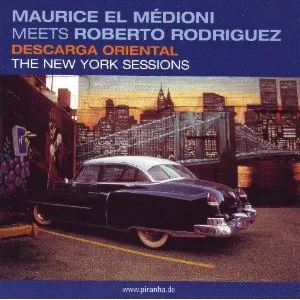
Descarga oriental: The New York Sessions
Maurice El Médioni & Roberto Rodriguez
Descarga
Similar artists
4
/5
Quantic
Electronic
Nu-Cumbia
Downtempo
3
/5
Ruben Gonzalez
Afro-Cuban Jazz
Latin Jazz
Son Cubano
3
/5
Eddie Palmieri
Salsa
Salsa Dura
Latin Jazz
3
/5
Mongo Santamaria
Rumba Cubana
Boogaloo
Mambo
3
/5
Cal Tjader
Exotica
Jazz
Mambo
2
/5
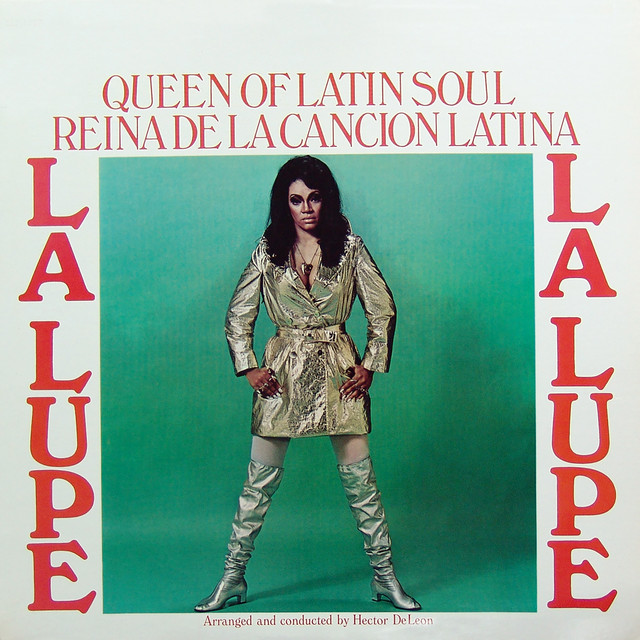
La Lupe
Bolero
Latin
Salsa
3
/5
Ray Barretto
Salsa
Latin Jazz
Son Cubano
3
/5
Tito Puente
Mambo
Chachachá
Latin
4
/5
Lalo Rodriguez
Salsa
Salsa Romántica
Latin
3
/5
Omara Portuondo
Bolero
Son Cubano
Latin
Download our mobile app
Get the Melodigging app and start digging for new genres on the go
Download on the App Store
Get it on Google Play
© 2026 Melodigging
Give feedback
Legal
Melodding was created as a tribute to
Every Noise at Once
, which inspired us to help curious minds keep digging into music's ever-evolving genres.