Genres
Artists
Albums
Make Music
Sign in
Sign in
Artists
Bollywood
Artists
Bollywood
Pritam
2001–2026
·
145 albums
Listen
5
/5
Genres
Haryanvi Pop
Haryanvi pop is a contemporary regional Indian pop style that blends the Haryanvi language and folk sensibilities with modern, high-impact pop production. It typically features catchy, chant-like hooks, dance-ready beats (often drawing from EDM, hip hop, trap, and reggaeton), and lyrics centered on local pride, romance, swagger, and rural-to-urban lifestyles. While rooted in the folk rhythms and storytelling of Haryana, its sound is unmistakably modern: punchy drums, shiny synths, earworm refrains, and strong visual culture tied to dance-led music videos and social media virality.
Discover
Listen
Indian Indie
Indian indie is the umbrella for independent, non-film music made in India across languages such as Hindi, English, and numerous regional tongues. It is defined more by its DIY production and artist-led release model than by a single sound. Musically, it spans indie pop and rock, folk-fusion, singer‑songwriter ballads, dream‑pop/shoegaze textures, and electronic‑leaning productions. Artists often blend Western harmony and song forms with raga‑tinged melodies, Indian rhythmic feels, and occasional use of traditional instruments like tabla, bansuri, or sitar. The scene grew rapidly with college festivals, small venues, and digital platforms (YouTube, streaming services, Bandcamp), plus boutique labels and festivals such as NH7 Weekender that created national visibility. Lyrically, it tends to be intimate and contemporary—touching on romance, urban life, identity, and nostalgia—while maintaining accessible hooks and warm, organic sonics.
Discover
Listen
Malayalam Hip Hop
Malayalam hip hop is the localized form of hip hop created by artists from Kerala, India, performed primarily in the Malayalam language. It blends global rap aesthetics (boom‑bap, trap, and alternative hip hop) with Kerala’s rhythmic and melodic sensibilities, often sampling or referencing folk percussion (chenda, thavil), Mappila folk idioms, and Carnatic/Raga motifs. Lyrically, it covers identity, migration (especially Gulf Malayali experiences), social commentary, political satire, and everyday urban life, frequently code‑switching between Malayalam and English. The scene grew online through DIY production and YouTube releases, and later crossed into the mainstream via film soundtracks and brand collaborations, while maintaining a strong independent, crew‑driven culture.
Discover
Listen
Modern Downshift
Modern downshift is a contemporary, playlist-era microgenre that blends hushed alternative pop and alt‑R&B sensibilities with the spaciousness of downtempo and ambient pop. Songs are typically slow to mid‑tempo, minimal in arrangement, and intimate in vocal delivery—often breathy, close‑miked, and confessional. Production emphasizes warmth and negative space: soft sub‑bass, restrained percussion, reverb‑washed pads or guitars, and gentle saturation that keeps the overall texture velvety and nocturnal. Lyrically, the style skews introspective and late‑night: relationships, vulnerability, quiet self‑reflection, and the emotional afterglow of parties or city drives. The result is music that feels low‑key and cinematic—designed as much for solitary listening as for low‑light social settings.
Discover
Listen
Hindi Indie
Hindi indie is a contemporary Indian independent music movement in which artists write and release primarily Hindi-language songs outside the traditional Bollywood film system. It blends the intimate storytelling of singer-songwriters with the textures of indie folk, alternative rock, and mellow pop, often presented with understated, DIY production. Sonically, the style favors acoustic guitars, light percussion, piano, and atmospheric synths, with warm, close-miked vocals that foreground lyrics. Thematically, Hindi indie tends toward introspective and romantic subjects, urban coming‑of‑age narratives, and everyday imagery expressed in colloquial Hindi (often seasoned with Urdu vocabulary). The result is a relatable, low-key aesthetic that contrasts with the scale and spectacle of mainstream film music.
Discover
Listen
Desi Emo Rap
Desi emo rap is a South Asian take on the internet-born emo rap movement, blending confessional, melancholic lyricism with trap drums, cloud-rap atmospheres, and Auto-Tuned melodies. Artists rap or sing in Hindi, Urdu, Punjabi, Nepali, and Hinglish, pairing diary-like themes of heartbreak, alienation, anxiety, and coming-of-age struggles with 808-heavy, reverb-washed production. The style is characteristically intimate and bedroom-produced, favoring moody pads, guitar loops, sparse pianos, and understated beats over bravado. It borrows the cathartic, melodically sung flows of emo rap while reflecting desi realities—urban grind, family expectations, migration, digital loneliness, and cross-cultural identity—making it resonate with South Asian youth on both the subcontinent and in the diaspora.
Discover
Listen
Desi
Desi is a contemporary umbrella term for South Asian–rooted popular music made both in the subcontinent and across its global diaspora. It blends Hindi, Punjabi, Urdu (and other regional) lyrics with Western pop, hip hop, R&B, and EDM production, while retaining melodic sensibilities from filmi/bollywood and classical/folk traditions. The sound ranges from romantic, hook-forward ballads to high-energy dance tracks driven by dhol- and tumbi-influenced rhythms. It is less a single formula than a shared aesthetic: flexible code-switching (Hinglish, Punjabi-English), raga-tinged melodies, and club-ready beats that connect Bollywood lineage, Punjabi bhangra, and global urban music.
Discover
Listen
Modern Bollywood
Modern Bollywood is the contemporary sound of Hindi‑language film music that emerged in the 2000s and crystallized in the 2010s. It blends classic filmi songwriting with global pop, EDM, hip‑hop, and R&B production, resulting in hook‑forward, polished tracks designed for both cinematic scale and streaming virality. Stylistically, it keeps melodic DNA from Hindustani ragas, ghazal, qawwali, and regional folk (especially Punjabi/Bhangra), while adopting Western harmony, four‑on‑the‑floor grooves, trap drums, and glossy synth textures. Hinglish lyrics, prominent topline hooks, and dance‑ready choruses are common. The era also popularized re-creations of older hits alongside original songs, with tight, radio‑friendly structures and high‑impact mixes that translate from theaters to reels.
Discover
Listen
Hindi Pop
Hindi pop (often called Indipop when referring to non-film Indian pop) is Hindi-language popular music created primarily outside of Bollywood film soundtracks. It blends Western pop, dance, rock, R&B, and electronic production with Hindustani melodic sensibilities, Indian rhythmic motifs, and Hindi (often Hinglish) lyrics. The genre rose to mass popularity in the 1990s through music television and an emerging independent label ecosystem, foregrounding standalone singles and artist-driven albums. Signature features include catchy chorus hooks, glossy synth-driven arrangements, light classical ornamentation, and videos that emphasize youth culture, fashion, romance, and dance.
Discover
Listen
Desi Pop
Desi pop is a broad umbrella of South Asian popular music that blends Western pop songwriting and production with Indian, Pakistani, Bangladeshi and diasporic sensibilities. It foregrounds catchy melodies, verse–pre-chorus–chorus structures, and contemporary electronic production while borrowing vocal ornamentation, rhythms, and instruments from regional traditions (e.g., Punjabi dhol, tumbi, tabla, sitar). Lyrics commonly mix Hindi/Urdu/Punjabi (often with Hinglish), and themes range from romance and nostalgia to dancefloor celebration. The sound spans glossy dance‑pop, R&B‑tinged ballads, and bhangra‑inflected club tracks, often overlapping with Bollywood but existing independently of film.
Discover
Listen
Pop
Pop is a broad, hook-driven style of popular music designed for wide appeal. It emphasizes memorable melodies, concise song structures, polished vocals, and production intended for radio, charts, and mass media. While pop continually absorbs elements from other styles, its core remains singable choruses, accessible harmonies, and rhythmic clarity. Typical forms include verse–pre-chorus–chorus, frequent use of bridges and middle-eights, and ear-catching intros and outros. Pop is not defined by a single instrumentation. It flexibly incorporates acoustic and electric instruments, drum machines, synthesizers, and increasingly digital production techniques, always in service of the song and the hook.
Discover
Listen
Rock
Rock is a broad family of popular music centered on amplified instruments, a strong backbeat, and song forms that foreground riffs, choruses, and anthemic hooks. Emerging from mid‑20th‑century American styles like rhythm & blues, country, and gospel-inflected rock and roll, rock quickly expanded in scope—absorbing folk, blues, and psychedelic ideas—while shaping global youth culture. Core sonic markers include electric guitar (often overdriven), electric bass, drum kit emphasizing beats 2 and 4, and emotive lead vocals. Rock songs commonly use verse–chorus structures, blues-derived harmony, and memorable melodic motifs, ranging from intimate ballads to high‑energy, stadium‑sized performances.
Discover
Listen
Bollywood
Bollywood is the popular film-music tradition associated with Hindi-language cinema from Mumbai, India. It blends raga-based melodies and Hindustani vocalism with Western orchestration, jazz/big-band legacies, pop hooks, disco/funk grooves, rock energy, and contemporary electronic production. Songs are typically designed for on-screen performance and storytelling, featuring lush arrangements, memorable refrains, and emotive playback singing. A common formal scheme is the mukhda (catchy refrain) and antara (stanza/verse) structure, often with instrumental preludes, interludes, and dance breaks. Because it serves narrative and spectacle, Bollywood music ranges widely in mood—from romantic ballads and devotional pieces to high-energy dance numbers—and has continuously absorbed global influences while remaining rooted in Indian melodic and rhythmic aesthetics.
Discover
Listen
Filmi
Filmi is the song tradition of Indian cinema, encompassing Hindi, Tamil, Telugu, Bengali, and other regional film industries. It is built for on-screen storytelling and "playback" singing, where actors lip-sync to pre-recorded vocals. Stylistically, filmi blends raga-informed melodies from Hindustani and Carnatic classical music with Indian folk forms, devotional currents (ghazal, qawwali, bhajan), and an evolving palette of Western popular idioms—big band, jazz, rock, disco, synth-pop, and EDM. Arrangements often feature lush orchestration, prominent melodic hooks, and dramatic modulations, supporting narratives of romance, devotion, comedy, and spectacle. As one of the most-heard musical practices in South Asia and its diaspora, filmi has defined the sound of commercial Indian culture for nearly a century while continually adapting to technology, audience taste, and cross-cultural exchange.
Discover
Listen
Soundtrack
Soundtrack is music created to accompany and enhance visual media such as film, television, and video games. It includes original scores (instrumental or vocal music composed specifically for the picture) and, at times, curated compilations of pre-existing songs. Stylistically, soundtrack is a meta-genre that can encompass orchestral symphonic writing, jazz, electronic and synth-driven textures, choral forces, popular song, and experimental sound design. Its defining trait is functional storytelling: themes, motifs, harmony, rhythm, and timbre are shaped by narrative needs, character psychology, pacing, and editing. Common features include leitmotifs for characters or ideas, modular cues that can be edited to picture, dynamic orchestration for dramatic range, and production approaches that sit well under dialogue and sound effects. Because it must synchronize to picture, soundtrack often uses clear dramatic arcs, tempo maps, and hit points.
Discover
Listen
Jazz
Jazz is an improvisation-centered music tradition that emerged from African American communities in the early 20th century. It blends blues feeling, ragtime syncopation, European harmonic practice, and brass band instrumentation into a flexible, conversational art. Defining features include swing rhythm (a triplet-based pulse), call-and-response phrasing, blue notes, and extended harmonies built on 7ths, 9ths, 11ths, and 13ths. Jazz is as much a way of making music—spontaneous interaction, variation, and personal sound—as it is a set of forms and tunes. Across its history, jazz has continually hybridized, from New Orleans ensembles and big-band swing to bebop, cool and hard bop, modal and free jazz, fusion, and contemporary cross-genre experiments. Its influence permeates global popular and art music.
Discover
Listen
Blues
Blues is an African American musical tradition defined by expressive "blue notes," call-and-response phrasing, and a characteristic use of dominant-seventh harmony in cyclical song forms (most famously the 12‑bar blues). It is as much a feeling as a form, conveying sorrow, resilience, humor, and hard-won joy. Musically, blues commonly employs the I–IV–V progression, swung or shuffled rhythms, and the AAB lyric stanza. Melodies lean on the minor/major third ambiguity and the flattened fifth and seventh degrees. Core instruments include voice, guitar (acoustic or electric), harmonica, piano, bass, and drums, with slide guitar, bends, and vocal melismas as signature techniques. Over time the blues has diversified into regional and stylistic currents—Delta and Piedmont country blues, urban Chicago and Texas blues, West Coast jump and boogie-woogie—while profoundly shaping jazz, rhythm & blues, rock and roll, soul, funk, and much of modern popular music.
Discover
Listen
Ghazal
Ghazal is a South Asian light-classical vocal genre built around the Urdu–Persian poetic form of the same name. It sets couplets (sher) that share a rhyme (qaafiya) and refrain (radif), often opening with a matla and ending with a maqta featuring the poet’s takhallus. Themes revolve around love, longing, separation, metaphysical yearning, and refined wit. Musically, ghazal draws on Hindustani classical grammar but prioritizes text clarity and melodic expressiveness over elaborate improvisation. Performances commonly feature a singer accompanied by harmonium and tabla (with sarangi, sitar, or guitar as color), use raga-informed melodies, and keep lilting tala cycles such as dadra (6 beats) or keherwa (8 beats). The style favors intimate delivery, subtle ornamentation (meend, murki), and immaculate diction, making it ideal for salon (mehfil) settings as well as recorded and film music.
Discover
Listen
Romance
Romance is a term with two closely related musical meanings. 1) In medieval and early modern Spain it denotes a narrative sung poem (romancero): strophic ballads built from octosyllabic lines with assonant rhyme on the even lines. These songs circulated orally, later appearing in cancioneros and spreading across the Iberian world and into Sephardic and Hispanic American traditions. 2) From the late 18th century the word was adopted in art music for brief, simple, and tender lyrical pieces—sometimes vocal but very often purely instrumental (e.g., for violin, piano, or winds). As The Oxford Dictionary of Music notes, it generally implies a specially personal, gentle, or intimate character.
Discover
Listen
Ballad
A ballad is a narrative song form that tells a story in simple, singable stanzas, traditionally using quatrains in ballad meter (alternating lines of iambic tetrameter and trimeter with an ABCB rhyme scheme). Ballads typically recount dramatic events—love, betrayal, tragedy, murder, the supernatural—or notable historical incidents. Early ballads were often sung unaccompanied or with minimal accompaniment, carried by memorable, modal melodies and refrains that aided oral transmission. Over time, the term also came to describe slow, sentimental popular songs in the 20th century, but the core of the genre remains the storytelling focus and strophic, easily learned structure. Ballads are central to the English- and Scots-language folk traditions, migrated to North America where they flourished in Appalachian singing, and continue to be performed, adapted, and reinterpreted in contemporary folk and roots scenes.
Discover
Listen
Qawwali
Qawwali is a Sufi devotional vocal music from the Indian subcontinent that aims to evoke spiritual ecstasy and communal devotion. It is typically performed by a lead singer (qawwal) with a small ensemble of accompanying vocalists, harmoniums, handclaps, and percussion such as dholak and tabla. Musically, Qawwali blends raga-based melodic frameworks and flexible, improvisatory singing with driving rhythms and responsorial choruses. Texts are drawn from Urdu, Persian, Punjabi, and other North Indian languages, and include ghazals, kafis, hamds (praise of God), naats (praise of the Prophet), and manqabats (praise of Sufi saints). Performances traditionally take place at Sufi shrines (dargahs), where repetition, call-and-response, and gradual intensification lead listeners toward wajd (states of spiritual ecstasy). In the modern era, Qawwali is also heard on concert stages, recordings, and film.
Discover
Listen
Sufi
Sufi is a devotional musical tradition rooted in Islamic mysticism that seeks to induce remembrance of the Divine (dhikr) and transport performers and listeners toward spiritual ecstasy (wajd). It is not a single uniform style, but a family of practices that vary across regions—most notably Persian/Iranian, Anatolian/Turkish (Mevlevi), Arab, and South Asian (qawwali, kafi). Musically, Sufi repertoire tends to revolve around repetitive, mantra-like refrains, call-and-response between lead and chorus, and gradual intensification over cyclical rhythms. Melodic language draws from regional modal systems such as the Persian dastgāh, Ottoman/Turkish makam, and South Asian raga, and is often supported by drones. Texts are central: poetry by mystic masters like Rumi, Hafez, Bullhe Shah, and Amir Khusrau is sung in Persian, Urdu, Punjabi, Arabic, Turkish, and other languages. Instrumentation varies by locale—harmonium, tabla/dholak, tanpura, and clapping in South Asia; ney, kudüm, bendir, and tanbur in Turkey; oud and frame drums across the Arab world—yet the unifying aim is spiritual uplift and inner transformation.
Discover
Listen
Hindustani Classical
Hindustani classical is the North Indian branch of the Indian classical tradition, centered on the concepts of raga (melodic framework) and tala (cyclical rhythm). It emphasizes improvisation within strict aesthetic and grammatical boundaries, unfolding a raga through a gradual, architected performance arc from free-rhythm exploration to metrically grounded elaboration. Performances typically proceed through an alap (slow, non-metrical exposition), jor and jhala (rhythmic intensification on plucked instruments), and a composed piece—bandish or gat—set to a tala cycle, followed by improvisations (vistar, tans, bol-bant) that resolve emphatically on the sam (first beat). Signature ornaments such as meend (glides), gamak (oscillation), and andolan (slow vibrato) articulate microtonal nuance (shruti). The style encompasses vocal genres like dhrupad and khyal, and instrumental idioms on sitar, sarod, sarangi, bansuri, and shehnai, supported by a sustaining drone (tanpura) and tabla or pakhawaj accompaniment. Beyond the concert hall, Hindustani classical has deeply informed sub-classical and popular forms across South Asia and, through mid-20th-century cultural exchange, popular and art music worldwide.
Discover
Listen
Indian Classical
Indian classical music (Shastriya Sangeet / Mārga Sangeet) is the art-music tradition of the Indian subcontinent, organized around melodic frameworks called raga and cyclical meters called tala. It has two major streams: Hindustani music in the North, which foregrounds extended improvisation and raga exploration, and Carnatic music in the South, which is composition-centric with structured but highly sophisticated improvisation. A related eastern tradition is Odissi (from present-day Odisha), whose classical lineage spans roughly two millennia. Despite regional distinctions, these systems share common theoretical roots, performance aesthetics, and a spiritual-philosophical view of music as a vehicle for rasa (embodied aesthetic emotion).
Discover
Listen
Show all 24 genres
Albums
2026
Haiwaan
Pritam, Shaan, Sukhwinder Singh & Javed Akhtar
Bollywood
Filmi
Soundtrack
2026
Cocktail 2
Pritam & Amitabh Bhattacharya
Bollywood
Filmi
Soundtrack
2026
Bhooth Bangla
Pritam, Kumaar & Yatindra Mishra
Bollywood
Filmi
Soundtrack
2025
Metro... In Dino: Side B
Pritam
Bollywood
Filmi
Soundtrack
2025
Metro... In Dino: Side A
Pritam
Bollywood
Filmi
Soundtrack
2025
Sikandar
Pritam, JAM8, Sameer Anjaan, S.O.M. & Danish Sabri
Bollywood
Filmi
Soundtrack
2024
ANIMAL (Telugu) (Deluxe Edition Album)
Harshavardhan Rameshwar, Pritam, Manan Bhardwaj, Shreyas Puranik, Vishal Mishra…
Bollywood
Filmi
Soundtrack
2024
Chandu Champion
Pritam
Bollywood
Filmi
Soundtrack
2024
Merry Christmas
Pritam & Varun Grover
Bollywood
Filmi
Soundtrack
2023
Dunki
Pritam & Shekhar Ravjiani
Bollywood
Filmi
Soundtrack
2023
Tiger 3
Pritam & Tanuj Tiku
Bollywood
Filmi
Soundtrack
2023
The Great Indian Family
Pritam
Bollywood
Filmi
Soundtrack
2023
Rocky Aur Rani Kii Prem Kahaani
Pritam & Amitabh Bhattacharya
Bollywood
Filmi
Soundtrack
2023
Dhoom: Instrumentals
Pritam
Bollywood
Filmi
Soundtrack
2023
Laal Singh Chaddha: Extended Album
Pritam & Amitabh Bhattacharya
Bollywood
Filmi
Soundtrack
2023
Tu Jhoothi Main Makkaar
Pritam
Bollywood
Filmi
Soundtrack
2023
Shehzada
Pritam
Bollywood
Filmi
Soundtrack
2022
Freddy
Pritam & Irshad Kamil
Bollywood
Filmi
Soundtrack
2022
Brahmastra
Pritam & Amitabh Bhattacharya
Bollywood
Filmi
Soundtrack
2022
Brahmastra
Pritam
Bollywood
Filmi
Soundtrack
2022
Laal Singh Chaddha
Pritam & Amitabh Bhattacharya
Bollywood
Filmi
Soundtrack
2022
Bhool Bhulaiyaa 2
Pritam & Tanishk Bagchi
Bollywood
Filmi
Soundtrack
2021
83
Pritam
Bollywood
Filmi
Pop
2021
Tadap
Pritam, Irshad Kamil, Ashish Pandit, Charan, Dino James & Shloke Lal
Bollywood
Filmi
Pop
2020
Ludo
Pritam
Bollywood
Filmi
Soundtrack
2020
Love Aaj Kal
Pritam & Irshad Kamil
Pop
2020
The Forgotten Army
Pritam
Bollywood
Filmi
Soundtrack
2019
The Sky Is Pink
Pritam & Gulzar
Bollywood
Filmi
Soundtrack
2019
Chhichhore
Pritam
Bollywood
Filmi
Soundtrack
2019
Kalank
Pritam
Bollywood
Filmi
Soundtrack
2017
Jab Harry Met Sejal
Pritam
Bollywood
Filmi
Soundtrack
2017
Jagga Jasoos
Pritam, Amitabh Bhattacharya & Nilesh Misra
Bollywood
Filmi
Soundtrack
2017
Tubelight
Pritam, Amitabh Bhattacharya & Kausar Munir
Bollywood
Filmi
Soundtrack
2017
Raabta
Pritam & JAM8
Bollywood
Filmi
Soundtrack
2016
Dangal
Pritam & Amitabh Bhattacharya
Bollywood
Filmi
Soundtrack
2016
Ae Dil Hai Mushkil
Pritam & Amitabh Bhattacharya
Bollywood
Filmi
Pop
2016
Dishoom
Pritam
Bollywood
Filmi
Soundtrack
2016
Azhar
Amaal Mallik, Pritam, Kalyanji-Anandji, DJ Chetas, Kumaar, Manoj Yadav, Rashmi…
Bollywood
Filmi
Soundtrack
2015
Dilwale
Pritam & Amitabh Bhattacharya
Bollywood
Filmi
Soundtrack
2015
Phantom
Pritam, Amitabh Bhattacharya & Kausar Munir
Bollywood
Filmi
Soundtrack
2015
Bajrangi Bhaijaan
Pritam
Bollywood
Filmi
Soundtrack
2014
Holiday
Pritam & Irshad Kamil
Bollywood
Filmi
Soundtrack
2014
Shaadi Ke Side Effects
Pritam & Mikey McCleary
Bollywood
Filmi
Soundtrack
2013
4
/5
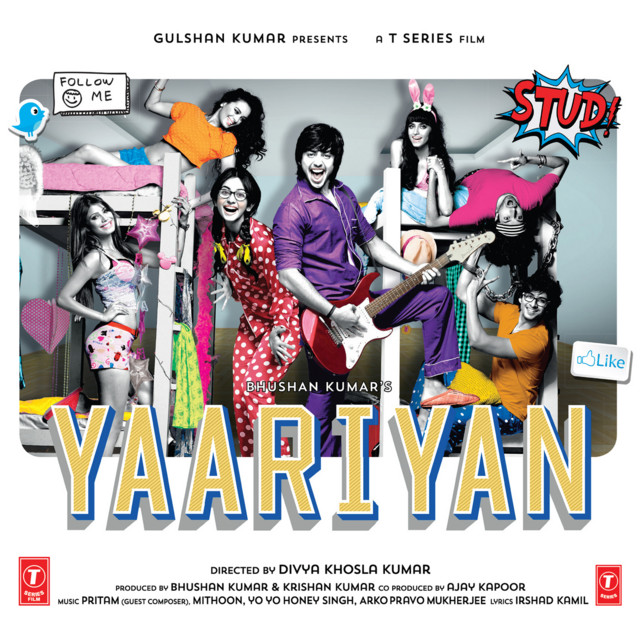
Yaariyan
Shafqat Amanat Ali
Qawwali
Sufi
Pop
2013
Dhoom:3
Pritam & Julius Packiam-Joshilay
Bollywood
Filmi
Soundtrack
2013
R… Rajkumar
Pritam
Bollywood
Filmi
Soundtrack
2013
Phata Poster Nikhla Hero
Pritam, Irshad Kamil & Amitabh Bhattacharya
Bollywood
Filmi
Soundtrack
2013
Once Upon a Time in Mumbaai दोबारा!
Pritam & Rajat Aroraa
Bollywood
Filmi
Soundtrack
2013
5
/5
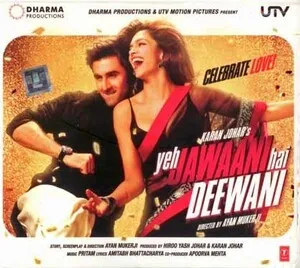
Yeh Jawaani Hai Deewani
Pritam
Filmi
Bollywood
Soundtrack
2013
I Love NY
Anupam Amod, Pritam, R.D. Burman & DJ Phukan
Bollywood
Filmi
Soundtrack
2013
Murder 3
Pritam & Sayeed Quadri
Bollywood
Filmi
Soundtrack
2012
Rush
Pritam
Bollywood
Filmi
Soundtrack
2012
OMG: Oh My God!
Himesh Reshammiya, Pritam, Sachin-Jigar & Meet Bros Anjjan
Bollywood
Filmi
Soundtrack
2012
Barfi!
Pritam, Swanand Kirkire, Sayeed Quadri, Ashish Pandit & Nilesh Misra
Bollywood
Filmi
Jazz
2012
Cocktail
Pritam & Irshad Kamil
Bollywood
Filmi
Soundtrack
2012
Ferrari Ki Sawaari
Pritam
Bollywood
Filmi
Soundtrack
2012
Jannat 2
Pritam
Ballad
Bollywood
Filmi
2012
Agent Vinod
Pritam & Amitabh Bhattacharya
Bollywood
Filmi
Pop
2012
Race 2
Pritam
Bollywood
Filmi
Soundtrack
2011
Players
Pritam
Bollywood
Filmi
Soundtrack
Similar artists
5
/5
A.R. Rahman
Bollywood
Filmi
Sufi
5
/5
Vishal-Shekhar
Bollywood
Filmi
Pop
5
/5
Irshad Kamil
Bollywood
Filmi
Pop
5
/5
Mithoon
Bollywood
Modern Bollywood
Filmi
1
/5
Various Artists
Afro-Funk
Alternative Rock
Ambient
4
/5
Shankar-Ehsaan-Loy
Bollywood
Desi
Hindi Pop
5
/5
Sachin-Jigar
Bollywood
Lo-Fi
Filmi
5
/5
Amitabh Bhattacharya
Bollywood
Desi
Hindi Indie
4
/5
Jatin-Lalit
Bollywood
Chutney
Hindi Pop
4
/5
Anand Bakshi
Bollywood
Hindi Pop
Chutney
Download our mobile app
Get the Melodigging app and start digging for new genres on the go
Download on the App Store
Get it on Google Play
© 2026 Melodigging
Give feedback
Legal
Melodding was created as a tribute to
Every Noise at Once
, which inspired us to help curious minds keep digging into music's ever-evolving genres.