Genres
Artists
Albums
Make Music
Sign in
Sign in
Artists
Verismo
Artists
Verismo
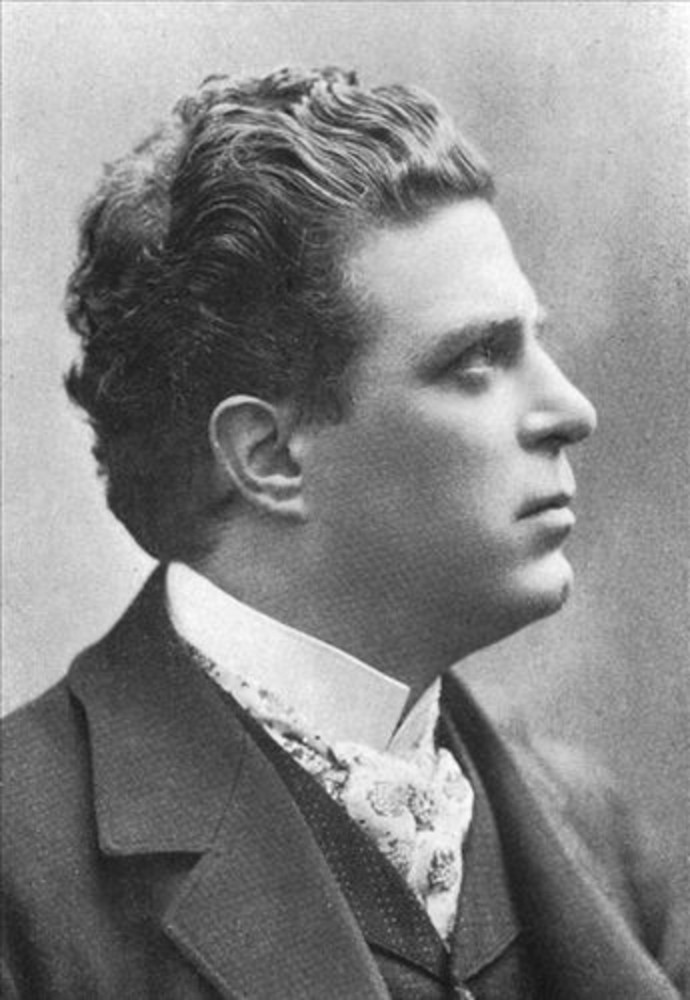
Pietro Mascagni
1953–1959
·
3 albums
Listen
3
/5
Genres
Verismo
Verismo is a late‑19th‑century Italian operatic movement that champions realism: ordinary people in contemporary or recent settings, intense emotions, and vivid, sometimes violent, conflicts. It favors continuous musical drama with flowing arioso and declamation over display arias, a rich late‑Romantic harmonic palette, and a large, coloristic orchestra that paints psychological and environmental detail (bells, banda, onstage chorus, local dances). Vocally, it spotlights spinto and dramatic voices capable of sudden dynamic surges, urgent parlando, and soaring lyrical lines that erupt at emotional peaks. The result is taut, cinematic storytelling that feels immediate, visceral, and unabashedly human.
Discover
Listen
Romantic Classical
Romantic classical (Romantic-era) music is the 19th‑century phase of Western art music in which expression, individuality, and imagination came to the fore. Composers expanded the orchestra, embraced chromatic harmony and bold modulations, and favored long‑breathed, emotive melodies. Aligned with the wider Romantic movement in literature and the arts, it prized the subjective—love, nature, the supernatural, nationalism, and the sublime—often through programmatic narratives. New and transformed genres (the symphonic poem, grand opera, the art song/Lied, concert overtures) coexisted with reimagined Classical forms (symphony, sonata, concerto) that grew in scale and harmonic daring. From ca. 1800 through the early 20th century, Romantic music stretched from Beethoven’s heroic style and Schubert’s lyricism to Wagner’s leitmotivic dramas and Tchaikovsky’s symphonic ballet-infused language, culminating in late-Romantic gigantism and post-Romantic continuations.
Discover
Listen
Concerto
A concerto is a large-scale composition that sets one or more solo instruments in dynamic dialogue with an orchestra. Its core idea is contrast—between soloist and tutti—and the dramatic negotiation of power, color, and thematic responsibility. While Baroque concertos often relied on ritornello form, the Classical era standardized a three-movement plan (fast–slow–fast) with sonata principles in the opening movement. The Romantic period emphasized virtuosity and expressive foregrounding of the soloist, and the 20th–21st centuries broadened the palette with new instruments, harmonies, and formats. Across eras, the concerto remains a showcase for instrumental character, technical brilliance, and the art of orchestral conversation.
Discover
Listen
Overture
An overture is an orchestral piece that traditionally serves as the opening to an opera, ballet, or stage work, and later evolved into an independent concert genre. Two foundational models emerged in the Baroque era: the French overture (slow, majestic dotted-rhythm opening followed by a faster, often fugal section) associated with Jean-Baptiste Lully, and the Italian overture (sinfonia) with a fast–slow–fast three-part design that presaged the Classical symphony. During the 19th century, the overture expanded into programmatic concert works, sometimes called "concert overtures," that used sonata-allegro or hybrid forms to depict narratives, scenes, or dramatic ideas. Overtures are characterized by bold thematic statements, clear formal signposts, and striking orchestration for full ensemble—strings, woodwinds, brass, and timpani—often designed to set the dramatic tone, preview motifs, or energize an audience before the curtain rises.
Discover
Listen
Opera
Opera is a large-scale theatrical genre that combines music, drama, and visual spectacle, in which the story is primarily conveyed through singing accompanied by an orchestra. It unites solo voices, ensembles, and chorus with staging, costumes, and often dance to create a total artwork. Emerging in late Renaissance Italy and flourishing in the Baroque era, opera developed signature forms such as recitative (speech-like singing that advances the plot) and aria (lyrical numbers that explore character and emotion). Over the centuries it evolved diverse national styles—Italian bel canto, French grand opéra, German music drama—while continually experimenting with orchestration, harmony, narrative structure, and stagecraft.
Discover
Listen
Classical
Classical music is the notated art-music tradition of Europe and its global descendants, characterized by durable forms, carefully codified harmony and counterpoint, and a literate score-based practice. The term “classical” can refer broadly to the entire Western art-music lineage from the Medieval era to today, not just the Classical period (c. 1750s–1820s). It privileges long-form structures (such as symphonies, sonatas, concertos, masses, and operas), functional or modal harmony, thematic development, and timbral nuance across ensembles ranging from solo instruments to full orchestras and choirs. Across centuries, the style evolved from chant and modal polyphony to tonal harmony, and later to post-tonal idioms, while maintaining a shared emphasis on written notation, performance practice, and craft.
Discover
Listen
Albums
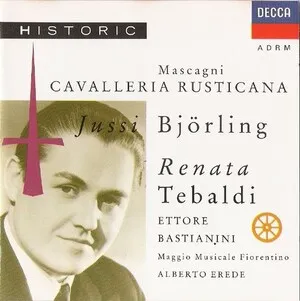
1959
1
/5
Cavalleria rusticana
Pietro Mascagni
Verismo
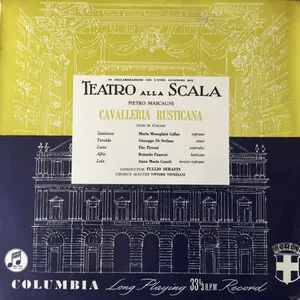
1953
1
/5
Cavalleria rusticana
Pietro Mascagni
Verismo
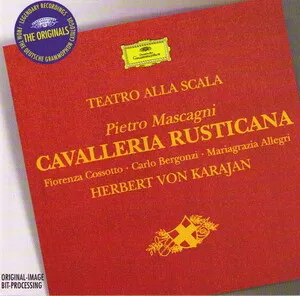
Cavalleria Rusticana
Pietro Mascagni
Verismo
Similar artists
4
/5
Herbert von Karajan
Classical
Symphonic Poem
Symphony
4
/5
Berliner Philharmoniker
Classical
Romantic Classical
Romanticism
4
/5
Wiener Philharmoniker
Classical
Romantic Classical
Romanticism
4
/5
London Symphony Orchestra
Classical
Ballet
Concerto
4
/5
Claudio Abbado
Classical
Concerto
Impressionism
3
/5
Academy of Ancient Music
Classical
Choral
Requiem
3
/5
Christopher Hogwood
Classical
Opera
Opera Seria
4
/5
Luciano Pavarotti
Canzone Napoletana
Classical
Opera
4
/5
Giacomo Puccini
Verismo
Classical
Opera
3
/5
Orchestra Del Teatro Alla Scala, Milano
Verismo
Classical
Grand Opera
Download our mobile app
Get the Melodigging app and start digging for new genres on the go
Download on the App Store
Get it on Google Play
© 2026 Melodigging
Give feedback
Legal
Melodding was created as a tribute to
Every Noise at Once
, which inspired us to help curious minds keep digging into music's ever-evolving genres.