Genres
Artists
Albums
Make Music
Sign in
Sign in
Artists
Filmi
Artists
Filmi
Nadeem Shravan
1993–2002
·
5 albums
Listen
4
/5
Genres
Banjara Pop
Banjara pop is contemporary popular music created by and for India’s Banjara (Lambani/Sugali) community. It blends regional Banjara folk idioms, dance rhythms, and Gor Boli/Lambadi (alongside Hindi, Marathi, Telugu and other local languages) with glossy, low‑to‑mid budget pop production. Typical releases feature ear‑catching hooks, bright synthesizers, dhol/tabla‑derived percussion patterns, and call‑and‑response refrains that suit community celebrations, weddings, and dance videos. Visual culture—costume, jewelry, and choreography—travels with the music via YouTube/Facebook/short‑video platforms, helping the style circulate across Maharashtra, Telangana, Andhra Pradesh, Karnataka, and Rajasthan. As a grassroots, platform‑driven micro‑scene, Banjara pop is less about album artists and more about singles, local studios, and viral clips that keep traditional melodies and themes alive in unmistakably modern form.
Discover
Listen
Desi
Desi is a contemporary umbrella term for South Asian–rooted popular music made both in the subcontinent and across its global diaspora. It blends Hindi, Punjabi, Urdu (and other regional) lyrics with Western pop, hip hop, R&B, and EDM production, while retaining melodic sensibilities from filmi/bollywood and classical/folk traditions. The sound ranges from romantic, hook-forward ballads to high-energy dance tracks driven by dhol- and tumbi-influenced rhythms. It is less a single formula than a shared aesthetic: flexible code-switching (Hinglish, Punjabi-English), raga-tinged melodies, and club-ready beats that connect Bollywood lineage, Punjabi bhangra, and global urban music.
Discover
Listen
Kannada Pop
Kannada pop is popular music performed primarily in the Kannada language, blending global pop idioms with South Indian melodic aesthetics. It spans radio-friendly film songs from Karnataka’s “Sandalwood” industry as well as independent, non-film releases. Typical tracks combine ear-catching hooks, verse–chorus forms, and polished production with raga-tinged melodies, light classical ornamentation, and a mix of electronic and acoustic instrumentation. Since the 2010s, streaming and social platforms have fueled a vibrant indie scene alongside mainstream film pop, bringing singer-songwriters and producer-led projects to a wider audience.
Discover
Listen
Marathi Pop
Marathi pop is contemporary popular music performed in the Marathi language, emerging as a non-film counterpart to Marathi cinema songs and older non-film bhavgeet traditions. It pairs Indian pop and Bollywood-style production with regional melodic sensibilities and rhythms from Maharashtra. Typical tracks use verse–pre-chorus–chorus structures, catchy hooks, and polished vocals with light ornamentation drawn from Hindustani classical practice. Production ranges from acoustic band settings to synth-driven, dance-oriented arrangements, often featuring dholki-inspired grooves, electric bass, guitars, keyboards, and programmed drums. Lyrically, Marathi pop explores romance, friendship, youth culture, everyday life, and regional pride, and it is distributed through private albums, television music programs, and—especially in the 2010s and 2020s—streaming platforms and short-video apps.
Discover
Listen
World
World music is a broad, industry-coined umbrella for traditional, folk, and contemporary popular styles from around the globe that fall outside the Anglo-American pop mainstream. The label emerged in the 1980s as a retail and marketing category to group diverse regional musics for international distribution. Musically, it spans acoustic and electric instrumentation; modal, pentatonic, and microtonal pitch systems; and rhythms ranging from cyclical grooves and polyrhythms to asymmetrical meters. While the term can obscure local specificity, it also facilitated cross-cultural collaboration, festivals, and recordings that brought regional genres to wider audiences.
Discover
Listen
Chutney
Chutney is an Indo-Caribbean dance music that blends North Indian folk and devotional song with Caribbean popular rhythms. It features lively percussion (especially dholak, dhantal, and tassa), harmonium-led melodies, and singable choruses in Hindi, Trinidadian Hindustani, and English. Emerging among the Indian diaspora in Trinidad and Tobago, chutney grew from intimate house-music traditions into amplified stage performances and recordings. Its lyrics typically revolve around love, weddings, teasing banter, and festive “bacchanal,” and its upbeat feel makes it a staple at family functions, fetes, and Carnival events. While classic chutney retains a rootsy Indo-folk core, modern productions often incorporate calypso and soca grooves, electric bass, guitar skanks, and synthesizers. This evolution helped give rise to the high-energy fusion subgenre chutney soca.
Discover
Listen
Kollywood
Kollywood (Tamil film music) is the popular music associated with the Tamil-language film industry centered in Chennai, India. It blends Carnatic classical melody writing with Western orchestration, pop song forms, and contemporary production. Songs are typically crafted for cinematic situations and delivered by playback singers, resulting in a catalog that spans romantic ballads, folk-inspired numbers, devotional themes, and high-energy dance tracks (kuthu/gaana). Characteristic features include raga-based melodies, memorable hooks, lush string arrangements, hybrid percussion (mridangam, thavil, urumi, ghatam alongside drum kits and samples), and a fluid adoption of global styles such as disco, synth-pop, EDM, rock, and R&B. The genre emphasizes melodic richness, dramatic dynamics, and strong lyrical storytelling in Tamil.
Discover
Listen
Filmi
Filmi is the song tradition of Indian cinema, encompassing Hindi, Tamil, Telugu, Bengali, and other regional film industries. It is built for on-screen storytelling and "playback" singing, where actors lip-sync to pre-recorded vocals. Stylistically, filmi blends raga-informed melodies from Hindustani and Carnatic classical music with Indian folk forms, devotional currents (ghazal, qawwali, bhajan), and an evolving palette of Western popular idioms—big band, jazz, rock, disco, synth-pop, and EDM. Arrangements often feature lush orchestration, prominent melodic hooks, and dramatic modulations, supporting narratives of romance, devotion, comedy, and spectacle. As one of the most-heard musical practices in South Asia and its diaspora, filmi has defined the sound of commercial Indian culture for nearly a century while continually adapting to technology, audience taste, and cross-cultural exchange.
Discover
Listen
Bollywood
Bollywood is the popular film-music tradition associated with Hindi-language cinema from Mumbai, India. It blends raga-based melodies and Hindustani vocalism with Western orchestration, jazz/big-band legacies, pop hooks, disco/funk grooves, rock energy, and contemporary electronic production. Songs are typically designed for on-screen performance and storytelling, featuring lush arrangements, memorable refrains, and emotive playback singing. A common formal scheme is the mukhda (catchy refrain) and antara (stanza/verse) structure, often with instrumental preludes, interludes, and dance breaks. Because it serves narrative and spectacle, Bollywood music ranges widely in mood—from romantic ballads and devotional pieces to high-energy dance numbers—and has continuously absorbed global influences while remaining rooted in Indian melodic and rhythmic aesthetics.
Discover
Listen
Sandalwood
Sandalwood refers to Kannada‑language film music from the Karnataka film industry in India. It is a cinematic song tradition that blends Carnatic and Hindustani classical melody with Karnataka’s folk idioms, while freely adopting Western pop, disco, rock, and contemporary electronic production. Songs are typically written in Kannada and feature poetic, image‑rich lyrics delivered by renowned playback singers. Musical materials often draw on raga‑based melody and Indian tala cycles but are arranged in verse–chorus formats suitable for the screen, ranging from romantic ballads and devotional pieces to high‑energy dance numbers and heroic “mass” anthems. Over time, Sandalwood has evolved from orchestra‑led studio recordings to digital, genre‑fluid productions that still keep melody and lyricism at the core, making it one of India’s most distinctive regional film‑music traditions.
Discover
Listen
Tollywood
Tollywood (in this context) refers to Telugu-language film music from the Indian film industry based primarily in Hyderabad. It blends Carnatic and Hindustani classical traditions with Indian folk idioms and contemporary global pop, rock, hip hop, and electronic production. Hallmarks include raga-inflected melodies, lush string and brass arrangements, high-energy dance rhythms for "mass" numbers, and emotive romantic ballads. Modern Tollywood songs often feature cutting-edge sound design, hook-heavy choruses, and cinematic dynamics tailored for on-screen choreography and narrative.
Discover
Listen
Soundtrack
Soundtrack is music created to accompany and enhance visual media such as film, television, and video games. It includes original scores (instrumental or vocal music composed specifically for the picture) and, at times, curated compilations of pre-existing songs. Stylistically, soundtrack is a meta-genre that can encompass orchestral symphonic writing, jazz, electronic and synth-driven textures, choral forces, popular song, and experimental sound design. Its defining trait is functional storytelling: themes, motifs, harmony, rhythm, and timbre are shaped by narrative needs, character psychology, pacing, and editing. Common features include leitmotifs for characters or ideas, modular cues that can be edited to picture, dynamic orchestration for dramatic range, and production approaches that sit well under dialogue and sound effects. Because it must synchronize to picture, soundtrack often uses clear dramatic arcs, tempo maps, and hit points.
Discover
Listen
Ghazal
Ghazal is a South Asian light-classical vocal genre built around the Urdu–Persian poetic form of the same name. It sets couplets (sher) that share a rhyme (qaafiya) and refrain (radif), often opening with a matla and ending with a maqta featuring the poet’s takhallus. Themes revolve around love, longing, separation, metaphysical yearning, and refined wit. Musically, ghazal draws on Hindustani classical grammar but prioritizes text clarity and melodic expressiveness over elaborate improvisation. Performances commonly feature a singer accompanied by harmonium and tabla (with sarangi, sitar, or guitar as color), use raga-informed melodies, and keep lilting tala cycles such as dadra (6 beats) or keherwa (8 beats). The style favors intimate delivery, subtle ornamentation (meend, murki), and immaculate diction, making it ideal for salon (mehfil) settings as well as recorded and film music.
Discover
Listen
Qawwali
Qawwali is a Sufi devotional vocal music from the Indian subcontinent that aims to evoke spiritual ecstasy and communal devotion. It is typically performed by a lead singer (qawwal) with a small ensemble of accompanying vocalists, harmoniums, handclaps, and percussion such as dholak and tabla. Musically, Qawwali blends raga-based melodic frameworks and flexible, improvisatory singing with driving rhythms and responsorial choruses. Texts are drawn from Urdu, Persian, Punjabi, and other North Indian languages, and include ghazals, kafis, hamds (praise of God), naats (praise of the Prophet), and manqabats (praise of Sufi saints). Performances traditionally take place at Sufi shrines (dargahs), where repetition, call-and-response, and gradual intensification lead listeners toward wajd (states of spiritual ecstasy). In the modern era, Qawwali is also heard on concert stages, recordings, and film.
Discover
Listen
Sufi
Sufi is a devotional musical tradition rooted in Islamic mysticism that seeks to induce remembrance of the Divine (dhikr) and transport performers and listeners toward spiritual ecstasy (wajd). It is not a single uniform style, but a family of practices that vary across regions—most notably Persian/Iranian, Anatolian/Turkish (Mevlevi), Arab, and South Asian (qawwali, kafi). Musically, Sufi repertoire tends to revolve around repetitive, mantra-like refrains, call-and-response between lead and chorus, and gradual intensification over cyclical rhythms. Melodic language draws from regional modal systems such as the Persian dastgāh, Ottoman/Turkish makam, and South Asian raga, and is often supported by drones. Texts are central: poetry by mystic masters like Rumi, Hafez, Bullhe Shah, and Amir Khusrau is sung in Persian, Urdu, Punjabi, Arabic, Turkish, and other languages. Instrumentation varies by locale—harmonium, tabla/dholak, tanpura, and clapping in South Asia; ney, kudüm, bendir, and tanbur in Turkey; oud and frame drums across the Arab world—yet the unifying aim is spiritual uplift and inner transformation.
Discover
Listen
Show all 15 genres
Albums
2002
4
/5
Haan Maine Bhi Pyaar Kiya (Original Motion Picture Soundtrack)
Udit Narayan
Chutney
2002
4
/5
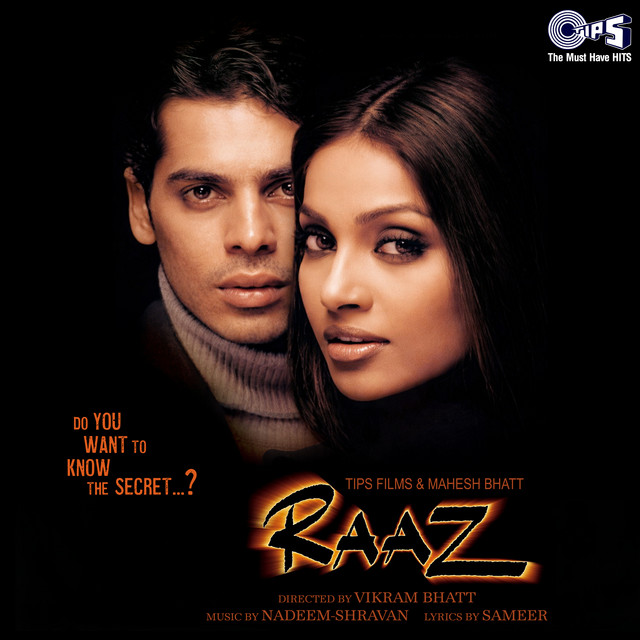
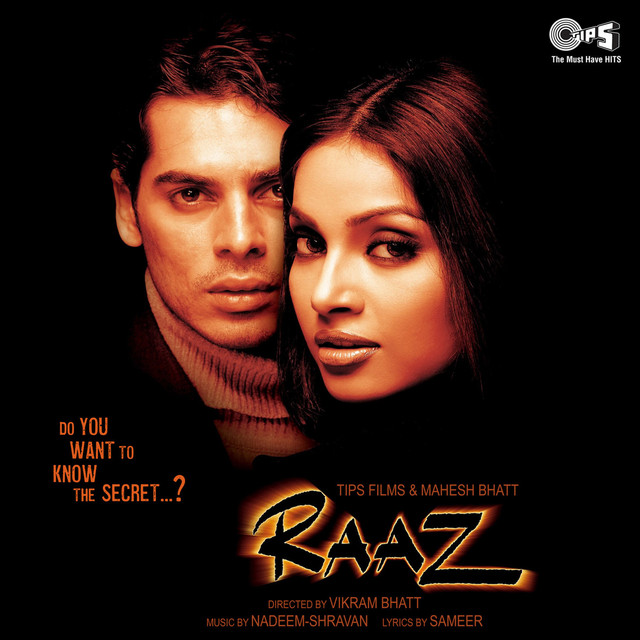
Raaz (Original Motion Picture Soundtrack)
Alka Yagnik
Desi
Bollywood
Filmi
2000
4
/5
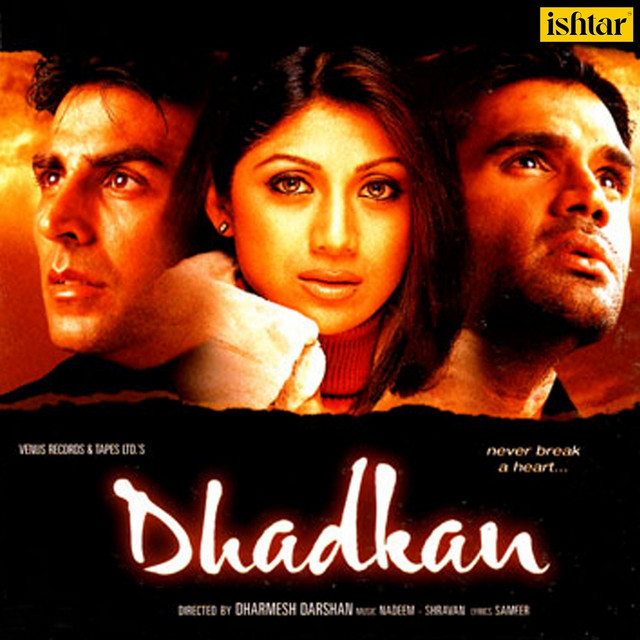
Dhadkan (Original Motion Picture Soundtrack)
Nusrat Fateh Ali Khan
World
Ghazal
Qawwali
1993
3
/5
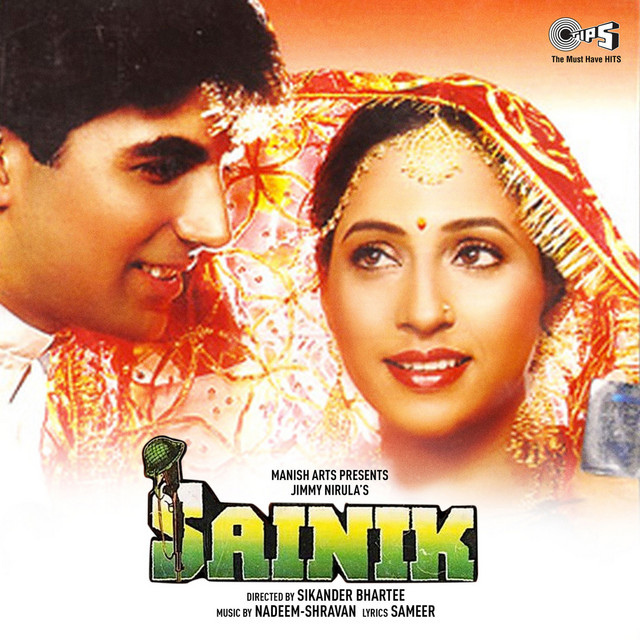
Sainik (Original Motion Picture Soundtrack)
Suhasini
Banjara Pop
1993
4
/5
Saajan (Original Motion Picture Soundtrack)
Anuradha Paudwal
Marathi Pop
Sandalwood
Ghazal
Similar artists
4
/5
Sameer Anjaan
Pop
Bollywood
Banjara Pop
5
/5
Pritam
Bollywood
Filmi
Pop
5
/5
Vishal-Shekhar
Bollywood
Filmi
Pop
5
/5
Irshad Kamil
Bollywood
Filmi
Pop
5
/5
A.R. Rahman
Bollywood
Filmi
Sufi
4
/5
Tanishk Bagchi
Bollywood
Hindi Indie
Pop Urbaine
4
/5
Manoj Muntashir
Bollywood
Hindi Pop
Filmi
4
/5
Rahat Fateh Ali Khan
Ghazal
Qawwali
Sufi
4
/5
Jubin Nautiyal
Bhajan
Devotional
Bollywood
4
/5
Amit Trivedi
Bollywood
Indian Indie
Bangla Pop
Download our mobile app
Get the Melodigging app and start digging for new genres on the go
Download on the App Store
Get it on Google Play
© 2026 Melodigging
Give feedback
Legal
Melodding was created as a tribute to
Every Noise at Once
, which inspired us to help curious minds keep digging into music's ever-evolving genres.