Genres
Artists
Albums
Make Music
Sign in
Sign in
Artists
Copla
Artists
Copla
Martirio
1994–1998
·
4 albums
Listen
2
/5
Genres
Nuevo Flamenco
Nuevo flamenco is a modernized, crossover evolution of traditional Andalusian flamenco that integrates pop, rock, and jazz aesthetics while preserving core flamenco compás (rhythmic cycles), guitar techniques, and cante (vocal) expression. It is marked by the use of flamenco guitar alongside bass, cajón, handclaps (palmas), saxophone or flute, keyboards, and drum kit, yielding a more contemporary, often radio-friendly sound. Harmonically, it blends Phrygian/Phrygian dominant colors and modal cadences with jazz-inspired extensions and pop progressions. Rhythmically, nuevo flamenco favors accessible palos like rumba (and tangos), while still drawing energy from bulerías and other 12-beat cycles. Its production commonly embraces studio polish, global grooves, and melodic hooks, making it a gateway for international audiences into the flamenco tradition.
Discover
Listen
Latin Jazz
Latin jazz is a fusion of jazz harmony and improvisation with Afro–Latin American rhythms, song forms, and percussion. It combines the swing, bebop, and big-band traditions with clave-based grooves such as son, rumba, danzón, and mambo, and later integrates Brazilian feels like samba and bossa nova. Typical features include the use of the clave (2–3 or 3–2), piano montunos (guajeos), bass tumbao patterns, timbales cáscara, conga marcha, and call-and-response horn "mambo" figures. While the rhythm section locks into cyclical patterns, soloists improvise using the vocabulary of jazz, creating music that is both danceable and harmonically rich.
Discover
Listen
Latin
Latin (as a genre label) is a broad umbrella used by the recording industry to categorize popular music rooted in Latin America, the Caribbean, and the Iberian world, often characterized by syncopated Afro-diasporic rhythms, dance-forward grooves, and lyrics primarily in Spanish or Portuguese. As a marketplace category that took shape in the mid-20th century United States, it gathers diverse traditions—Afro-Cuban, Brazilian, Mexican, and Caribbean styles—into a shared space. In practice, "Latin" spans everything from big-band mambo and bolero ballads to contemporary pop, rock, hip hop, and dance fusions produced by artists of Latin American heritage.
Discover
Listen
Copla
Copla (often called copla andaluza or canción española) is a dramatic Spanish popular song style characterized by narrative lyrics, big emotions, and theatrical performance. It typically tells compact, melodramatic stories of love, jealousy, honor, betrayal, social stigma, or fate, delivered by a solo singer with highly expressive phrasing. Musically, copla favors clear tonal harmony (often minor-key), memorable melodies, and accompaniment that ranges from guitar or piano to full orchestra or band. Rhythms frequently draw on pasodoble and bolero feels, with touches of flamenco color and the Andalusian cadence that imbue the songs with a distinctly Iberian character. Historically linked to stage and cinema, copla thrives on performance: commanding vocals, precise diction, and emotional acting are as central as the music itself.
Discover
Listen
Jazz
Jazz is an improvisation-centered music tradition that emerged from African American communities in the early 20th century. It blends blues feeling, ragtime syncopation, European harmonic practice, and brass band instrumentation into a flexible, conversational art. Defining features include swing rhythm (a triplet-based pulse), call-and-response phrasing, blue notes, and extended harmonies built on 7ths, 9ths, 11ths, and 13ths. Jazz is as much a way of making music—spontaneous interaction, variation, and personal sound—as it is a set of forms and tunes. Across its history, jazz has continually hybridized, from New Orleans ensembles and big-band swing to bebop, cool and hard bop, modal and free jazz, fusion, and contemporary cross-genre experiments. Its influence permeates global popular and art music.
Discover
Listen
Flamenco
Flamenco is a highly expressive musical and dance tradition from Andalusia that combines cante (song), toque (guitar), baile (dance), palmas (handclaps), and jaleo (shouts of encouragement). It is characterized by intricate rhythmic cycles called compás, intense vocal melismas with ornamental micro-inflections, and guitar techniques such as rasgueado, picado, alzapúa, golpe, and tremolo. Harmonically it often centers on the Phrygian mode and the Andalusian cadence (iv–III–II–I), creating a dramatic tension that complements the emotional depth of the lyrics, which frequently explore themes of love, loss, pride, and fate. Flamenco is organized into palos (forms) such as soleá, bulería, alegrías, seguiriyas, tientos/tangos, fandangos, tarantas, and rumba, each defined by its compás, mood, and traditional melodic/harmonic vocabulary.
Discover
Listen
Sevillanas
Sevillanas is a lively Andalusian song-and-dance genre closely associated with Seville’s spring fair (Feria de Abril) and the pilgrimage to El Rocío. Although often performed within the broader flamenco ecosystem, sevillanas is fundamentally a festive folk style derived from the Castilian seguidilla and shaped in Andalusia. A typical sevillanas performance consists of four short sung-and-danced sections (coplas), each with its own choreography. The music is upbeat, commonly in 3/4 with occasional hemiola feels between 3/4 and 6/8, and is accompanied by Spanish guitar, palmas (handclaps), and dancers’ castanets. Lyrics celebrate everyday life, romance, regional pride, and religious devotion, making the genre both communal and highly singable.
Discover
Listen
Bolero
Bolero is both a Spanish dance-music form from the late 18th century and, later, a Cuban song style from the late 19th century. The Spanish bolero emerged as a moderately slow solo or partner dance in 3/4 time, shaped by Andalusian song-dance traditions. It typically features guitar accompaniment and castanets, and its sung texts often follow the seguidilla stanza pattern. In Cuba, bolero evolved into a romantic ballad—most often in 2/4 (later also felt in 4/4)—performed by singers, trios, and salon ensembles. Cuban bolero emphasizes intimate, lyrical melodies, guitar-led accompaniment (often with requinto), and gentle Afro-Caribbean rhythmic undercurrents (habanera feel, soft bongo, claves), becoming one of Latin America’s quintessential love-song forms.
Discover
Listen
Andalusian Folk Music
Andalusian folk music is the traditional music of Andalusia in southern Spain, closely associated with regional song, dance, and especially the cultural world that gave rise to flamenco. It draws on a long historical mix of Iberian, Romani, Moorish-Andalusi, Sephardic Jewish, and broader Mediterranean influences, but in its better-known modern form it is most strongly identified with music and dance traditions developed from the 18th century onward in Andalusia. The genre is marked by expressive singing, modal melodic language, rich ornamentation, flexible rhythm, handclaps, guitar accompaniment, and strong links to dance. In many contexts, "Andalusian folk music" refers to the wider traditional musical environment of Andalusia from which flamenco emerged and within which forms such as fandangos, seguidillas, saetas, sevillanas, and other regional styles have circulated. As reflected in the supplied external description, it is especially connected with the flamenco traditions of Andalusia and with the Romani communities of the region, known locally as gitanos, who played a major role in shaping its post-18th-century development.
Discover
Listen
Show all 9 genres
Albums
1998
1
/5
Coplas de madrugá
Martirio
Copla
1994
1
/5
He visto color por sevillanas
Martirio
Sevillanas
Andalusian Folk Music
Cristalitos machacaos
Martirio
Copla
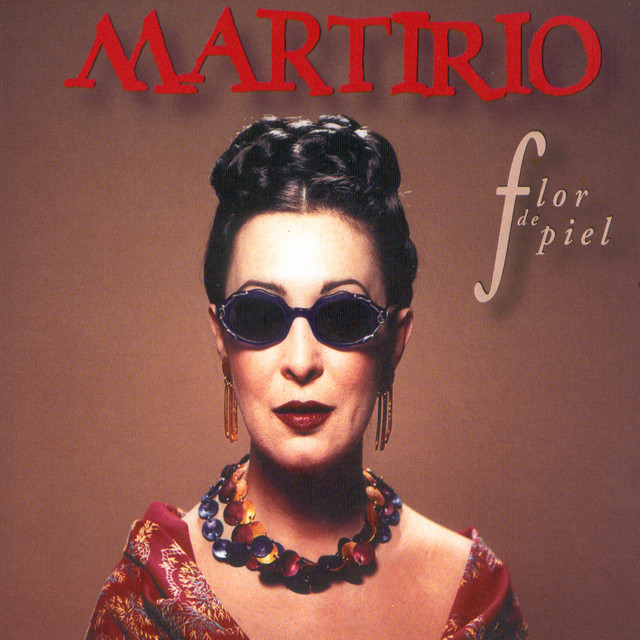
Flor de piel
Martirio
Copla
Similar artists
3
/5
Isabel Pantoja
Copla
Canción Melódica
Flamenco
3
/5
Diego El Cigala
Flamenco
Tango
Bolero
3
/5
Bebo Valdés
Flamenco
Bolero
Chachachá
3
/5
Manolo Escobar
Copla
Villancico
Flamenco
2
/5
Raúl Rodríguez
Bolero
Flamenco
Latin Jazz
2
/5
Carmen Sevilla
Flamenco
Andalusian Folk Music
Copla
3
/5
Miguel Poveda
Copla
Fado
Flamenco
3
/5
Rocío Jurado
Copla
Canción Melódica
Flamenco
3
/5
Diana Navarro
Copla
Flamenco
Flamenco Pop
2
/5
Lola Flores
Copla
Flamenco
Organic Ambient
Download our mobile app
Get the Melodigging app and start digging for new genres on the go
Download on the App Store
Get it on Google Play
© 2026 Melodigging
Give feedback
Legal
Melodding was created as a tribute to
Every Noise at Once
, which inspired us to help curious minds keep digging into music's ever-evolving genres.