Genres
Artists
Albums
Make Music
Sign in
Sign in
Artists
Free Jazz
Artists
Free Jazz
Manfred Jung
1981
·
2 albums
Listen
1
/5
Genres
Free Jazz
Free jazz is a radical branch of jazz that rejects fixed chord progressions, strict meter, and conventional song forms in favor of collective improvisation, textural exploration, and spontaneous interaction. Musicians prioritize timbre, dynamics, and gesture as much as pitch and harmony, often using extended techniques (multiphonics, overblowing, prepared piano) and unconventional sounds. While rooted in the blues and earlier jazz vocabularies, free jazz frees improvisers from pre-set harmonic cycles, allowing lines to unfold over tonal centers, shifting modes, drones, or complete atonality. Rhythm sections may float without a steady pulse, or drive with layered polyrhythms and “energy playing.” The result ranges from contemplative soundscapes to cathartic, high-intensity eruptions. Culturally, the genre intersected with the civil rights era and broader avant-garde movements, emphasizing autonomy, community, and new possibilities for musical expression.
Discover
Listen
Wagnerian Singing
Wagnerian singing is the dramatic operatic vocal style associated with the music dramas of Richard Wagner. It is characterized by large, penetrating voices capable of projecting over very dense orchestration for prolonged periods, with remarkable stamina, focus, and legato. The style prioritizes declamatory text delivery in German, seamless "endless melody" (unendliche Melodie), and an expressive, weighty timbre with a pronounced singer’s formant (squillo) that carries through large halls. Tessituras are often high and unrelenting, with long phrases, wide dynamic ranges, and limited use of ornamental display compared to bel canto. Typical Wagnerian voice categories include the Heldentenor and hochdramatische Sopran (high dramatic soprano), along with dramatic mezzo-sopranos and bass-baritones. Roles such as Brünnhilde, Isolde, Siegfried, and Wotan exemplify the technical and expressive demands of the style.
Discover
Listen
Opera
Opera is a large-scale theatrical genre that combines music, drama, and visual spectacle, in which the story is primarily conveyed through singing accompanied by an orchestra. It unites solo voices, ensembles, and chorus with staging, costumes, and often dance to create a total artwork. Emerging in late Renaissance Italy and flourishing in the Baroque era, opera developed signature forms such as recitative (speech-like singing that advances the plot) and aria (lyrical numbers that explore character and emotion). Over the centuries it evolved diverse national styles—Italian bel canto, French grand opéra, German music drama—while continually experimenting with orchestration, harmony, narrative structure, and stagecraft.
Discover
Listen
Albums
1981
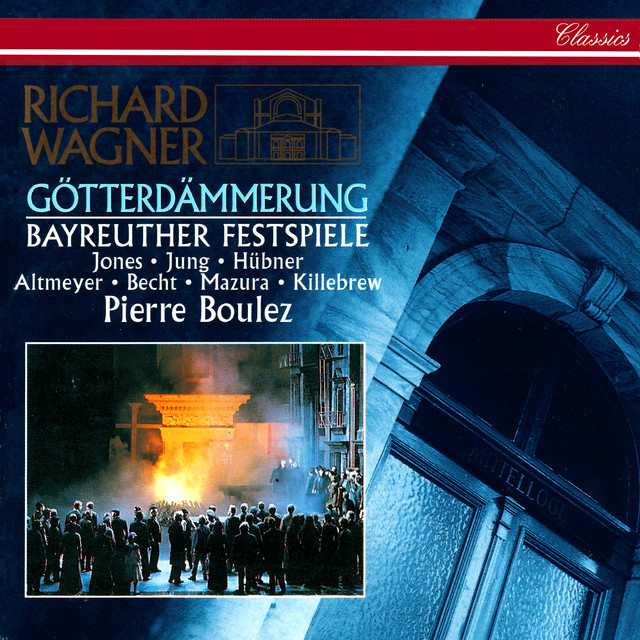
Wagner: Götterdämmerung
Richard Wagner, Pierre Boulez, Gwyneth Jones, Manfred Jung, Fritz Hübner, Franz…
Wagnerian Singing
1981
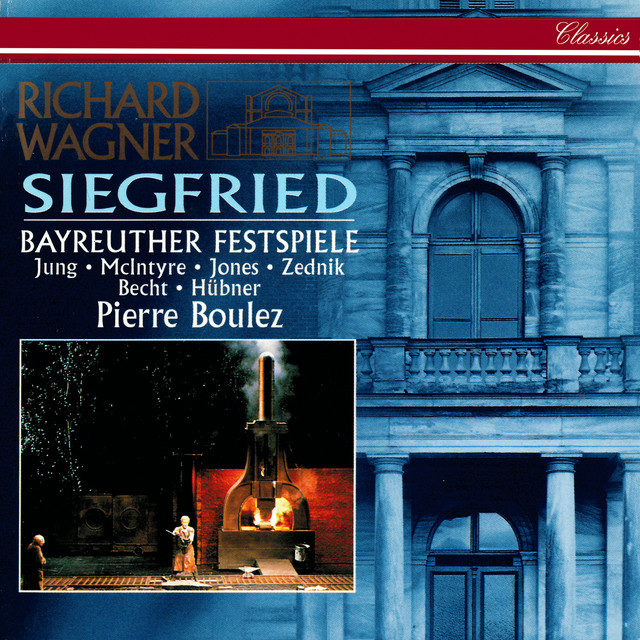
Wagner: Siegfried
Richard Wagner, Manfred Jung, Donald McIntyre, Gwyneth Jones, Heinz Zednik, Her…
Wagnerian Singing
Similar artists
4
/5
Berliner Philharmoniker
Classical
Symphony
Romantic Classical
4
/5
Herbert von Karajan
Classical
Symphonic Poem
Symphony
4
/5
Wiener Philharmoniker
Classical
Romantic Classical
Romanticism
4
/5
Claudio Abbado
Classical
Concerto
Expressionism
3
/5
Richard Wagner
New German School
Romantische Oper
Wagnerian Singing
3
/5
Bavarian Radio Symphony Orchestra
Austro-German Modernism
Classical
Classical Contralto
3
/5
Karl Böhm
Classical
Classical Period
Opera
3
/5
Sir Georg Solti
Classical
Romantic Classical
Romanticism
3
/5
Metropolitan Opera Orchestra
Classical
Opera
Wagnerian Singing
3
/5
Wiener Staatsopernchor
Classical
Requiem
Opera
Download our mobile app
Get the Melodigging app and start digging for new genres on the go
Download on the App Store
Get it on Google Play
© 2026 Melodigging
Give feedback
Legal
Melodding was created as a tribute to
Every Noise at Once
, which inspired us to help curious minds keep digging into music's ever-evolving genres.