Genres
Artists
Albums
Make Music
Sign in
Sign in
Artists
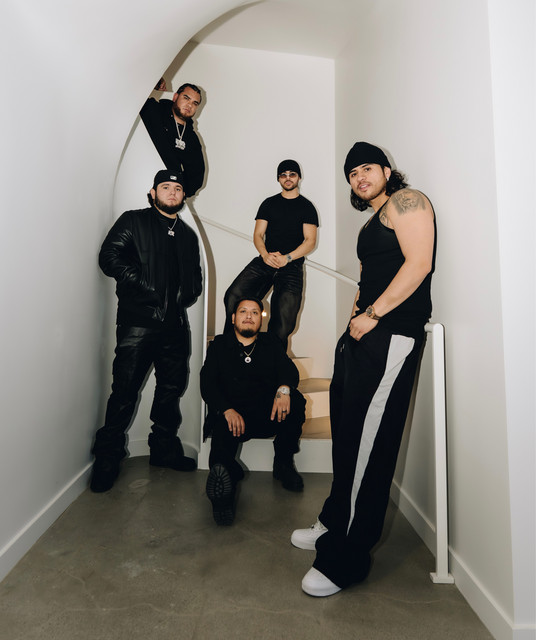
Reggaeton Mexa
Artists
Reggaeton Mexa
Jey F
Listen
3
/5
Genres
Dembow Belico
Dembow bélico is a recent crossover of the Dominican dembow rhythm with the lyrical aesthetics and sonic signifiers of Mexico’s corridos bélicos and broader regional mexicano. It keeps dembow’s relentless, syncopated, club-ready percussion, but injects “bélico” (warlike) storytelling, slang, and iconography drawn from the corridos world. Producers typically fuse fast dembow drums, sirens, and chopped vocal shots with Mexican regional elements like tuba stabs, sierreño/12‑string guitar riffs, and banda-style brass hits. The result is a high-energy, gritty, and party-oriented sound that also carries the bravado and conflict-laced narratives characteristic of corridos bélicos.
Discover
Listen
Electro Corridos
Electro corridos (often styled as electrocorridos, electro bélico, or house belicón) fuse the narrative songwriting, vocal delivery, and melodic motifs of Mexican corridos with modern electronic dance production. Hallmarks include four-on-the-floor or syncopated club drums, sidechained bass lines that mirror traditional tuba/tololoche figures, bright synth leads echoing requinto/accordion riffs, and drop-focused arrangements. While lyrics retain corridos’ storytelling—romance, street life, hustle, regional pride—the sound is engineered for clubs and festivals, sitting at the crossroads of Regional Mexicano and EDM/house culture.
Discover
Listen
Reggaeton Mexa
Reggaeton mexa is the Mexican take on reggaetón, fusing the classic dembow pulse with local slang, humor, and references to Mexican youth culture. It leans on viral, dance‑oriented hooks and streetwise storytelling, often delivered with bold, tongue‑in‑cheek bravado. Beyond straight perreo, producers and artists frequently blend elements from regional mexicano and cumbia with modern urbano textures (808s, crisp claps, autotune‑forward vocals). The result is a distinctly Mexican club sound that thrives on social media, parties, and neighborhood scenes in Mexico City, Monterrey, and Guadalajara.
Discover
Listen
Urbano Mexicano
Urbano mexicano is the Mexican take on Latin urban music, blending reggaeton’s dembow pulse and trap’s 808 heaviness with Spanish lyrics, Mexican slang, and local storytelling. It favors sleek, dance‑ready productions, sing‑rap toplines, and catchy hooks designed for streaming and social platforms. Themes span party and romance to barrio life and digital‑age swagger, often flipping between melodic crooning and percussive rap cadences. While globally aligned with urbano latino, its sonic palette and cultural references anchor it distinctly in Mexico’s youth culture.
Discover
Listen
Musica Urbana Oaxaquena
Musica urbana oaxaqueña (Oaxacan urban music) is a contemporary, grassroots blend of Latin urban styles—reggaeton, Latin trap, dancehall and hip‑hop—with regional sounds and languages from the state of Oaxaca, Mexico. It often mixes Spanish with Indigenous languages such as Zapotec, Mixtec, Mixe, Mazatec, and Triqui, foregrounding local identity alongside global club aesthetics. Production typically marries dembow or halftime trap drums with timbres and melodic turns inspired by Oaxacan brass band traditions (bandas de viento), chilena costeña (6/8–3/4 hemiola swing), son istmeño motifs, and cumbia keyboards or guitars. Lyrically, it ranges from party and romance to migration, pride, and community narratives tied to fiestas patronales, tequio (communal work), and Oaxacan diasporic life.
Discover
Listen
Son Jarocho
Son jarocho is a traditional folk music and dance style from the Sotavento region of Veracruz, Mexico, shaped by the encounter of Spanish, Indigenous, and West African cultures. It is performed at community gatherings called fandangos, where singers, dancers, and instrumentalists trade improvised verses and rhythms in a festive, call-and-response setting. Its core sound blends strummed jaranas (small, re-entrant tuned guitars), the melodic requinto jarocho played with a plectrum, and the arpa jarocha (harp), supported by percussive zapateado dancing on a wooden platform (tarima). Additional timbres come from the quijada (donkey jawbone), pandero, and marimbol (bass lamellophone). Sones such as La Bamba, El Siquisirí, El Colás, El Balajú, and El Cascabel feature hemiola (sesquiáltera) grooves that alternate between 6/8 and 3/4, décima-verse poetry, and a communal, improvisatory spirit.
Discover
Listen
Similar artists
3
/5
Alan Dazmel
Gogeo
Reggaeton Mexa
Son Jarocho
3
/5
Oviña
Reggaeton Mexa
Son Jarocho
Urbano Mexicano
5
/5
Fuerza Regida
Sierreño
Banda
Corrido
5
/5
Peso Pluma
Banda
Electro Corridos
Corridos Bélicos
5
/5
Blessd
Trap Boricua
Dembow Belico
Electro Corridos
5
/5
Victor Mendivil
Corrido
Electro Corridos
Corridos Bélicos
4
/5
Grupo Marca Registrada
Norteño
Banda
Sierreño
4
/5
Yng Lvcas
Reggaeton Mexa
Electro Corridos
Previa
2
/5
RAYBEN
Electro Corridos
Reggaeton Mexa
Urbano Mexicano
5
/5
Bad Bunny
Latin
Reggaeton
Trap Latino
Download our mobile app
Get the Melodigging app and start digging for new genres on the go
Download on the App Store
Get it on Google Play
© 2026 Melodigging
Give feedback
Legal
Melodding was created as a tribute to
Every Noise at Once
, which inspired us to help curious minds keep digging into music's ever-evolving genres.