Your digging level
Description
Gogeo is a high-energy Latin-electronic club microgenre that emerged from the Mexican underground party and car-audio scenes. It is characterized by a fusion of Guaracha-style lead riffs, Tribal Guarachero percussion, and aggressive EDM drops, all underpinned by oversized sub-bass frequencies designed to rattle car sound systems. The aesthetic bridges the gap between festival-ready Electro-Latin energy and the raw, bass-heavy functionalism of street party music, often featuring catchy Spanish vocal chops and metallic synth textures.
History
Gogeo developed in the late 2010s within Mexico's vibrant electronic music underground, specifically evolving from the 'Tribal Guarachero' and Colombian 'Guaracha' (Aleteo) movements.
As producers in Mexico sought to create tracks that would stand out in car audio competitions and street parties (sonideros), they began hybridizing the triplet-heavy rhythms of Tribal with the hypnotic, repetitive synth leads of Guaracha and the structural build-ups of Big Room EDM.
The genre gained significant traction in the early 2020s through short-form video platforms like TikTok, where its high-energy drops and danceable rhythms fueled viral dance challenges. It has since established itself as a distinct microgenre within the broader 'Latin Tech' and 'Circuit' scenes, with a dedicated community of producers and DJs primarily based in Mexico.
To compose Gogeo, start with a fast tempo, typically between 128 and 135 BPM, and establish a driving four-on-the-floor kick drum pattern.
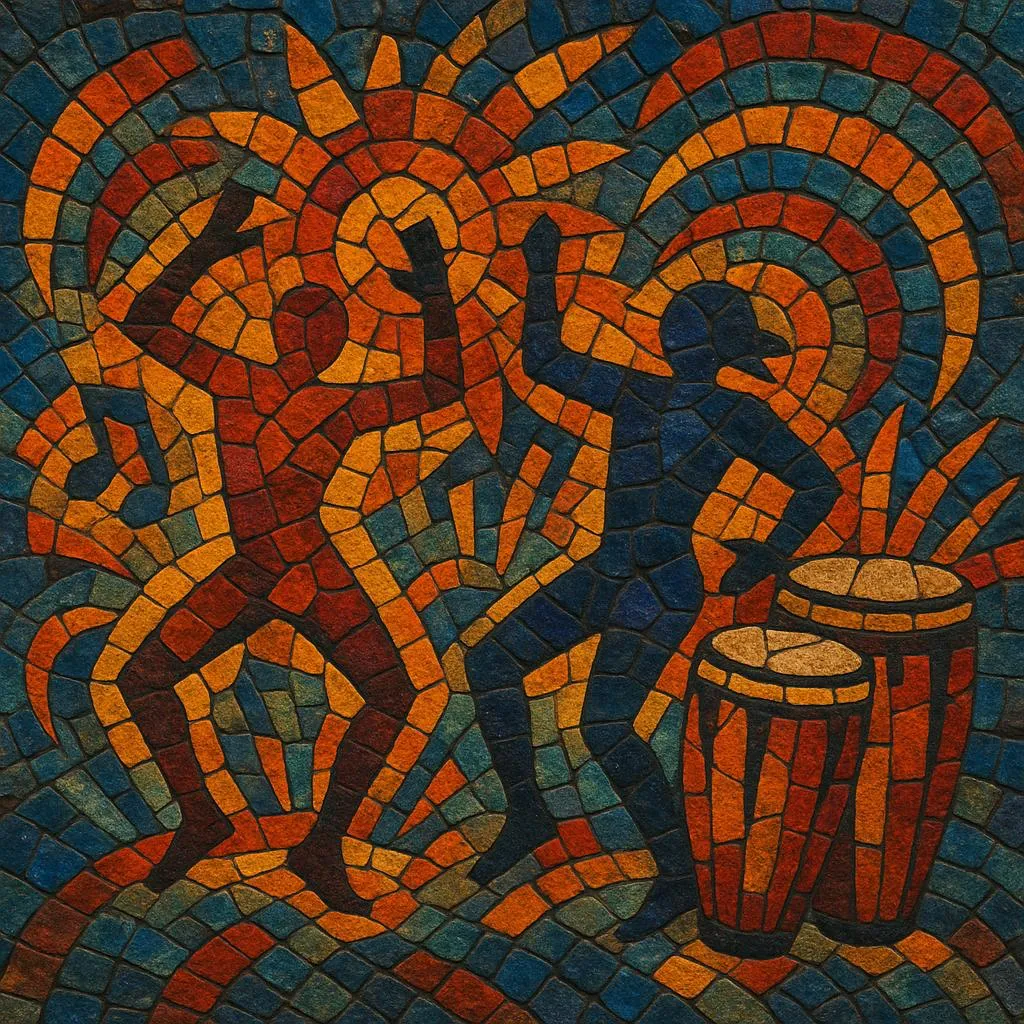
Layer this with syncopated Latin percussion, particularly focusing on tribal snares, congas, and metallic hi-hats to create a rolling, triplet-feel groove.
The bassline should be simple but extremely heavy, focusing on sub-frequencies that resonate physically.
For the melody, use bright, piercing synth leads—often emulating trumpets or high-pitched whistles—playing repetitive, hypnotic riffs typical of Guaracha.
Structure the track around high-energy build-ups and drops, incorporating vocal chops (often shouting phrases like 'Venga' or 'Dale') to hype up the listener.