Your digging level

For this genre
0/8
🏆
Sign in, then listen to this genre to level up

Description

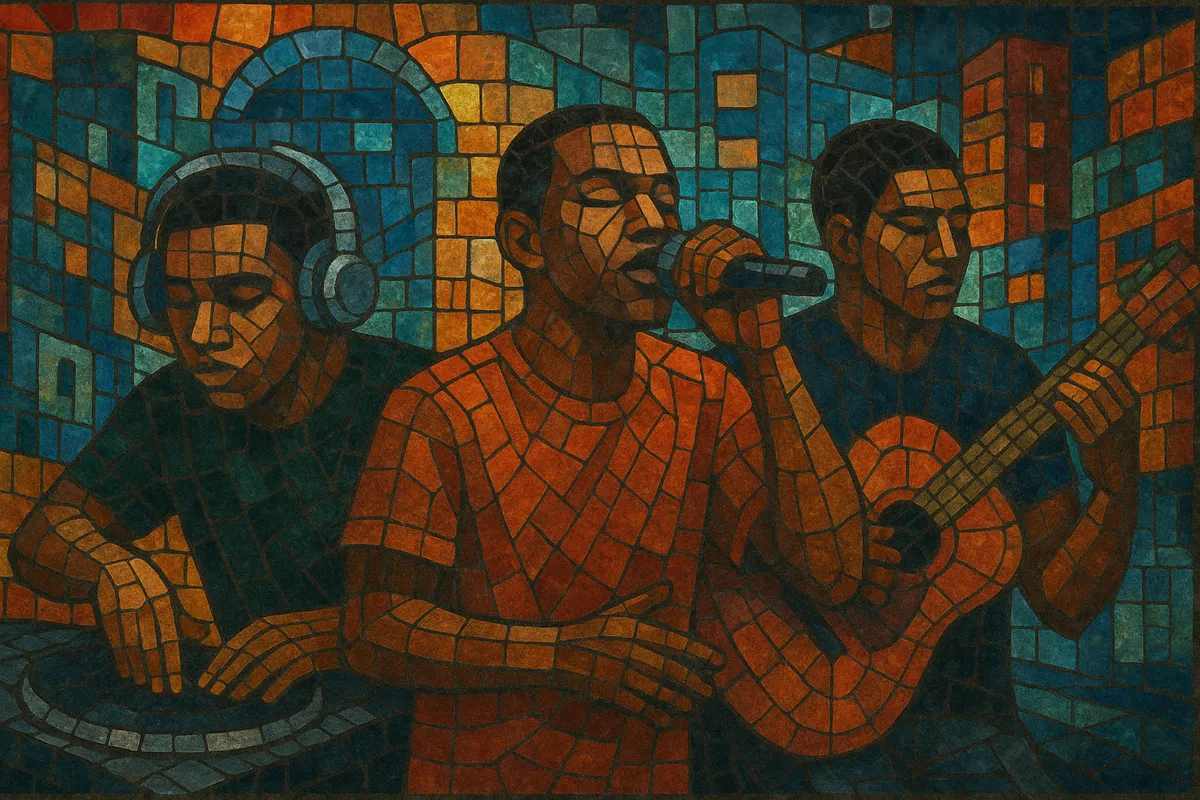
Zim urban groove (often shortened to "Urban Grooves") is a Zimbabwean urban-pop movement that blends contemporary R&B, hip hop, dancehall, kwaito, and mainstream pop into a distinctly local sound. It is characterized by mid‑tempo grooves, glossy synth and guitar textures, catchy choruses, and a fluid mix of Shona, Ndebele, and English lyrics. Vocals alternate between smooth R&B crooning and rap verses, often over dancehall‑leaning or kwaito‑bounced drum patterns.

The genre emerged alongside a youth‑driven cultural shift in early‑2000s Zimbabwe, when a new generation of singers, rappers, and producers shaped an aspirational, romantic, and city‑life aesthetic. While club‑friendly and radio‑oriented, it often retains African melodic sensibilities and occasionally references traditional timbres (e.g., marimba/mbira‑inspired motifs) within a modern, polished production style.


Sources: Spotify, Wikipedia, Discogs, Rate Your Music, MusicBrainz, and other online sources

History

Origins (late 1990s – early 2000s)

Zim urban groove took shape as Zimbabwean youth absorbed American R&B/hip hop, Jamaican dancehall, South African kwaito, and broader Afropop. Affordable home‑studio software and beat‑making tools helped young producers craft radio‑ready music that felt both global and local, with bilingual (Shona/English/Ndebele) lyrics and pop‑leaning hooks.

2000s Boom and Airplay Policies

The early 2000s saw a surge in local urban music on national radio and TV, supported by strong airplay quotas for Zimbabwean content. This exposure catalyzed a wave of hits from singer‑rappers and R&B vocalists, positioning Urban Grooves as the dominant youth sound of the decade. Independent studios in Harare and other cities nurtured songwriter‑producer teams, while the genre’s sleek, romantic aesthetic became a hallmark of Zimbabwe’s contemporary pop identity.

Evolution and Diversification (2010s – present)

As the 2010s progressed, the scene diversified. Some artists leaned further into rap and trap, others into Afro‑house/pop crossovers, and a parallel movement—zimdancehall—rose to prominence. Even as tastes shifted, Urban Grooves provided the bridge that normalized local languages and contemporary production on mainstream platforms, and its alumni continue to influence Zimbabwean pop, R&B, and hip hop today.

Legacy

Urban Grooves cemented a sustainable ecosystem for modern Zimbabwean popular music: artist development pipelines, producer culture, and a market expectation for locally made, globally styled hits. Its melodic sensibility, code‑switching lyricism, and hybrid rhythms remain foundational across newer Zimbabwean genres.

How to make a track in this genre

Tempo and Rhythm
•   Aim for 88–110 BPM for R&B/hip‑hop grooves and 100–120 BPM for dancehall/house‑leaning tracks. •   Use dancehall‑influenced dembow or kwaito‑style bounce (heavy kick on 1, syncopated off‑beats, and laid‑back swing). •   Layer crisp claps/snares with light percussion (shakers, rimshots) and add occasional tom or conga fills for movement.
Harmony and Melody
•   Pop‑friendly diatonic progressions work well (e.g., I–V–vi–IV, ii–V–I, or vi–IV–I–V). Keep harmonies lush but uncluttered. •   Write ear‑catching toplines with call‑and‑response phrases; blend melismatic R&B runs with concise rap cadences. •   Consider African‑leaning motifs (e.g., pentatonic hooks) or marimba/mbira‑inspired lines adapted to synths or guitars.
Instrumentation and Sound Design
•   Core palette: punchy programmed drums, warm sub‑bass/808s, mellow electric piano/synth pads, clean electric guitar licks, and bright plucks. •   Add contemporary polish with side‑chained pads, subtle vocal chops, and tasteful autotune for stylistic effect. •   Reference kwaito/house textures (wide pads, chorus‑kissed keys) while keeping pop clarity in the midrange.
Vocals and Lyrics
•   Alternate sung choruses with rap verses. Stack harmonies and doubles on hooks for impact. •   Write about romance, urban life, aspiration, and community; code‑switch naturally between Shona, Ndebele, and English for flow and relatability. •   Keep hooks concise and repeatable; emphasize memorable catchphrases.
Production Tips
•   Use FL Studio, Ableton Live, or similar DAWs; build drums first, then chords, bass, and topline. •   Leave headroom; glue with light bus compression and rhythmic delays. For radio sheen, add gentle high‑shelf on vocals and master bus. •   Test mixes on small speakers and phones to ensure vocal clarity and hook prominence.

Top tracks

Locked
Share your favorite track to unlock other users’ top tracks
Influenced by
Challenges
Digger Battle
Let's see who can find the best track in this genre
© 2026 Melodigging
Melodding was created as a tribute to Every Noise at Once, which inspired us to help curious minds keep digging into music's ever-evolving genres.
Buy me a coffee for Melodigging