Genres
Artists
Albums
Make Music
Sign in
Sign in
Artists
Tsugaru-Jamisen
Artists
Tsugaru-Jamisen
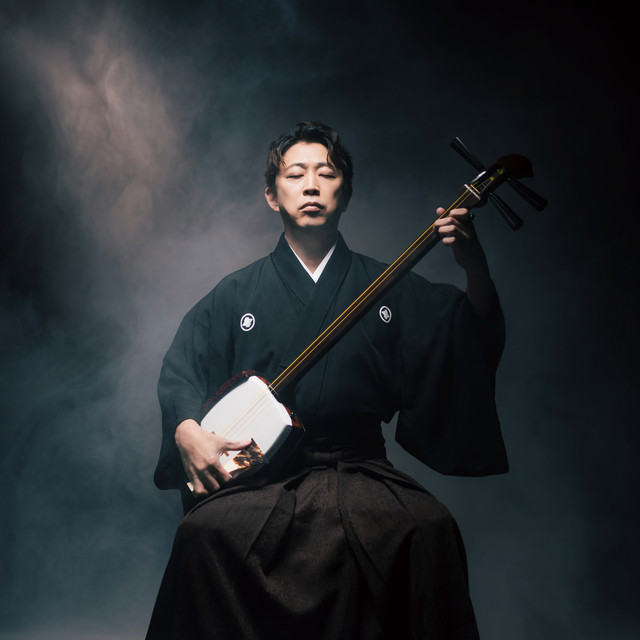
Hiromitsu Agatsuma
2001–2008
·
7 albums
Listen
2
/5
Genres
Slow Game
Slow game is a modern, internet-era blend of contemporary R&B and hip hop that prioritizes seductive mid‑tempo grooves, intimate vocals, and polished, radio‑ready songwriting. It typically features trap‑influenced drum programming (808 kicks, ticking hi‑hats), warm sub‑bass, sparse keys or guitar loops, and a prominent, melodic hook. Lyrically, the style revolves around romance, attraction, and late‑night introspection, often switching between sung choruses and rap verses. Compared with classic “slow jams,” slow game is glossier, more minimal, and shaped by the aesthetics of streaming culture—catchy toplines, short forms, and lush, reverb‑soaked space that leaves room for vocal ad‑libs and harmonies.
Discover
Listen
World Fusion
World fusion is a broad, exploratory approach that blends musical traditions from different cultures with contemporary forms such as jazz, rock, ambient, and electronic music. Rather than being tied to a single folk lineage, it privileges hybrid instrumentation, modal and rhythmic vocabularies from around the globe, and collaborative performance practices. Compared with the more pop-oriented worldbeat, world fusion tends to be more improvisational, texture-driven, and studio- or ensemble-focused. It commonly juxtaposes instruments like oud, kora, sitar, tabla, duduk, and frame drums with electric guitar, synthesizers, and jazz rhythm sections, often emphasizing modal harmony, drones, polyrhythms, and odd meters.
Discover
Listen
Traditional Music
Traditional music is an umbrella term used in the mid–20th century by folklorists and ethnomusicologists to denote community-rooted, orally transmitted repertoires tied to social ritual, work, celebration, and storytelling. Unlike commercial pop or art-music traditions, traditional music is typically learned by ear, varies regionally, and evolves slowly through communal participation. It often features modal melodies, cyclic rhythms, heterophony or unison singing, and indigenous instruments whose timbres are integral to local identity. Lyrics tend to preserve language, history, and collective memory. While the musical practices themselves can be ancient, the phrase “traditional music” emerged to replace earlier, narrower or colonial framings like “folk” or “ethnic” music, foregrounding continuity, locality, and living practice rather than exoticism.
Discover
Listen
Jazz
Jazz is an improvisation-centered music tradition that emerged from African American communities in the early 20th century. It blends blues feeling, ragtime syncopation, European harmonic practice, and brass band instrumentation into a flexible, conversational art. Defining features include swing rhythm (a triplet-based pulse), call-and-response phrasing, blue notes, and extended harmonies built on 7ths, 9ths, 11ths, and 13ths. Jazz is as much a way of making music—spontaneous interaction, variation, and personal sound—as it is a set of forms and tunes. Across its history, jazz has continually hybridized, from New Orleans ensembles and big-band swing to bebop, cool and hard bop, modal and free jazz, fusion, and contemporary cross-genre experiments. Its influence permeates global popular and art music.
Discover
Listen
Tsugaru-Jamisen
A virtuosic regional shamisen style from the Tsugaru area of Aomori, Japan, tsugaru-jamisen is known for its driving rhythms, percussive bachi (plectrum) strikes, and improvisatory development over folk-song (min'yō) melodic cells. Players typically use a futozao (thick-neck) shamisen with a large bachi, exploiting the instrument’s sawari (sympathetic buzz) and powerful downstrokes to create both pitch and percussion. Core repertoire pieces such as Tsugaru Jongara-bushi, Tsugaru Yosare-bushi, and Tsugaru Aiya-bushi are treated as frameworks for variation, with free-rhythm introductions blossoming into fast, dance-like sections. The style balances raw intensity and lyricism, combining rapid tremolo, slides, pull-offs, and offbeat accents with the Japanese jo–ha–kyū sense of pacing. It is performed solo, in duo call-and-response with singers and flutes, or in ensembles, and today appears in concert halls, festivals, competitions, and cross-genre collaborations.
Discover
Listen
Japanese Classical
Japanese classical refers to the courtly, religious, theatrical, and chamber traditions that crystallized in Japan from the Nara and Heian periods onward. It encompasses Gagaku (imperial court music), Shinto ritual music (kagura), Buddhist chant (shōmyō), Noh and Kabuki repertories (e.g., nagauta, jōruri), and chamber music for koto, shamisen, and shakuhachi (sankyoku). The style emphasizes modal color (ryō and ritsu modes, along with later in/yo pentatonic variants), the dramatic architecture of jo–ha–kyū (slow introduction, development, swift conclusion), and the aesthetic of ma (meaningful silence/space). Textures are often heterophonic or layered, timbres are cultivated for breathy, reedy, and bell-like colors (e.g., shō, hichiriki, ryūteki), and rhythm can range from free-flowing chant to stately ceremonial cycles. The result is a contemplative yet ceremonially powerful sound world distinct from Western common-practice tonality.
Discover
Listen
Albums
2008
1
/5
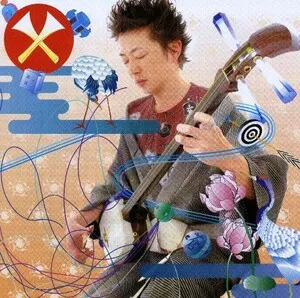
Agatsuma Plays Standards
Hiromitsu Agatsuma 上妻宏光
Tsugaru-Jamisen
2007
2
/5
蒼風
Hiromitsu Agatsuma 上妻宏光
Tsugaru-Jamisen
Jazz
2006
1
/5
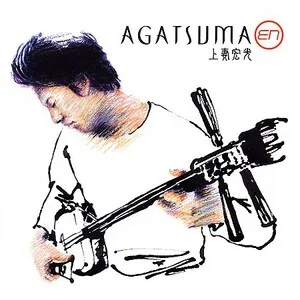
En
Agatsuma
Tsugaru-Jamisen
2005
1
/5
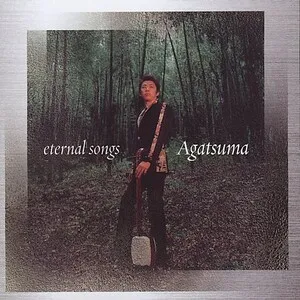
Eternal Songs (Eien no Uta)
Agatsuma
Tsugaru-Jamisen
2003
1
/5
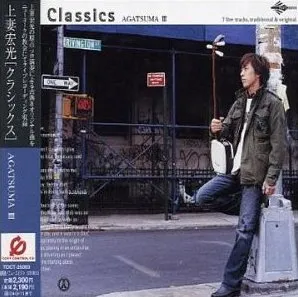
Classics: Agatsuma III
Agatsuma
Tsugaru-Jamisen
2002
1
/5
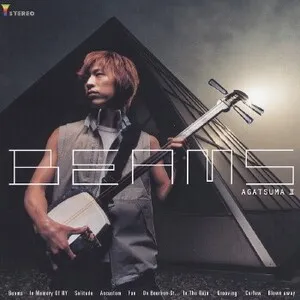
Beams: Agatsuma II
Agatsuma
Tsugaru-Jamisen
2001
2
/5
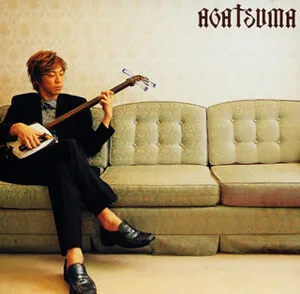
Agatsuma
Agatsuma
Tsugaru-Jamisen
Similar artists
2
/5
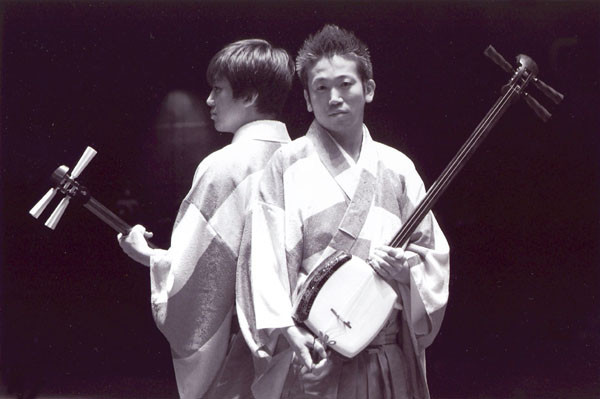
Yoshida Brothers
Tsugaru-Jamisen
Japanese Classical
Traditional Music
1
/5
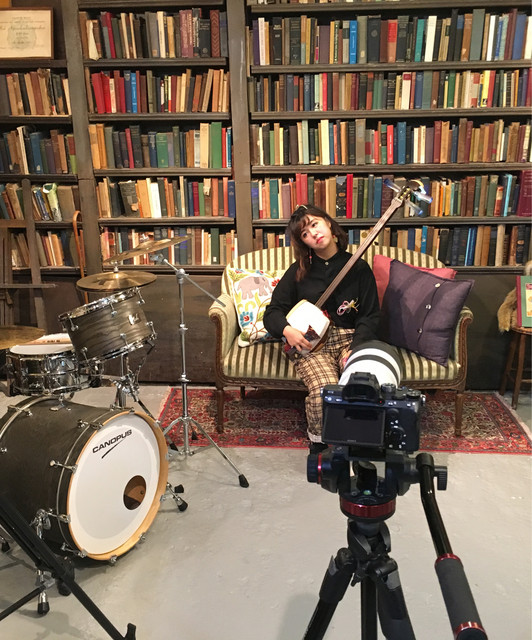
Shinobu Kawashima
Japanese Classical
Traditional Music
Tsugaru-Jamisen
1
/5
Noriko Tadano
Japanese Classical
Traditional Music
Tsugaru-Jamisen
1
/5
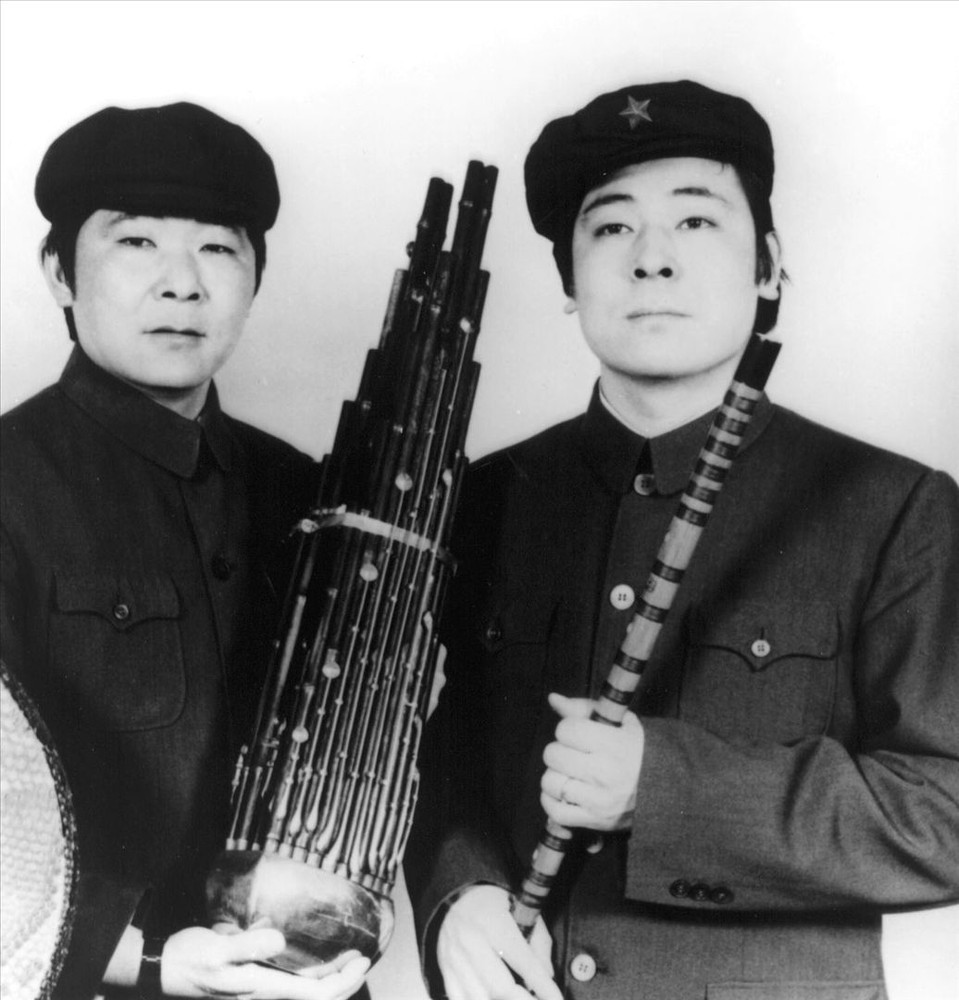
Guo Brothers
Japanese Classical
Traditional Music
Chinese Folk Music
4
/5
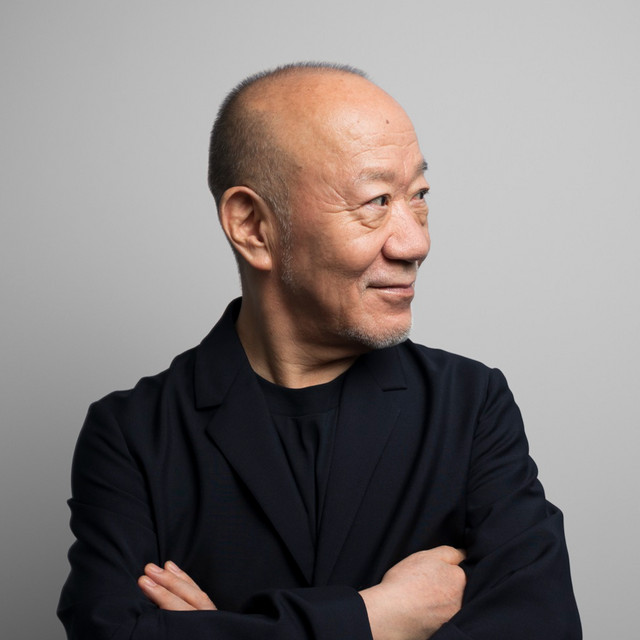
Joe Hisaishi
Japanese Classical
Anime
Cinematic Classical
3
/5
Hong Ting
Japanese Classical
Traditional Music
Chinese Folk Music
2
/5
Aun J-Classic Orchestra
Calming Instrumental
Japanese Classical
Traditional Music
2
/5
Momokusu Iwata
Japanese Classical
Traditional Music
Samurai Trap
2
/5
Weishan Liu
Gufeng
Japanese Classical
Traditional Music
2
/5
Mizuyo Komiya
Japanese Classical
Traditional Music
Download our mobile app
Get the Melodigging app and start digging for new genres on the go
Download on the App Store
Get it on Google Play
© 2026 Melodigging
Give feedback
Legal
Melodding was created as a tribute to
Every Noise at Once
, which inspired us to help curious minds keep digging into music's ever-evolving genres.