Genres
Artists
Albums
Make Music
Sign in
Sign in
Artists
Breakbeat
Artists
Breakbeat
Former City Records
Listen
3
/5
Genres
Detroit Sound
Detroit sound is a modern hip‑hop micro‑scene from Detroit, Michigan characterized by upbeat, bouncy 808 percussion; simple, funky mallet and bell loops, sparse keys or string stabs, and synth‑bass lines. Vocally, it foregrounds street‑centric subject matter delivered with a dry, often humorous, ultra‑direct punch‑in style—rappers record bar‑by‑bar so each line lands like a standalone quotable. The result is minimal, fast‑moving, and highly rhythmic rap that prizes timing, charisma, and wit over dense melodic hooks.
Discover
Listen
G-House
G-house ("gangsta house") is a club-focused fusion of house music and hip-hop, characterized by dark, low-slung basslines, shuffling house drums, and rap vocals or samples with a streetwise, West Coast swagger. Typically sitting around 120–126 BPM, it borrows the groove and arrangement discipline of deep/tech house while foregrounding the attitude and timbral aesthetics of gangsta rap and G-funk. Vocal hooks are often pitched, chopped, or looped, sitting over minimal, sub-heavy bass figures and crisp 909/808-derived percussion. The result is music that feels both sleek and menacing—built for late-night dancefloors with a noir, urban edge.
Discover
Listen
Phonk
Phonk is a dark, sample-heavy microgenre of hip hop and trap that resurrects the gritty aesthetics of 1990s Memphis rap. It blends chopped-and-screwed vocals, ominous minor-key loops, lo‑fi textures, and overdriven 808s to create a woozy, menacing atmosphere. While early phonk leaned on slowed vocal samples and cassette‑era grit, a later offshoot known as drift phonk foregrounded hard‑clipping 808 bass and bright cowbell patterns at faster tempos, becoming synonymous with car/drift videos and social media virality. Across its variants, phonk is united by retro Southern rap DNA, tape‑worn sonics, and an underground, DIY producer culture.
Discover
Listen
Post-Dubstep
Post-dubstep is a loosely defined wave of UK-born electronic music that grew out of dubstep but moved away from its rigid 140 BPM wobble-bass formula. It keeps the bass-weight, sound-system focus, and rhythmic syncopation of dubstep and UK garage, but folds in house and techno tempos, R&B vocal chops, ambient space, and experimental production. Typical tracks explore 120–135 BPM (not fixed at 140), use broken 2‑step/garage swing instead of 4/4, and favor detailed sound design over maximal drops. You’ll often hear hushed, intimate vocals (sampled or original), neo-soul/jazz-influenced chords, and micro-edited percussion with lots of negative space. The mood is frequently introspective, melancholic, and textural—more headphone-oriented than festival-leaning—yet still rooted in club culture.
Discover
Listen
Speedrun
Speedrun is a gaming-adjacent EDM microgenre designed for adrenaline, focus, and momentum. It blends hyper-energetic drops with catchy, game-like melodies and rapid switch‑ups that mirror the pace and tension of timed gameplay. Typically sitting between 140–175+ BPM, the style pivots between half‑time dubstep weight, electro/complextro riffing, glitchy fills, and drum & bass acceleration. Producers favor bright, synthetic leads (often with chiptune flourishes), tightly sidechained supersaws, and animated bass design that stays clean and punchy for streaming. The mood is triumphant, high‑octane, and “level‑up” cinematic—made to keep speedrunners and viewers locked in.
Discover
Listen
Vaporwave
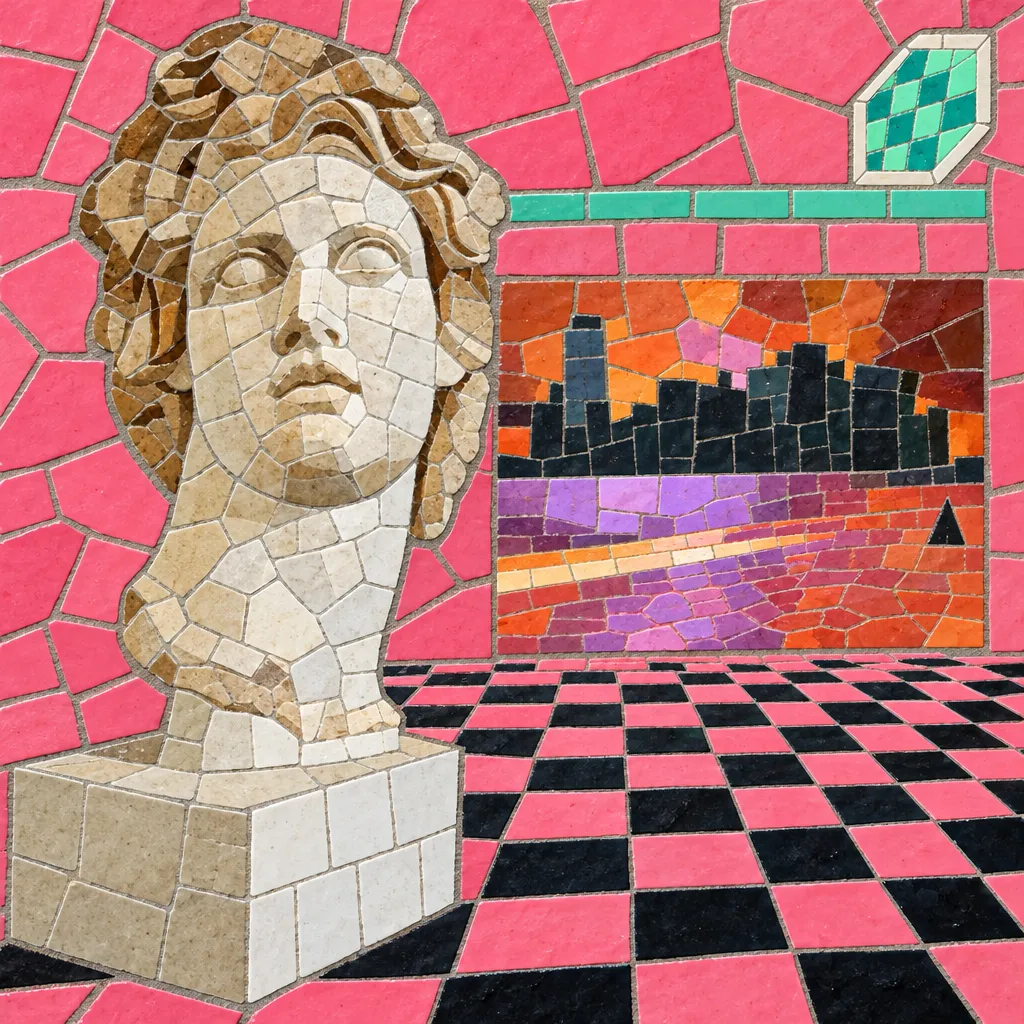
Vaporwave is an internet-born microgenre and visual aesthetic that repurposes late‑20th‑century commercial sound—mu zak, smooth jazz, soft rock, synth‑pop, city pop, and corporate training tapes—into hazy, slowed, and looped collages. Its sound foregrounds pitched‑down samples, heavy reverb, tape hiss, vinyl crackle, and dreamy pads to evoke a mood between satire and sincere nostalgia. Beyond music, vaporwave is inseparable from its graphic language: Greco‑Roman busts, Japanese text, retro operating systems, chrome logos, palm trees, neon gradients, and “mall culture” architecture. The result feels like a haunted shopping mall: part critique of consumer capitalism, part wistful memory of media and retail spaces from the 1980s–2000s. Tempos are typically slow (roughly 60–90 BPM), harmonies tend toward lush seventh and extended chords, and rhythms range from barely perceptible loops to minimal, gated drum programming. Many tracks are short, vignette‑like studies in texture and mood.
Discover
Listen
Chill Breakcore
Chill breakcore is a micro-style that softens the jagged edges of classic breakcore with lush ambience, dreamy pads, and emotive melodies. It retains the genre’s telltale chopped Amen breaks, granular edits, and breakneck rhythmic vocabulary, but tempers them with downtempo moods, lo‑fi textures, and vaporous sound design. Producers often work at drum-and-bass or breakcore tempos (typically 150–175 BPM) while shaping the overall feel to be intimate, melancholic, and relaxed—sometimes even half‑time—so the beats feel intricate but weightless. The result sits somewhere between atmospheric jungle, IDM, and vaporwave: breakbeats that shimmer instead of bludgeon, and harmony that leans nostalgic rather than abrasive.
Discover
Listen
Rally House
Rally house is a high-energy, festival-oriented strain of house music engineered to rally large crowds in arenas, stadiums, and mainstage settings. It blends the punchy four-on-the-floor of big-room and electro house with anthem-like melodic hooks, noisy risers, and explosive drops meant to trigger mass call-and-response. Typical productions sit around 126–130 BPM, feature supersaw leads, hard-hitting kicks with strong sidechain pumping, and dramatic, tension-building breakdowns that bloom into maximal, chant-ready drops. Producers frequently use crowd chants, claps, brass stabs, snare rolls, white-noise sweeps, and simple, triumphant chord progressions to maximize immediacy and impact.
Discover
Listen
Channel Pop
Channel pop is a digital-era strain of mainstream pop shaped by video and creator platforms—especially YouTube and later TikTok and Instagram—where artists build audiences through frequent uploads on their own “channels.” Musically it favors intimate, highly polished but close-mic’d vocals, acoustic guitar or piano-led arrangements, restrained beats, and succinct, playlist-friendly structures. Many releases are cover-first (reimagining recent chart hits) with a steady flow of glossy singles, session-style performances, and creator collaborations that gradually blend into original material. Titles, artwork, and release cadence are optimized for search and recommendation algorithms, yielding a sound that is simultaneously personal and platform-aware.
Discover
Listen
Float House
Float House is a subgenre of electronic dance music characterized by its relaxed, dreamy, and ethereal atmosphere. It blends the rhythmic structure of Deep House and Minimal House with the lush, atmospheric textures of Ambient and Chillout music. The sound is defined by soft, often lo-fi production values, including tape saturation and hiss, combined with melodic synthesizers, warm pads, and gentle, driving percussion. Unlike the grittier 'Outsider House' or 'Lo-Fi House', Float House focuses on a lighter, more optimistic, and 'floating' sensation, often utilizing heavy side-chain compression to create a rhythmic pumping effect that enhances the hypnotic vibe. It frequently incorporates organic samples like nature sounds (water, birds) and has a tempo that sits comfortably between downtempo and club-ready house (around 115-125 BPM).
Discover
Listen
Footwork
Footwork (often called juke or Chicago juke) is a high‑velocity, sample‑driven form of electronic dance music that emerged from Chicago’s battle‑dance culture. Built around stuttering, off‑grid percussion at roughly 160 BPM, it uses chopped vocal snippets, booming sub‑bass, and rapid toms, claps, and snares arranged in highly syncopated patterns that are not locked to a constant 4/4 kick. Producers frequently slice fragments of rap, R&B, pop, and soul into call‑and‑response hooks that interact with dancers on the floor. The result is a tense, kinetic sound designed for competitive circles as much as for clubs and headphones.
Discover
Listen
Miami Bass
Miami bass is a high-energy, bass-forward hip hop and electro offshoot that emerged in South Florida during the mid-to-late 1980s. It is defined by booming TR-808 sub-bass, crisp handclaps and snares, uptempo breakbeats, and chant-like vocals that favor call-and-response hooks over dense lyricism. Often nicknamed "booty bass," the style prioritizes dancefloor function and car-audio impact, with many tracks effectively serving as "bass tests" for subwoofers. Melodic and harmonic elements are sparse and repetitive, while the rhythmic programming and low-end power drive the music’s party-centric atmosphere.
Discover
Listen
Breakbeat
Breakbeat is a broad branch of electronic music defined by its use of broken, syncopated drum patterns ("breakbeats") rather than straight four-on-the-floor rhythms. Producers typically build tracks from looped and chopped drum breaks—often sampled from vintage funk, jazz, and R&B recordings—layered with basslines, synths, and effects. As both a production technique and a stylistic umbrella, breakbeat underpins and intersects with many scenes: from old‑school hip‑hop turntablism and electro to the UK rave continuum (breakbeat hardcore, big beat, Florida breaks) and onward to garage-derived styles. While not synonymous with jungle and drum & bass, the same culture of sampling and chopping classic breaks (e.g., the Amen break) helped inform those genres as well.
Discover
Listen
Show all 13 genres
Similar artists
3
/5
1 9 0 5
Breakbeat
Detroit Sound
Footwork
2
/5
Detroit's Filthiest
Ghettotech
Breakbeat
Footwork
2
/5
DJ これからの緊急災害
Breakbeat
Footwork
G-House
2
/5
Detroit In Effect
Breakbeat
Detroit Sound
Footwork
2
/5
Moodrich
Breakbeat
Footwork
G-House
2
/5
DJ Pirna
Breakbeat
Footwork
G-House
2
/5
DJ MELL G
Breakbeat
Footwork
G-House
1
/5
Sketchy
Breakbeat
Footwork
G-House
1
/5
Toni Moralez
Breakbeat
Footwork
G-House
1
/5
Ottonian
Breakbeat
Footwork
G-House
Download our mobile app
Get the Melodigging app and start digging for new genres on the go
Download on the App Store
Get it on Google Play
© 2026 Melodigging
Give feedback
Legal
Melodding was created as a tribute to
Every Noise at Once
, which inspired us to help curious minds keep digging into music's ever-evolving genres.