Genres
Artists
Albums
Make Music
Sign in
Sign in
Artists
Acousmatic
Artists
Acousmatic
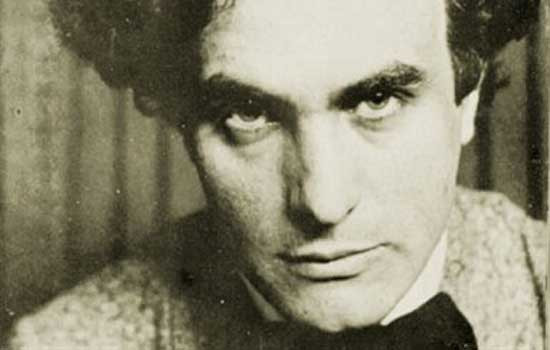
Edgard Varèse
1998
·
1 album
Listen
1
/5
Genres
Modern Classical
Modern classical is a contemporary strand of instrumental music that applies classical composition techniques to intimate, cinematic settings. It typically foregrounds piano and strings, is sparsely orchestrated, and embraces ambience, repetition, and timbral detail. Rather than the academic modernism of the early 20th century, modern classical as used today refers to accessible, mood-driven works that sit between classical, ambient, and film music. Felt pianos, close‑miked string quartets, tape hiss, drones, soft electronics, and minimal harmonic movement are common, producing a contemplative, emotionally direct sound that translates well to headphones, streaming playlists, and screen media.
Discover
Listen
Experimental
Experimental music is an umbrella term for practices that prioritize exploration, process, and discovery over adherence to established genre norms. It embraces new sound sources, nonstandard tuning systems, indeterminacy and chance operations, graphic and open-form scores, extended techniques, and technology-led sound design (tape, electronics, computers, and live processing). Rather than a single style, it is a methodology and ethos: testing hypotheses about sound, structure, and performance, often blurring boundaries between composition, improvisation, sound art, and performance art. Listeners can expect unfamiliar timbres, unusual forms, and an emphasis on how music is made as much as the resulting sound.
Discover
Listen
Experimental Electronic
Experimental electronic is an umbrella term for electronic music that foregrounds exploration and innovation over convention. It treats the studio, computer, and synthesizer as laboratories, using techniques such as tape manipulation, modular and software synthesis, feedback systems, granular and spectral processing, algorithmic/generative composition, circuit-bending, and field recording. Rather than regular song forms or dancefloor functionality, it prioritizes timbre, texture, space, and process. Structures may be nonlinear or open-form; harmony is often non-functional or drone-based; rhythm can be free, irregular, or machine-deconstructed. The style overlaps with electroacoustic music, sound art, industrial, ambient, and noise while continually interfacing with club culture and contemporary art contexts.
Discover
Listen
Acousmatic
Acousmatic music is a form of electroacoustic composition created specifically for loudspeakers, where the audience hears sounds without seeing their sources. The genre privileges timbre, morphology, and spatial movement over traditional melody and harmony, and it is often experienced in darkened auditoria to sharpen attention to pure listening. Composers typically work with recorded or synthesized sounds—ranging from environmental recordings and instrumental fragments to purely electronic textures—then edit, transform, and organize them into a fixed medium. Performance focuses on diffusion: the live projection of a fixed track across a multichannel loudspeaker array to sculpt space and perspective in real time.
Discover
Listen
Avant-Garde
Avant-garde music is an umbrella term for boundary-pushing practices that challenge prevailing norms of harmony, rhythm, timbre, form, and performance. It privileges experimentation, conceptual rigor, and a willingness to reframe what counts as music at all. Historically tied to early 20th‑century artistic modernism, avant-garde music introduced atonality, the emancipation of noise, and new forms of notation and process. It embraces indeterminacy, extended techniques, electronics, spatialization, and multimedia performance, treating sound as material to be sculpted, questioned, and reinvented.
Discover
Listen
Classical
Classical music is the notated art-music tradition of Europe and its global descendants, characterized by durable forms, carefully codified harmony and counterpoint, and a literate score-based practice. The term “classical” can refer broadly to the entire Western art-music lineage from the Medieval era to today, not just the Classical period (c. 1750s–1820s). It privileges long-form structures (such as symphonies, sonatas, concertos, masses, and operas), functional or modal harmony, thematic development, and timbral nuance across ensembles ranging from solo instruments to full orchestras and choirs. Across centuries, the style evolved from chant and modal polyphony to tonal harmony, and later to post-tonal idioms, while maintaining a shared emphasis on written notation, performance practice, and craft.
Discover
Listen
Albums
1998
1
/5
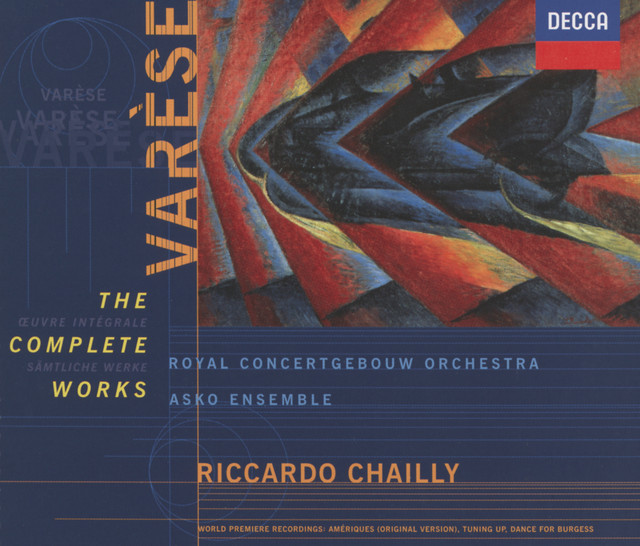
Varèse: The Complete Works
Edgard Varèse
Acousmatic
Similar artists
2
/5
Raymond Scott
Acousmatic
Electronic
Children's Music
2
/5
Karlheinz Stockhausen
Integral Serialism
Serialism
Darmstadt School
2
/5
Iannis Xenakis
Classical
Stochastic Music
Acousmatic
1
/5
Robert Ashley
Spoken Word
Acousmatic
Experimental
1
/5
Éliane Radigue
Drone
Experimental
Ambient
1
/5
Various Artists
Afro-Funk
Alternative Rock
Ambient
1
/5
Luigi Nono
Darmstadt School
Classical
Acousmatic
2
/5
Pierre Henry
Acousmatic
Avant-Garde
Experimental
2
/5
Pauline Oliveros
Acousmatic
Free Improvisation
Ambient
1
/5
Daphne Oram
Acousmatic
Avant-Garde
Experimental
Download our mobile app
Get the Melodigging app and start digging for new genres on the go
Download on the App Store
Get it on Google Play
© 2026 Melodigging
Give feedback
Legal
Melodding was created as a tribute to
Every Noise at Once
, which inspired us to help curious minds keep digging into music's ever-evolving genres.