Genres
Artists
Albums
Make Music
Sign in
Sign in
Artists
Avant-Garde
Artists
Avant-Garde
Collin Walcott
1976
·
1 album
Listen
2
/5
Genres
Spectra
Spectra is a contemporary, internet-native microgenre of moody alternative electronic and R&B-adjacent music characterized by spectral, hazy textures, soft-focus vocals, and lush, wide stereo sound design. It blends downtempo grooves with post-dubstep sound palettes, dreamy pads, and understated, melancholic songwriting. Production often favors granular and time-stretched atmospheres, filtered synths, submerged bass, and delicate percussion patterns that feel intimate yet cinematic. Vocals are commonly breathy and layered with subtle pitch/formant processing, while harmony leans toward extended, suspended, and add-color chords that emphasize bittersweet, nocturnal moods.
Discover
Listen
Contemporary Jazz
Contemporary jazz is an umbrella term for post-1970 jazz that absorbs advances from post‑bop, fusion, free jazz, modern classical, and global traditions while retaining the core values of improvisation and interaction. It favors a flexible rhythmic feel (from straight‑8 to polyrhythms), modal and post‑tonal harmony, and a producer’s ear for space, texture, and sound design. Unlike earlier era labels tied to a single movement, contemporary jazz denotes a living, evolving practice. It ranges from intimate acoustic trios to electronics‑enhanced ensembles, often using odd meters, ambient timbres, and song forms that move beyond the 32‑bar standard. The result is a wide spectrum—from lyrical, ECM‑influenced spaciousness to groove‑forward, rhythmically intricate music influenced by funk and world traditions.
Discover
Listen
Minimalism
Minimalism is a style of Western art music that emerged in the United States during the 1960s, characterized by the use of very limited musical materials, steady pulse, and extensive repetition. Composers often build pieces from short cells or motifs that are repeated and slowly transformed through additive or subtractive processes, phase shifting, and gradual changes in harmony, texture, or register. Harmony is typically consonant (often modal or diatonic), though just intonation and extended drones are also common. The result is music that foregrounds process, clarity, audibility of structure, and a hypnotic sense of stasis and flow. Typical ensembles include keyboards, mallet percussion, strings, winds, voices, and electronics or tape. Minimalism influenced a wide array of later styles, from ambient and new age to post-minimalism and minimal techno.
Discover
Listen
Indo Jazz
Indo jazz is a cross-cultural fusion that blends the melodic and rhythmic frameworks of Indian classical music with the improvisational language, ensemble formats, and harmonic vocabulary of jazz. Pioneered in mid-1960s London by the Indo‑Jazz Fusions projects of saxophonist Joe Harriott and composer‑violinist John Mayer, the style typically marries raga-based melodies, drone textures, and tala time cycles with jazz head–solo–head forms, modal harmony, and interactive improvisation. The palette often includes saxophone, piano, double bass, and drum set alongside tabla, sitar or violin, bansuri, and tanpura. The result is music that can be serene and meditative yet rhythmically intricate, moving fluidly between swing and straight feels while respecting the raga’s pitch set and ornamentation (meend, gamak, and microtonal inflections).
Discover
Listen
Avant-Garde
Avant-garde music is an umbrella term for boundary-pushing practices that challenge prevailing norms of harmony, rhythm, timbre, form, and performance. It privileges experimentation, conceptual rigor, and a willingness to reframe what counts as music at all. Historically tied to early 20th‑century artistic modernism, avant-garde music introduced atonality, the emancipation of noise, and new forms of notation and process. It embraces indeterminacy, extended techniques, electronics, spatialization, and multimedia performance, treating sound as material to be sculpted, questioned, and reinvented.
Discover
Listen
Jazz
Jazz is an improvisation-centered music tradition that emerged from African American communities in the early 20th century. It blends blues feeling, ragtime syncopation, European harmonic practice, and brass band instrumentation into a flexible, conversational art. Defining features include swing rhythm (a triplet-based pulse), call-and-response phrasing, blue notes, and extended harmonies built on 7ths, 9ths, 11ths, and 13ths. Jazz is as much a way of making music—spontaneous interaction, variation, and personal sound—as it is a set of forms and tunes. Across its history, jazz has continually hybridized, from New Orleans ensembles and big-band swing to bebop, cool and hard bop, modal and free jazz, fusion, and contemporary cross-genre experiments. Its influence permeates global popular and art music.
Discover
Listen
Albums
1976
1
/5
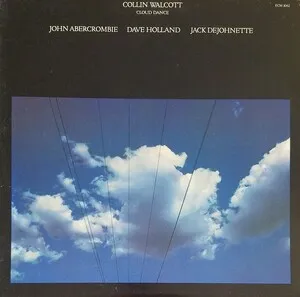
Cloud Dance
Collin Walcott
Indo Jazz
Contemporary Jazz
Jazz
Similar artists
1
/5
Various Artists
Soundtrack
Afro-Funk
Alternative Rock
3
/5
Moondog
Outsider
Avant-Garde
Classical
2
/5
Jon Hassell
Tennessee Experimental
Ambient
Tribal Ambient
2
/5
Park Jiha
Fusion Gugak
Avant-Garde
Post-Minimalism
1
/5
Evan Ziporyn
Totalism
Avant-Garde
Minimalism
2
/5
Don Cherry
Free Jazz
Jazz
Avant-Garde Jazz
1
/5
John Zorn
Avant-Garde Jazz
Free Improvisation
Jazz
1
/5
Arthur Blythe
Jazz
Free Jazz
Avant-Garde
1
/5
Air
Jazz
Loft Jazz
Avant-Garde
1
/5
Lawrence D. "Butch" Morris
Free Jazz
Avant-Garde
Conducted Improvisation
Download our mobile app
Get the Melodigging app and start digging for new genres on the go
Download on the App Store
Get it on Google Play
© 2026 Melodigging
Give feedback
Legal
Melodding was created as a tribute to
Every Noise at Once
, which inspired us to help curious minds keep digging into music's ever-evolving genres.