Genres
Artists
Albums
Make Music
Sign in
Sign in
Artists
Cybergrind
Artists
Cybergrind
Bubblegum Octopus
2009–2019
·
4 albums
Listen
2
/5
Genres
Diy Emo
DIY emo is a grassroots, home-recorded and community-driven branch of contemporary emo that blends twinkly Midwest-emo guitar work, confessional lyricism, and pop-punk urgency with a distinctly lo‑fi, self-produced aesthetic. It foregrounds the ethics of the do‑it‑yourself underground: basement shows, tape or Bandcamp releases, collective touring, and a preference for intimacy over polish. Sonically, it leans on clean, chiming guitars, melodic basslines, dynamic drumming, and unvarnished vocals that veer from soft-spoken to cathartic sing-alongs. Rather than chasing radio gloss, DIY emo embraces rawness and vulnerability—often capturing the feel of a crowded living room show—while channeling themes of friendship, mental health, hometowns, and the bittersweet transitions of early adulthood.
Discover
Listen
Cybergrind
Cybergrind is an ultra-kinetic fusion of grindcore’s extremity with digital production and club-adjacent sound design. It pairs screamed or growled vocals and whiplash riffing with drum machines, trackers, and DAWs that unleash blast beats far beyond human performance, glitch edits, and brutal, bit-crushed textures. Stylistically, it draws from breakcore, digital hardcore, industrial, gabber, and speedcore, translating grind’s micro-song intensity into a hyper-digital aesthetic. Song lengths are often short, arrangements swing between chaotic bursts and razor-cut grooves, and synths/organs/8‑bit timbres frequently replace or double traditional guitars. Lyrically and visually, cybergrind leans into dystopia, technophobia/techno‑fetish, internet culture, and cyberpunk imagery.
Discover
Listen
Nintendocore
Nintendocore is a fusion of chiptune/video‑game aesthetics with the aggression and structures of hardcore, metalcore, and related heavy styles. It pairs 8‑bit timbres reminiscent of NES and Game Boy sound chips with distorted guitars, screamed or shouted vocals, breakdowns, and high‑energy drumming. Typical sonic markers include square‑wave leads, triangle‑wave bass lines, noise‑channel snares and hi‑hats, rapid arpeggios, and modal melodies that evoke classic game soundtracks. These are integrated into punk/metal frameworks featuring blast beats, mathy syncopations, and dynamic stop‑starts. While some bands directly quote game themes, many write original material that channels the same nostalgic, pixelated character. Culturally, the genre emerged from early‑2000s internet communities and DIY scenes (forums, MySpace, netlabels) where hardware hacking, tracker composition, and hardcore touring circuits overlapped.
Discover
Listen
Bitpop
Bitpop is a pop-oriented offshoot of the chiptune/chipmusic scene that marries hook-driven songwriting with the timbres of vintage 8‑bit and 16‑bit game hardware. Typical sound sources include the pulse, triangle, and noise generators of consoles like the Nintendo Game Boy, NES/Famicom, and Commodore 64 SID, sequenced in trackers and layered with modern drums, bass, guitars, and vocals. The style favors bright, catchy melodies, ultra-quantized rhythms, rapid arpeggios (to imply chords on limited sound chips), and bitcrushed or downsampled textures. Songs usually follow contemporary pop structures (verse–chorus–bridge), aim for danceable tempos, and evoke playful, nostalgic "video‑game" aesthetics while maintaining the polish of modern pop production.
Discover
Listen
Mathcore
Mathcore is an extreme offshoot of metalcore and hardcore punk characterized by rapid-fire shifts in meter, tempo, and texture. It emphasizes dissonant, angular riffing; complex, polymetric drum patterns; and whirlwind song structures that often feel deliberately chaotic. The genre fuses the precision and rhythmic gamesmanship of math rock with the aggression of hardcore and the density of extreme metal. Songs routinely feature sudden stops, blast beats, start–stop riffing, odd time signatures, and atonal or chromatic harmonies, producing a sound that is tense, volatile, and cathartic.
Discover
Listen
Chiptune
Chiptune (also called chip music or 8-bit music) is a style of electronic music created with, or emulating, the programmable sound generator (PSG) and FM chips found in vintage game consoles and home computers such as the NES/Famicom, Game Boy, Commodore 64 (SID), Amiga, Atari ST, and others. The sound palette is defined by simple waveforms (square/pulse, triangle, saw, noise), rapid arpeggios that imply chords on limited channels, pitch bends, duty-cycle modulation, and crunchy noise percussion. These constraints lend chiptune its bright, percussive, and highly melodic character, often evoking early video-game aesthetics. While originally utilitarian—music for games and computer demos—the approach evolved into a standalone art form. Contemporary chiptune spans pure hardware-authentic tracks and hybrid productions that blend chip timbres with modern synthesis, drums, vocals, and mixing techniques.
Discover
Listen
Experimental Rock
Experimental rock is a broad, exploratory branch of rock music that prioritizes innovation over convention. It stretches rock’s core instrumentation and song forms through unusual timbres, extended techniques, nonstandard tunings, chance procedures, and studio-as-instrument production. Drawing on avant-garde composition, free jazz, minimalism, and electronic/tape music, experimental rock often rejects verse–chorus structures in favor of drones, suites, collage, and improvisation. It embraces dissonance and noise as expressive tools, employs odd or fluid meters, and incorporates non-rock instruments, found sounds, and unconventional recording methods. The result is a lineage of music that treats rock not as a fixed style but as a laboratory for new sound worlds.
Discover
Listen
Experimental
Experimental music is an umbrella term for practices that prioritize exploration, process, and discovery over adherence to established genre norms. It embraces new sound sources, nonstandard tuning systems, indeterminacy and chance operations, graphic and open-form scores, extended techniques, and technology-led sound design (tape, electronics, computers, and live processing). Rather than a single style, it is a methodology and ethos: testing hypotheses about sound, structure, and performance, often blurring boundaries between composition, improvisation, sound art, and performance art. Listeners can expect unfamiliar timbres, unusual forms, and an emphasis on how music is made as much as the resulting sound.
Discover
Listen
Experimental Electronic
Experimental electronic is an umbrella term for electronic music that foregrounds exploration and innovation over convention. It treats the studio, computer, and synthesizer as laboratories, using techniques such as tape manipulation, modular and software synthesis, feedback systems, granular and spectral processing, algorithmic/generative composition, circuit-bending, and field recording. Rather than regular song forms or dancefloor functionality, it prioritizes timbre, texture, space, and process. Structures may be nonlinear or open-form; harmony is often non-functional or drone-based; rhythm can be free, irregular, or machine-deconstructed. The style overlaps with electroacoustic music, sound art, industrial, ambient, and noise while continually interfacing with club culture and contemporary art contexts.
Discover
Listen
Electronic
Electronic is a broad umbrella genre defined by the primary use of electronically generated or electronically processed sound. It encompasses music made with synthesizers, drum machines, samplers, computers, and studio/tape techniques, as well as electroacoustic manipulation of recorded or synthetic sources. The genre ranges from academic and experimental traditions to popular and dance-oriented forms. While its sonic palette is rooted in electricity and circuitry, its aesthetics span minimal and textural explorations, structured song forms, and beat-driven club permutations. Electronic emphasizes sound design, timbre, and studio-as-instrument practices as much as melody and harmony.
Discover
Listen
Show all 10 genres
Albums
2019
1
/5
Perfect Life & Other Stuff
Bubblegum Octopus
Cybergrind
Nintendocore
2014
1
/5
Critters
Bubblegum Octopus
Nintendocore
2011
2
/5
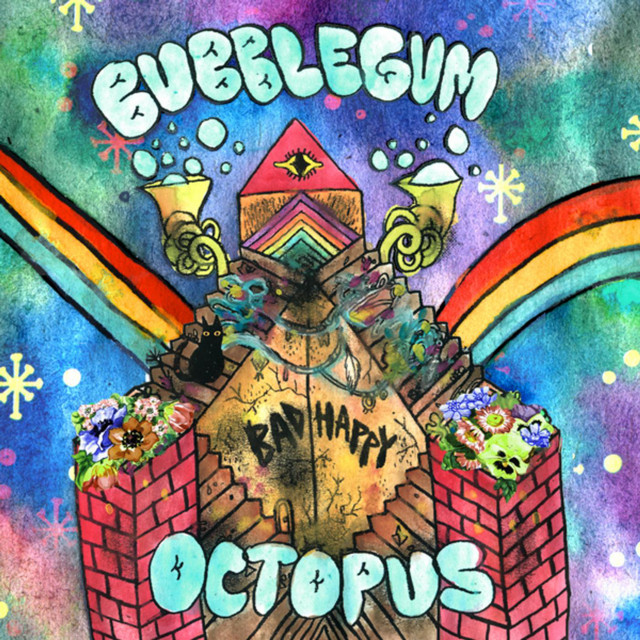
Bad Happy
Bubblegum Octopus
Nintendocore
Cybergrind
Bitpop
2009
2
/5
The Album Formerly Known as 8-Legged Dance Moves
Bubblegum Octopus
Nintendocore
Similar artists
2
/5
Blind Equation
Cybergrind
Nintendocore
Chiptune
2
/5
Rolo Tomassi
Cybergrind
Mathcore
Math Rock
3
/5
Anamanaguchi
Chiptune
Bitpop
Nintendocore
2
/5
Iamerror
Mathcore
Cybergrind
Nintendocore
I Shot the Duck Hunt Dog
Chiptune
Cybergrind
Metal
2
/5
Genghis Tron
Cybergrind
Grindcore
American Grindcore
2
/5
Agoraphobic Nosebleed
Grindcore
Cybergrind
Noisecore
1
/5
ZOMBIESHARK!
Cybergrind
Grindcore
Mathcore
1
/5
Cutting Pink With Knives
Cybergrind
Grindcore
Mathcore
2
/5
SeeYouSpaceCowboy...
Sasscore
Metalcore
Nintendocore
Download our mobile app
Get the Melodigging app and start digging for new genres on the go
Download on the App Store
Get it on Google Play
© 2026 Melodigging
Give feedback
Legal
Melodding was created as a tribute to
Every Noise at Once
, which inspired us to help curious minds keep digging into music's ever-evolving genres.