Genres
Artists
Albums
Make Music
Sign in
Sign in
Artists
Qawwali
Artists
Qawwali
Atif Aslam
2004–2026
·
7 albums
Listen
5
/5
Genres
Hindi Indie
Hindi indie is a contemporary Indian independent music movement in which artists write and release primarily Hindi-language songs outside the traditional Bollywood film system. It blends the intimate storytelling of singer-songwriters with the textures of indie folk, alternative rock, and mellow pop, often presented with understated, DIY production. Sonically, the style favors acoustic guitars, light percussion, piano, and atmospheric synths, with warm, close-miked vocals that foreground lyrics. Thematically, Hindi indie tends toward introspective and romantic subjects, urban coming‑of‑age narratives, and everyday imagery expressed in colloquial Hindi (often seasoned with Urdu vocabulary). The result is a relatable, low-key aesthetic that contrasts with the scale and spectacle of mainstream film music.
Discover
Listen
Haryanvi Pop
Haryanvi pop is a contemporary regional Indian pop style that blends the Haryanvi language and folk sensibilities with modern, high-impact pop production. It typically features catchy, chant-like hooks, dance-ready beats (often drawing from EDM, hip hop, trap, and reggaeton), and lyrics centered on local pride, romance, swagger, and rural-to-urban lifestyles. While rooted in the folk rhythms and storytelling of Haryana, its sound is unmistakably modern: punchy drums, shiny synths, earworm refrains, and strong visual culture tied to dance-led music videos and social media virality.
Discover
Listen
Indian Indie
Indian indie is the umbrella for independent, non-film music made in India across languages such as Hindi, English, and numerous regional tongues. It is defined more by its DIY production and artist-led release model than by a single sound. Musically, it spans indie pop and rock, folk-fusion, singer‑songwriter ballads, dream‑pop/shoegaze textures, and electronic‑leaning productions. Artists often blend Western harmony and song forms with raga‑tinged melodies, Indian rhythmic feels, and occasional use of traditional instruments like tabla, bansuri, or sitar. The scene grew rapidly with college festivals, small venues, and digital platforms (YouTube, streaming services, Bandcamp), plus boutique labels and festivals such as NH7 Weekender that created national visibility. Lyrically, it tends to be intimate and contemporary—touching on romance, urban life, identity, and nostalgia—while maintaining accessible hooks and warm, organic sonics.
Discover
Listen
Modern Downshift
Modern downshift is a contemporary, playlist-era microgenre that blends hushed alternative pop and alt‑R&B sensibilities with the spaciousness of downtempo and ambient pop. Songs are typically slow to mid‑tempo, minimal in arrangement, and intimate in vocal delivery—often breathy, close‑miked, and confessional. Production emphasizes warmth and negative space: soft sub‑bass, restrained percussion, reverb‑washed pads or guitars, and gentle saturation that keeps the overall texture velvety and nocturnal. Lyrically, the style skews introspective and late‑night: relationships, vulnerability, quiet self‑reflection, and the emotional afterglow of parties or city drives. The result is music that feels low‑key and cinematic—designed as much for solitary listening as for low‑light social settings.
Discover
Listen
Modern Indie Pop
Modern indie pop is a 2010s-forward style of pop made largely outside the traditional major-label pop pipeline, but with a strong focus on hooks, concise song forms, and modern production. It typically blends indie-rock songwriting attitudes (personal lyrics, DIY aesthetics, alternative scenes) with contemporary pop sonics such as punchy drums, bright or glassy synths, tight vocal editing, and streaming-era arrangement pacing. Compared with earlier indie pop, “modern” indie pop is usually more producer-led, more influenced by electronic and R&B-informed pop textures, and often designed to translate well to playlists and short-form content without losing an alternative identity.
Discover
Listen
Odi Pop
Odi pop is a contemporary Kenyan youth music style that localizes hip hop through heavy use of Kiswahili/Sheng, sing‑along rap hooks, and chant‑like call‑and‑response. Built on an African rhythm base, it draws strongly from reggae and dancehall riddims while embracing modern street slang, group performance energy, and catchy, repetitive choruses designed for viral dances and crowd participation. Under the Odi pop umbrella sit several sub‑styles—most notably Gengetone (the best‑known wave), as well as Dabonge and Debe—reflecting regional studio scenes, producer signatures, and micro‑dance trends. Many acts are crews rather than soloists, emphasizing collective identity and playful bravado.
Discover
Listen
Desi
Desi is a contemporary umbrella term for South Asian–rooted popular music made both in the subcontinent and across its global diaspora. It blends Hindi, Punjabi, Urdu (and other regional) lyrics with Western pop, hip hop, R&B, and EDM production, while retaining melodic sensibilities from filmi/bollywood and classical/folk traditions. The sound ranges from romantic, hook-forward ballads to high-energy dance tracks driven by dhol- and tumbi-influenced rhythms. It is less a single formula than a shared aesthetic: flexible code-switching (Hinglish, Punjabi-English), raga-tinged melodies, and club-ready beats that connect Bollywood lineage, Punjabi bhangra, and global urban music.
Discover
Listen
Modern Bollywood
Modern Bollywood is the contemporary sound of Hindi‑language film music that emerged in the 2000s and crystallized in the 2010s. It blends classic filmi songwriting with global pop, EDM, hip‑hop, and R&B production, resulting in hook‑forward, polished tracks designed for both cinematic scale and streaming virality. Stylistically, it keeps melodic DNA from Hindustani ragas, ghazal, qawwali, and regional folk (especially Punjabi/Bhangra), while adopting Western harmony, four‑on‑the‑floor grooves, trap drums, and glossy synth textures. Hinglish lyrics, prominent topline hooks, and dance‑ready choruses are common. The era also popularized re-creations of older hits alongside original songs, with tight, radio‑friendly structures and high‑impact mixes that translate from theaters to reels.
Discover
Listen
Hindi Pop
Hindi pop (often called Indipop when referring to non-film Indian pop) is Hindi-language popular music created primarily outside of Bollywood film soundtracks. It blends Western pop, dance, rock, R&B, and electronic production with Hindustani melodic sensibilities, Indian rhythmic motifs, and Hindi (often Hinglish) lyrics. The genre rose to mass popularity in the 1990s through music television and an emerging independent label ecosystem, foregrounding standalone singles and artist-driven albums. Signature features include catchy chorus hooks, glossy synth-driven arrangements, light classical ornamentation, and videos that emphasize youth culture, fashion, romance, and dance.
Discover
Listen
Pop
Pop is a broad, hook-driven style of popular music designed for wide appeal. It emphasizes memorable melodies, concise song structures, polished vocals, and production intended for radio, charts, and mass media. While pop continually absorbs elements from other styles, its core remains singable choruses, accessible harmonies, and rhythmic clarity. Typical forms include verse–pre-chorus–chorus, frequent use of bridges and middle-eights, and ear-catching intros and outros. Pop is not defined by a single instrumentation. It flexibly incorporates acoustic and electric instruments, drum machines, synthesizers, and increasingly digital production techniques, always in service of the song and the hook.
Discover
Listen
Rock
Rock is a broad family of popular music centered on amplified instruments, a strong backbeat, and song forms that foreground riffs, choruses, and anthemic hooks. Emerging from mid‑20th‑century American styles like rhythm & blues, country, and gospel-inflected rock and roll, rock quickly expanded in scope—absorbing folk, blues, and psychedelic ideas—while shaping global youth culture. Core sonic markers include electric guitar (often overdriven), electric bass, drum kit emphasizing beats 2 and 4, and emotive lead vocals. Rock songs commonly use verse–chorus structures, blues-derived harmony, and memorable melodic motifs, ranging from intimate ballads to high‑energy, stadium‑sized performances.
Discover
Listen
Bollywood
Bollywood is the popular film-music tradition associated with Hindi-language cinema from Mumbai, India. It blends raga-based melodies and Hindustani vocalism with Western orchestration, jazz/big-band legacies, pop hooks, disco/funk grooves, rock energy, and contemporary electronic production. Songs are typically designed for on-screen performance and storytelling, featuring lush arrangements, memorable refrains, and emotive playback singing. A common formal scheme is the mukhda (catchy refrain) and antara (stanza/verse) structure, often with instrumental preludes, interludes, and dance breaks. Because it serves narrative and spectacle, Bollywood music ranges widely in mood—from romantic ballads and devotional pieces to high-energy dance numbers—and has continuously absorbed global influences while remaining rooted in Indian melodic and rhythmic aesthetics.
Discover
Listen
Filmi
Filmi is the song tradition of Indian cinema, encompassing Hindi, Tamil, Telugu, Bengali, and other regional film industries. It is built for on-screen storytelling and "playback" singing, where actors lip-sync to pre-recorded vocals. Stylistically, filmi blends raga-informed melodies from Hindustani and Carnatic classical music with Indian folk forms, devotional currents (ghazal, qawwali, bhajan), and an evolving palette of Western popular idioms—big band, jazz, rock, disco, synth-pop, and EDM. Arrangements often feature lush orchestration, prominent melodic hooks, and dramatic modulations, supporting narratives of romance, devotion, comedy, and spectacle. As one of the most-heard musical practices in South Asia and its diaspora, filmi has defined the sound of commercial Indian culture for nearly a century while continually adapting to technology, audience taste, and cross-cultural exchange.
Discover
Listen
Qawwali
Qawwali is a Sufi devotional vocal music from the Indian subcontinent that aims to evoke spiritual ecstasy and communal devotion. It is typically performed by a lead singer (qawwal) with a small ensemble of accompanying vocalists, harmoniums, handclaps, and percussion such as dholak and tabla. Musically, Qawwali blends raga-based melodic frameworks and flexible, improvisatory singing with driving rhythms and responsorial choruses. Texts are drawn from Urdu, Persian, Punjabi, and other North Indian languages, and include ghazals, kafis, hamds (praise of God), naats (praise of the Prophet), and manqabats (praise of Sufi saints). Performances traditionally take place at Sufi shrines (dargahs), where repetition, call-and-response, and gradual intensification lead listeners toward wajd (states of spiritual ecstasy). In the modern era, Qawwali is also heard on concert stages, recordings, and film.
Discover
Listen
Sufi
Sufi is a devotional musical tradition rooted in Islamic mysticism that seeks to induce remembrance of the Divine (dhikr) and transport performers and listeners toward spiritual ecstasy (wajd). It is not a single uniform style, but a family of practices that vary across regions—most notably Persian/Iranian, Anatolian/Turkish (Mevlevi), Arab, and South Asian (qawwali, kafi). Musically, Sufi repertoire tends to revolve around repetitive, mantra-like refrains, call-and-response between lead and chorus, and gradual intensification over cyclical rhythms. Melodic language draws from regional modal systems such as the Persian dastgāh, Ottoman/Turkish makam, and South Asian raga, and is often supported by drones. Texts are central: poetry by mystic masters like Rumi, Hafez, Bullhe Shah, and Amir Khusrau is sung in Persian, Urdu, Punjabi, Arabic, Turkish, and other languages. Instrumentation varies by locale—harmonium, tabla/dholak, tanpura, and clapping in South Asia; ney, kudüm, bendir, and tanbur in Turkey; oud and frame drums across the Arab world—yet the unifying aim is spiritual uplift and inner transformation.
Discover
Listen
Show all 15 genres
Albums
2026
Subah Aye Na
Atif Aslam
Bollywood
Hindi Indie
Qawwali
2023
3
/5
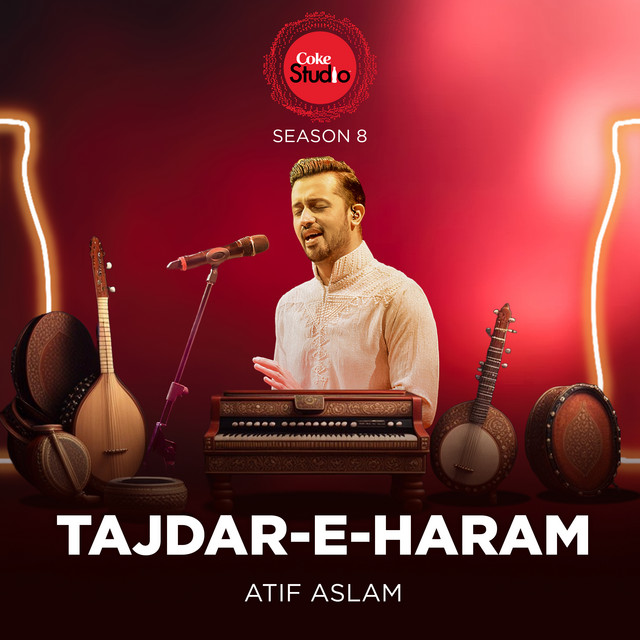
Tajdar-E-Haram (Coke Studio Season 8)
Atif Aslam
Qawwali
Sufi
Modern Bollywood
2023
5
/5
Best of Romance: Atif Aslam & Pritam
Atif Aslam
Qawwali
Sufi
Modern Bollywood
2021
4
/5
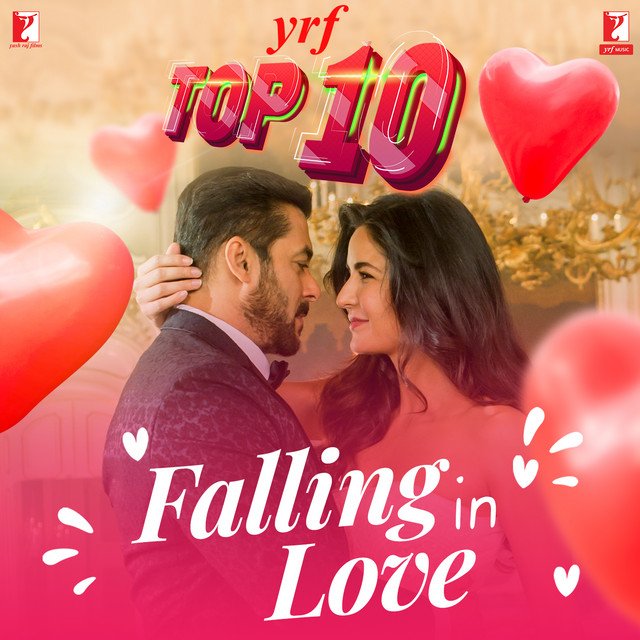
YRF Top 10 - Falling in Love
Atif Aslam
Qawwali
Sufi
2007
Meri Kahani
Atif Aslam
Pop
Rock
2006
Doorie
Atif Aslam
Pop
2004
Jal Pari
Atif Aslam
Pop
Similar artists
5
/5
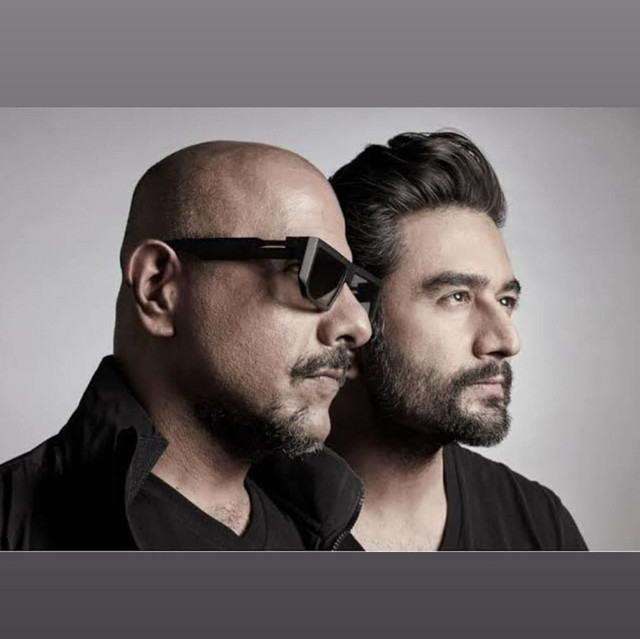
Vishal-Shekhar
Bollywood
Filmi
Pop
5
/5
Pritam
Bollywood
Filmi
Pop
5
/5
A.R. Rahman
Bollywood
Filmi
Sufi
5
/5
Irshad Kamil
Bollywood
Filmi
Pop
5
/5
Mithoon
Bollywood
Modern Bollywood
Filmi
4
/5
Yo Yo Honey Singh
Hindi Hip Hop
Punjabi Hip Hop
Bollywood
4
/5
Sameer Anjaan
Pop
Bollywood
Banjara Pop
4
/5
Jatin-Lalit
Bollywood
Chutney
Hindi Pop
Viveck Philip
Bollywood
Filmi
Modern Bollywood
4
/5
Rahat Fateh Ali Khan
Ghazal
Qawwali
Sufi
Download our mobile app
Get the Melodigging app and start digging for new genres on the go
Download on the App Store
Get it on Google Play
© 2026 Melodigging
Give feedback
Legal
Melodding was created as a tribute to
Every Noise at Once
, which inspired us to help curious minds keep digging into music's ever-evolving genres.