Genres
Artists
Albums
Make Music
Sign in
Sign in
Artists
Canterbury Scene
Artists
Canterbury Scene
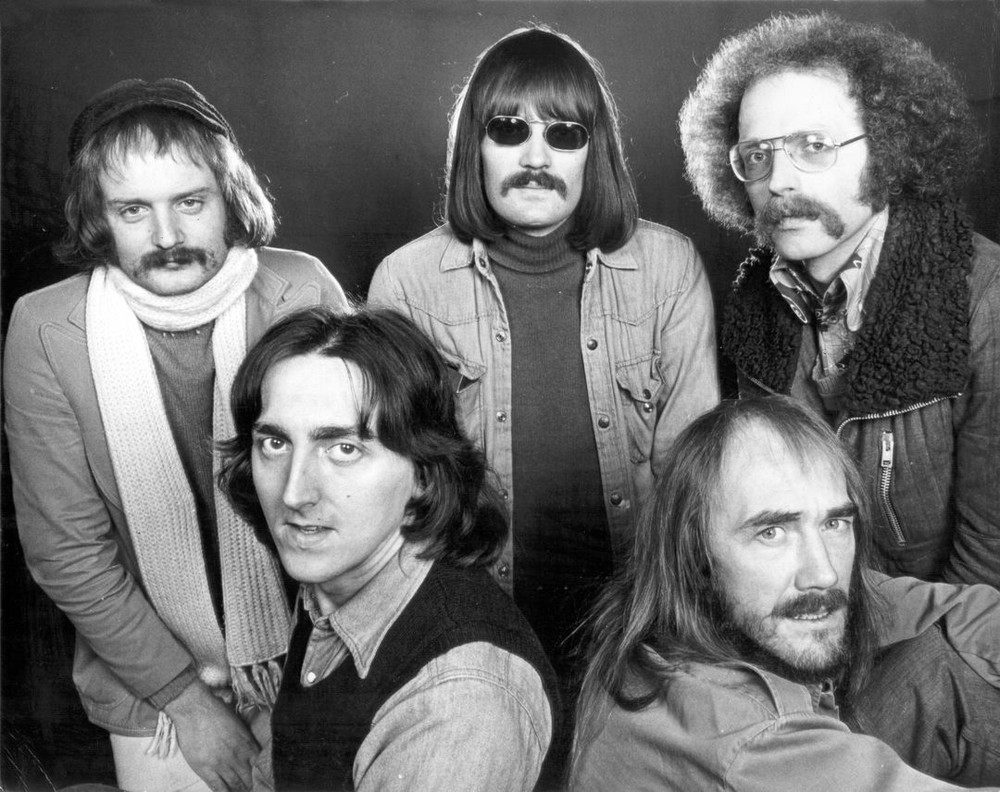
Affinity
2025
·
1 album
Listen
Genres
Canterbury Scene
The Canterbury scene is a branch of late‑1960s British progressive rock whose musicians clustered around the city of Canterbury in England. It blends psychedelic rock’s exploratory spirit with the harmonic language and improvisational freedom of modern jazz, favoring sophisticated song forms, whimsical English wit, and a warm, organ‑rich timbre. Compared with heavier strands of prog, Canterbury music tends to be lighter in touch, melodically playful, and harmonically adventurous, often moving between odd meters and swung grooves, extended jazz chords, and conversational ensemble interplay. Vocals and lyrics are frequently surreal, self‑aware, and gently humorous, while the arrangements pivot between tightly composed passages and open improvisation.
Discover
Listen
Krautrock
Krautrock is an experimental form of rock that emerged in late-1960s West Germany, characterized by hypnotic repetition, long-form structures, and a forward-looking embrace of electronics and studio experimentation. It typically features a steady, driving 4/4 “motorik” beat, circular bass ostinatos, sparse harmonic movement, and textural layering that draws from minimalism, free improvisation, and avant-garde composition. Rather than virtuosic solos, the emphasis is on collective groove, trance-inducing momentum, and timbral exploration. The sound ranges from raw, percussive jams to spacious, cosmic electronics, often eschewing conventional Anglo-American blues forms in favor of a distinctly European modernist aesthetic.
Discover
Listen
Beat Music
Beat music (often called Merseybeat when centered on Liverpool) is a British style of early-to-mid 1960s guitar pop built on a strong, danceable backbeat, close vocal harmonies, and concise, hook-driven songwriting. It blends the rhythmic drive of American rock and roll and rhythm and blues with skiffle’s DIY energy and doo‑wop’s harmonies, typically delivered by two electric guitars, electric bass, and drums, with frequent handclaps and tambourine. Songs are short, catchy, and youthful in theme, favoring major keys, I–IV–V progressions, and memorable choruses that foreground melody over instrumental virtuosity.
Discover
Listen
Folk Rock
Folk rock is a fusion genre that blends the narrative lyricism, modal melodies, and acoustic timbres of traditional folk with the backbeat, amplification, and song structures of rock. It typically pairs acoustic or traditional instruments (acoustic guitar, mandolin, fiddle) with a rock rhythm section (electric guitar, bass, drums), often featuring chiming 12‑string guitar textures, close vocal harmonies, and socially conscious or storytelling lyrics. The result ranges from intimate, reflective ballads with a steady backbeat to more anthemic, roots‑driven rock. Emerging in the mid‑1960s through artists such as Bob Dylan and The Byrds, folk rock became a gateway for traditional and roots materials to enter mainstream popular music, and it seeded later movements from country rock and Americana to jangle pop and modern indie folk.
Discover
Listen
Jazz Rock
Jazz rock is a hybrid style that merges the improvisational language and harmonic richness of jazz with the amplified energy, backbeat, and song forms of rock. It typically features electric guitar, bass, and drums alongside jazz-oriented instruments such as saxophone, trumpet, and keyboards, often arranged in horn sections. Extended chords, syncopation, and improvisation coexist with catchy riffs and driving grooves, yielding music that is both virtuosic and accessible. While closely related to jazz fusion, jazz rock generally keeps a stronger tie to rock songcraft and backbeat-centered rhythms.
Discover
Listen
Progressive Rock
Progressive rock is a rock subgenre that expands the genre’s formal, harmonic, and conceptual boundaries. It favors long-form compositions, intricate arrangements, and virtuosic musicianship, often drawing on Western classical, jazz, folk, and psychedelic idioms. Typical hallmarks include multi-part suites, shifting time signatures, extended instrumental passages, recurring motifs, and concept albums that present unified themes or narratives. The sound palette commonly features electric guitar, bass, and drums alongside an array of keyboards (Hammond organ, Mellotron, Moog/ARP synthesizers, piano), woodwinds or brass, and occasional orchestral additions. Lyrics often explore science fiction, mythology, philosophy, social commentary, and introspective themes.
Discover
Listen
Psychedelic Rock
Psychedelic rock is a style of rock music that seeks to evoke, simulate, and expand altered states of consciousness through sound. It typically features timbral experimentation (fuzz, wah, tape delay, phasing), drones, modal or raga-influenced harmony, extended improvisation, studio-as-instrument production, and surreal, mystical, or mind-expanding lyrics. Emerging from mid-1960s counterculture, it fused garage-band energy with folk, blues, and non-Western musical ideas—especially Indian classical ragas—while embracing new studio technologies and concert light shows. Both a live and a studio art, psychedelic rock ranges from jangly, kaleidoscopic pop to heavy, hypnotic jams and cosmic soundscapes.
Discover
Listen
Show all 7 genres
Albums
2025
3
/5
Till My Heart Stops
Affinity
Canterbury Scene
Krautrock
Similar artists
1
/5
Various Artists
Soundtrack
Afro-Funk
Alternative Rock
2
/5
Soft Machine
Canterbury Scene
Jazz Fusion
Progressive Rock
2
/5
Gong
Canterbury Scene
Space Rock
Progressive Rock
2
/5
Hatfield & The North
Canterbury Scene
Jazz Rock
Art Rock
1
/5
Embryo
Krautrock
Jazz Rock
Jazz
3
/5
Hawkwind
Canterbury Scene
Space Rock
Rock
2
/5
Caravan
Canterbury Scene
Progressive Rock
Art Rock
2
/5
Robert Wyatt
Progressive Rock
Canterbury Scene
Rock
2
/5
Kevin Ayers
Canterbury Scene
Art Rock
Krautrock
2
/5
Steve Hillage
Rock
Electronic
Progressive Rock
Download our mobile app
Get the Melodigging app and start digging for new genres on the go
Download on the App Store
Get it on Google Play
© 2026 Melodigging
Give feedback
Legal
Melodding was created as a tribute to
Every Noise at Once
, which inspired us to help curious minds keep digging into music's ever-evolving genres.