Genres
Artists
Albums
Make Music
Sign in
Sign in
Record label
Jazzman
United Kingdom
Related genres
Avant-Garde Jazz
Avant-garde jazz is a boundary-pushing current of jazz that privileges experimentation, collective improvisation, and timbral exploration over conventional song forms and chord progressions. It often uses atonality or loose tonality, extended instrumental techniques, shifting or absent meters, and open forms. Ensembles may emphasize texture and density as much as melody and harmony, drawing as readily from modern classical music and non-Western traditions as from blues and bebop. While sometimes intense or noisy, avant-garde jazz also embraces spaciousness and silence, allowing players to interact in real time without predetermined roles. The result is music that questions the limits of jazz itself, foregrounding sound, spontaneity, and social expression.
Discover
Listen
Bebop
Bebop is a modern jazz style characterized by fast tempos, intricate melodies, and harmonically advanced improvisation. It moved jazz from dance-oriented big-band music to art-focused small-ensemble performance, prioritizing virtuosity and spontaneous creativity. Typical bebop groups are quintets or quartets featuring trumpet, alto or tenor saxophone, piano, double bass, and drums. The music emphasizes asymmetrical phrasing, extended chords and substitutions, and contrafacts—new melodies written over the chord changes of popular songs. Rhythm sections center time on the ride cymbal, with the bass walking and the drummer "dropping bombs" on snare and bass drum. Melodies are angular and chromatic, and soloists outline rapidly shifting harmonies with bebop scales, enclosure tones, and altered dominants.
Discover
Listen
Contemporary Jazz
Contemporary jazz is an umbrella term for post-1970 jazz that absorbs advances from post‑bop, fusion, free jazz, modern classical, and global traditions while retaining the core values of improvisation and interaction. It favors a flexible rhythmic feel (from straight‑8 to polyrhythms), modal and post‑tonal harmony, and a producer’s ear for space, texture, and sound design. Unlike earlier era labels tied to a single movement, contemporary jazz denotes a living, evolving practice. It ranges from intimate acoustic trios to electronics‑enhanced ensembles, often using odd meters, ambient timbres, and song forms that move beyond the 32‑bar standard. The result is a wide spectrum—from lyrical, ECM‑influenced spaciousness to groove‑forward, rhythmically intricate music influenced by funk and world traditions.
Discover
Listen
Disco
Disco is a dance-music genre and nightlife subculture that crystallized in the United States during the 1970s, drawing especially from African-American, Italian-American, Latino, and queer club communities. Musically, disco is typified by a steady four-on-the-floor kick drum, syncopated and melodic electric-bass lines, lush string sections, bright brass and horns, electric pianos and synthesizers, and percussive, choppy rhythm guitars. Arrangements often feature orchestral colors, handclaps, congas, and vibraphone or bell textures, all engineered to deliver a continuous, groove-forward experience for the dance floor. The style combines the rich orchestration and romantic sweep of Philadelphia soul with the bottom-end drive of funk and the songcraft of contemporary R&B/pop, delivered in DJ-friendly extended mixes and 12-inch singles designed for club play.
Discover
Listen
Folk
Folk is a song-centered acoustic tradition rooted in community storytelling, everyday life, and social history. It emphasizes clear melodies, simple harmonies, and lyrics that foreground narrative, protest, and personal testimony. As a modern recorded genre, folk coalesced in the early-to-mid 20th century in the United States out of older ballad, work song, and rural dance traditions. It typically features acoustic instruments (guitar, banjo, fiddle, mandolin, harmonica), strophic song forms, and participatory singing (choruses, call-and-response).
Discover
Listen
Free Jazz
Free jazz is a radical branch of jazz that rejects fixed chord progressions, strict meter, and conventional song forms in favor of collective improvisation, textural exploration, and spontaneous interaction. Musicians prioritize timbre, dynamics, and gesture as much as pitch and harmony, often using extended techniques (multiphonics, overblowing, prepared piano) and unconventional sounds. While rooted in the blues and earlier jazz vocabularies, free jazz frees improvisers from pre-set harmonic cycles, allowing lines to unfold over tonal centers, shifting modes, drones, or complete atonality. Rhythm sections may float without a steady pulse, or drive with layered polyrhythms and “energy playing.” The result ranges from contemplative soundscapes to cathartic, high-intensity eruptions. Culturally, the genre intersected with the civil rights era and broader avant-garde movements, emphasizing autonomy, community, and new possibilities for musical expression.
Discover
Listen
Funk
Funk is a rhythm-forward African American popular music style that centers on groove, syncopation, and interlocking parts. Rather than emphasizing complex chord progressions, funk builds tight, repetitive vamps that highlight the rhythm section and create an irresistible dance feel. The genre is marked by syncopated drum patterns, melodic yet percussive bass lines, choppy guitar "chanks," punchy horn stabs, call‑and‑response vocals, and a strong backbeat. Funk’s stripped-down harmony, prominent use of the one (accenting the downbeat), and polyrhythmic layering draw deeply from soul, rhythm and blues, jazz, gospel, and African rhythmic traditions. From James Brown’s late-1960s innovations through the expansive P-Funk universe and the slicker sounds of the 1970s and 1980s, funk has continually evolved while seeding countless other genres, from disco and hip hop to house and modern R&B.
Discover
Listen
Jazz
Jazz is an improvisation-centered music tradition that emerged from African American communities in the early 20th century. It blends blues feeling, ragtime syncopation, European harmonic practice, and brass band instrumentation into a flexible, conversational art. Defining features include swing rhythm (a triplet-based pulse), call-and-response phrasing, blue notes, and extended harmonies built on 7ths, 9ths, 11ths, and 13ths. Jazz is as much a way of making music—spontaneous interaction, variation, and personal sound—as it is a set of forms and tunes. Across its history, jazz has continually hybridized, from New Orleans ensembles and big-band swing to bebop, cool and hard bop, modal and free jazz, fusion, and contemporary cross-genre experiments. Its influence permeates global popular and art music.
Discover
Listen
Jazz Fusion
Jazz fusion (often simply called "fusion") blends the improvisational language and harmonic richness of jazz with the amplified instruments, grooves, and song forms of rock, funk, and R&B. It typically features electric guitars, electric bass or fretless bass, Rhodes electric piano, clavinet, analog and digital synthesizers, and a drum kit playing backbeat- and syncopation-heavy patterns. Hallmarks include extended chords and modal harmony, complex and shifting meters, brisk unison lines, virtuosic improvisation, and a production aesthetic that embraces effects processing and studio craft. The style ranges from fiery, aggressive workouts to polished, atmospheric textures, often within the same piece. Emerging in the late 1960s and flourishing through the 1970s, jazz fusion became a bridge between jazz audiences and rock/funk listeners, shaping later styles such as jazz-funk, smooth jazz, nu jazz, and parts of progressive and technical rock/metal.
Discover
Listen
Modal Jazz
Modal jazz is a style of jazz in which improvisation and composition are organized around musical modes rather than rapid chord changes. Instead of navigating dense harmonic progressions (as in bebop and hard bop), modal jazz often sustains a single scale or a small set of modes for long stretches, creating a spacious, open canvas for melodic development. Hallmarks include slow harmonic rhythm, pedal points or drones, vamp-based forms, and quartal/quintal voicings on piano and guitar. Improvisers focus on color, contour, and motivic variation inside a mode (e.g., Dorian, Mixolydian, Aeolian, Lydian), rather than outlining constant chord substitutions. The sound is typically lyrical, floating, and contemplative, but it can also be turbulent and intense when rhythm section dynamics and modal tension are pushed. Canonical examples include Miles Davis’s Kind of Blue (1959) and John Coltrane’s modal vehicles such as Impressions and My Favorite Things.
Discover
Listen
Post-Bop
Post-bop is a modern jazz style that emerged in the early-to-mid 1960s as a synthesis of bebop, hard bop, modal jazz, cool jazz, third stream ideas, and the experimental impulses of the avant‑garde. It typically features acoustic small ensembles (often trumpet, saxophone, piano, bass, and drums) interacting with highly flexible time, non-functional or modal harmony, and motivic development rather than relying strictly on bebop chord cycles. Its sound balances structure and freedom: forms are clearly composed and often intricate, but improvisers stretch time feels, reharmonize on the fly, and use advanced harmonic colors such as quartal voicings, pedal points, and chromatic planing. Canonical touchstones include Miles Davis’s mid‑’60s Second Great Quintet (e.g., E.S.P., Nefertiti), Wayne Shorter’s Speak No Evil, Herbie Hancock’s Maiden Voyage, Andrew Hill’s Point of Departure, and many mid‑’60s Blue Note recordings that pushed beyond hard bop.
Discover
Listen
R&b
R&B (Rhythm and Blues) is a vocal- and groove-centered popular music tradition that blends blues tonality, jazz harmony, and gospel-inflected singing with a steady backbeat. It emphasizes expressive lead vocals, call-and-response, lush harmonies, and danceable rhythms. From its 1940s roots in African American communities to its later evolutions, R&B has continually absorbed and reshaped surrounding sounds—from jump blues and swing in the early days to soul, funk, hip hop, and electronic production in the contemporary era. Today, R&B ranges from intimate, slow-burning ballads to club-ready tracks, all tied together by a focus on feel, melody, and vocal performance.
Discover
Listen
Soul
Soul is a genre of popular music that blends the spiritual fervor and vocal techniques of African‑American gospel with the grooves and song forms of rhythm & blues and the harmonic palette of jazz and blues. It is defined by impassioned, melismatic lead vocals; call‑and‑response with backing singers; handclaps and a strong backbeat; syncopated bass lines; and memorable horn or string riffs. Typical instrumentation includes drum kit, electric bass, electric guitar, piano or Hammond organ, horns (trumpet, saxophone, trombone), and sometimes orchestral strings. Lyrically, soul ranges from love and heartbreak to pride, social commentary, and spiritual yearning. Regionally distinct scenes—such as Detroit’s Motown, Memphis/Stax, Muscle Shoals, Chicago, New Orleans, and Philadelphia—shaped different flavors of soul, while the style’s emotional directness and rhythmic drive made it a cornerstone of later funk, disco, contemporary R&B, and hip hop.
Discover
Listen
Soul Jazz
Soul jazz is a groove-forward branch of jazz that blends the improvisational language of hard bop with the churchy harmonies of gospel and the backbeat of rhythm & blues. It favors memorable riffs, earthy tones, and a strong, danceable pulse over dense harmonic complexity. Typical settings include Hammond B-3 organ trios (organ, guitar, drums) or small combos with saxophone or trumpet. Tunes often use blues forms, minor-key vamps, and gospel cadences, featuring call-and-response figures, pentatonic and blues-scale lines, and a relaxed but insistent pocket. The overall aesthetic is warm, direct, and soulful—equally at home in jazz clubs, lounges, and on the radio.
Discover
Listen
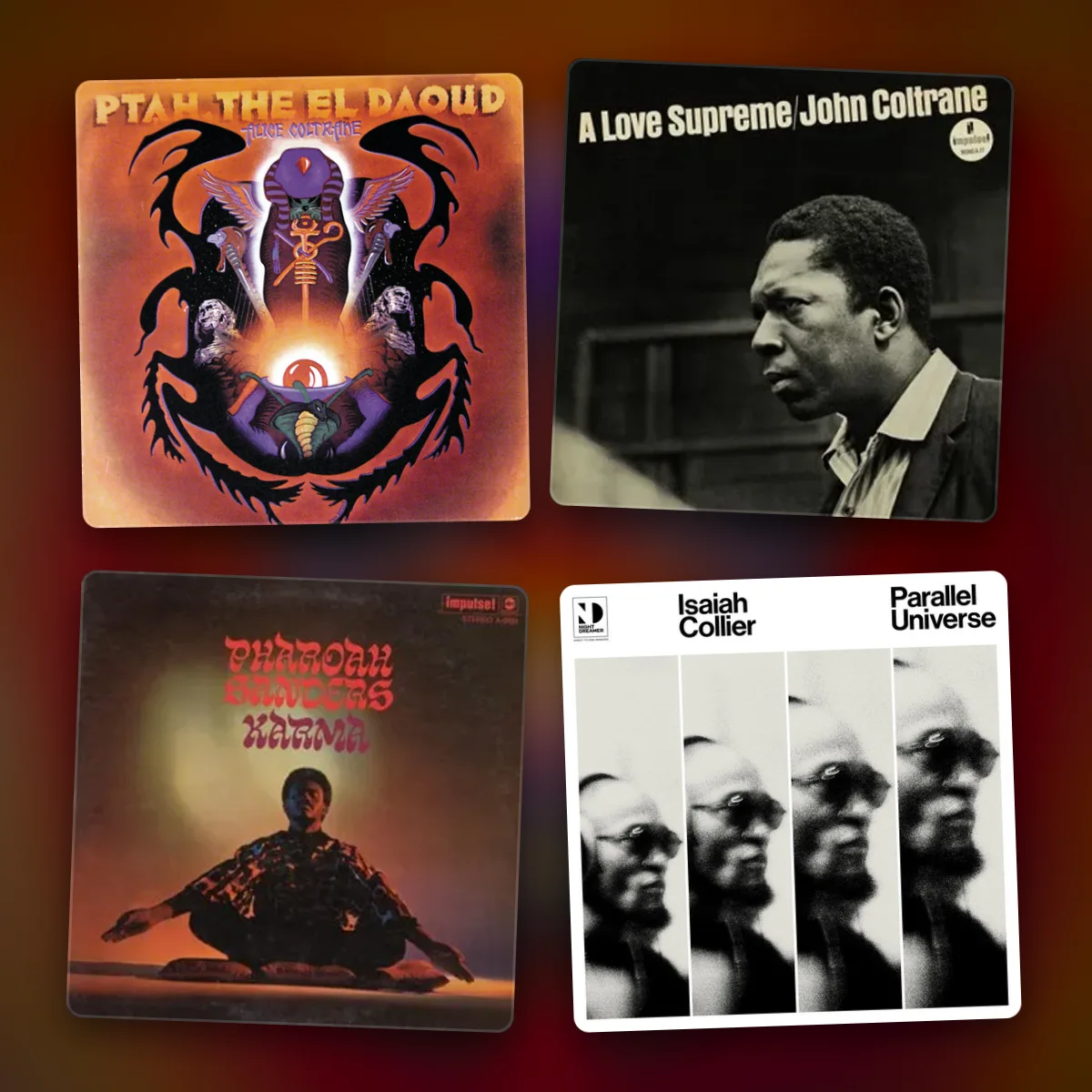
Spiritual Jazz
Spiritual jazz is a strand of modern jazz that seeks transcendence through sound, blending free improvisation, modal frameworks, and non‑Western musical concepts to evoke the sacred, the cosmic, and the ecstatic. It often features long, open forms; drones and pedal points; polyrhythmic percussion; and timbres associated with ritual or meditation (harp, flutes, bells, tanpura). Melodic language leans toward modes and scales from African, Middle Eastern, and South Asian traditions alongside blues inflection. The mood can shift from contemplative prayer to cathartic release, and vocal elements may include chants, mantras, spoken word, or invocations aligned with spiritual or philosophical themes.
Discover
Listen
Albums
Texas Funk: Black Gold From the Lone Star State 1968–1975
Various Artists
Tuck in With...
The Natural Yogurt Band
Tuck in With...
The Natural Yogurt Band
À l’aube du Free Jazz
Cecil Taylor
Spiritual Jazz 2: Europe
Various Artists
Jukebox Mambo (Rumba & Afro-Latin Accented Rhythm & Blues 1949-1960)
Various Artists
The Best Of Frank Motley & King Herbert - Canada's Message To The Meters
Various Artists
Dance The Latin... (Swingin' Mambos, Soulful Salsa And Funky Rhythms From The Hip Latin Dancefloors Of New York City)
Various Artists
Follow Me to the Popcorn: The Untold History of the Belgium Popcorn Scene
Various Artists
Follow Me To The Popcorn: The Untold History of The Belgium Popcorn Scene
Various Artists
Show more
Artists
Ella Fitzgerald
Nina Simone
Milton Wright
Cecil Taylor
Boris Gardiner
JJ Whitefield
Bobby Moore & The Rhythm Aces
Jean-Claude Petit
Mor Thiam
The Natural Yogurt Band
Various Artists
Ricardo Marrero and The Group
Amanda Whiting
Lloyd Miller
Nat Birchall
The Greg Foat Group
Kelan Phil Cohran
The Mike Westbrook Concert Band
Sokratis Votskos Quartet
George F. Smallwood & Marshmellow Band
Nostalgia 77
Dee Felice Trio
Hannibal Marvin Peterson
Nathan Davis
Jef Gilson
Muriel Grossmann
The Tammys
The John Cameron Quartet
Bobby Jackson
Young Jessie
Tumi Mogorosi
Muguette
Terea
Intimate Strangers
Astra Nova Orchestra
Los Brasilios
Hilton Felton
The Sign of 4
The Lloyd Miller Trio
Bobby Williams
Tino Contreras
The Artistic Heritage Ensemble
Malagasy
James Tatum
Chris McGregor & The Castle Lager Big Band
That's Why
Owen Eugene Marshall
The Sidewinders
Johnny Heartsman
Uncle Funkenstein
Sounds of the City Experience
Mountain Mocha Kilimanjaro
Azanyah
Lee Mason
Jack Arel
Burton Inc.
Infinite Spirit Music
Roscoe Weathers
Forced Meditation
Starcrost
Steam Heat
Vibration Black Finger
Don Rendell Ian Carr Quintet
Gilles Torrent
LaVice & Company
Erni Clark
The Al Tanner Quintet
Smiley Winters
The Nat Birchall Quartet
Forty Seven Times Its Own Weight
Ron Everett
The Mankunku Quartet
Download our mobile app
Get the Melodigging app and start digging for new genres on the go
Download on the App Store
Get it on Google Play
© 2026 Melodigging
Give feedback
Legal
Melodding was created as a tribute to
Every Noise at Once
, which inspired us to help curious minds keep digging into music's ever-evolving genres.