Your digging level
Description
Waiata Māori are the traditional songs of the Māori people of Aotearoa (New Zealand). The term covers many sub‑types, including waiata aroha (songs of love), waiata tangi (laments), oriori (lullabies), pātere (rapid chant‑songs), poi songs (accompanying poi), and waiata‑ā‑ringa (action songs).
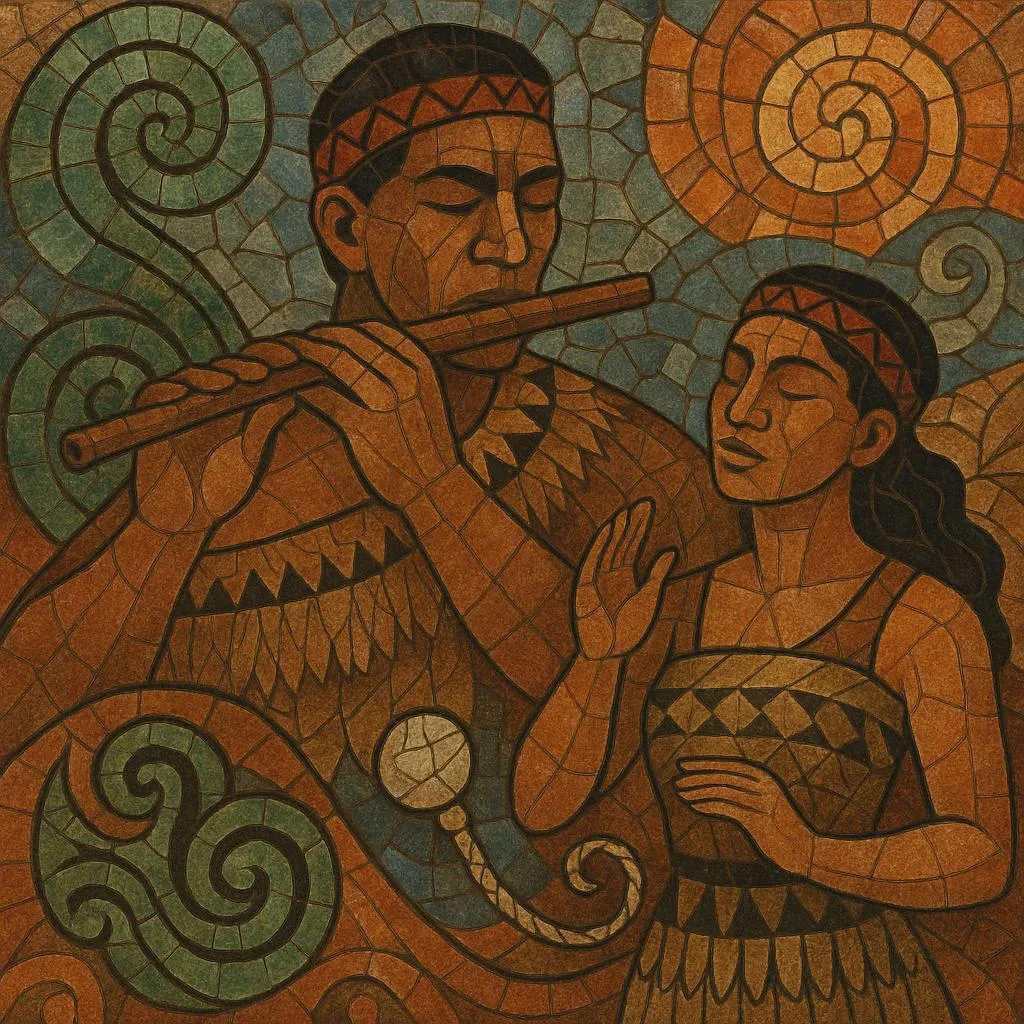
Musically, older waiata are often chant‑like, led by a kaiwaiata (leader) with antiphonal or unison responses, flexible rhythm, and narrow‑range melodies shaped by the words. From the 19th century, four‑part choral harmony influenced by Christian hymnody became widespread, creating the rich communal sound now strongly associated with Māori group singing. In performance contexts such as kapa haka, waiata are paired with expressive hand, body, and poi actions, and may be supported by taonga pūoro (traditional instruments) such as kōauau (flute), pūtōrino, and pūrerehua (bullroarer).
Culturally, waiata carry whakapapa (genealogy), history, protest, praise, and everyday emotion. They remain a living tradition—sung on marae, in schools, festivals, and contemporary recordings—central to language revitalization and Māori identity.
History
Waiata predate European contact, emerging from broader Polynesian/Austronesian chant and song traditions. They served as repositories of whakapapa (genealogy), tribal histories, and social memory, while also articulating love, grief, welcome, and satire. Performance commonly featured a leader and responsive chorus, with melody and rhythm governed by the text and oratory conventions on the marae.
Missionary influence in the 1800s introduced four‑part choral singing and Western tonal harmony, which Māori communities rapidly indigenized. Himene (hymns) and harmonized waiata proliferated, blending Māori poetics with European harmony. Collectors and scholars such as Sir Āpirana Ngata worked to document and teach waiata across iwi, helping preserve a wide repertoire.
The formalization and growth of kapa haka (competitive performance) foregrounded waiata‑ā‑ringa, poi songs, and choral waiata as emblematic ensemble forms. Radio, records, and touring troupes (including Māori showbands) carried waiata to national and international audiences, while composers such as Tuini Ngāwai and Ngoi Pēwhairangi created widely sung pieces.
From the late 20th century onward, waiata have become pillars of te reo Māori revitalization. Contemporary artists create new waiata that sit comfortably alongside pop, reggae, and folk idioms, yet remain grounded in traditional forms and tikanga (cultural protocols). Festivals, curricula, and recordings continue to sustain the tradition, ensuring waiata remain a living, evolving art.
Decide on a form—e.g., waiata aroha (love), tangi (lament), or oriori (lullaby). Define the kaupapa clearly (who/what is addressed, purpose, and setting on the marae or beyond). Use te reo Māori and traditional poetic devices: metaphor (whakatauākī, whakataukī), landscape imagery, and whakapapa references.
Compose melody to follow the prosody of the text. Older styles favor narrow melodic range and flexible pulse; entrances by a leader (kaiwaiata) and choral response are common. For modern harmonized settings, craft clear phrases for call‑and‑response or unison that the rōpū (group) can project together.
If using harmony (a widespread contemporary practice), arrange for SATB chorus drawing on simple functional progressions (I–IV–V and relative minor/major), cadencing with strong unisons. Use block homophony for power and clarity; add brief suspensions or parallel motion for choral color without obscuring text.
For waiata‑ā‑ringa, design hand and body actions that illustrate key words and intensify phrasing. For poi songs, align poi patterns to rhythmic accents and syllables. Consider coloring with taonga pūoro (kōauau, pūtōrino, pūrerehua) in introductions, interludes, or drones—always respecting tikanga and the primacy of the voice.
Rehearse precise group entries, breath points, and dynamics to support oratory. Place the waiata appropriately in the pōwhiri or whaikōrero cycle. Maintain correct pronunciation, dialectal features, and iwi‑specific motifs. Above all, let the text carry mana, with music serving clarity and collective expression.