

Your digging level
Description
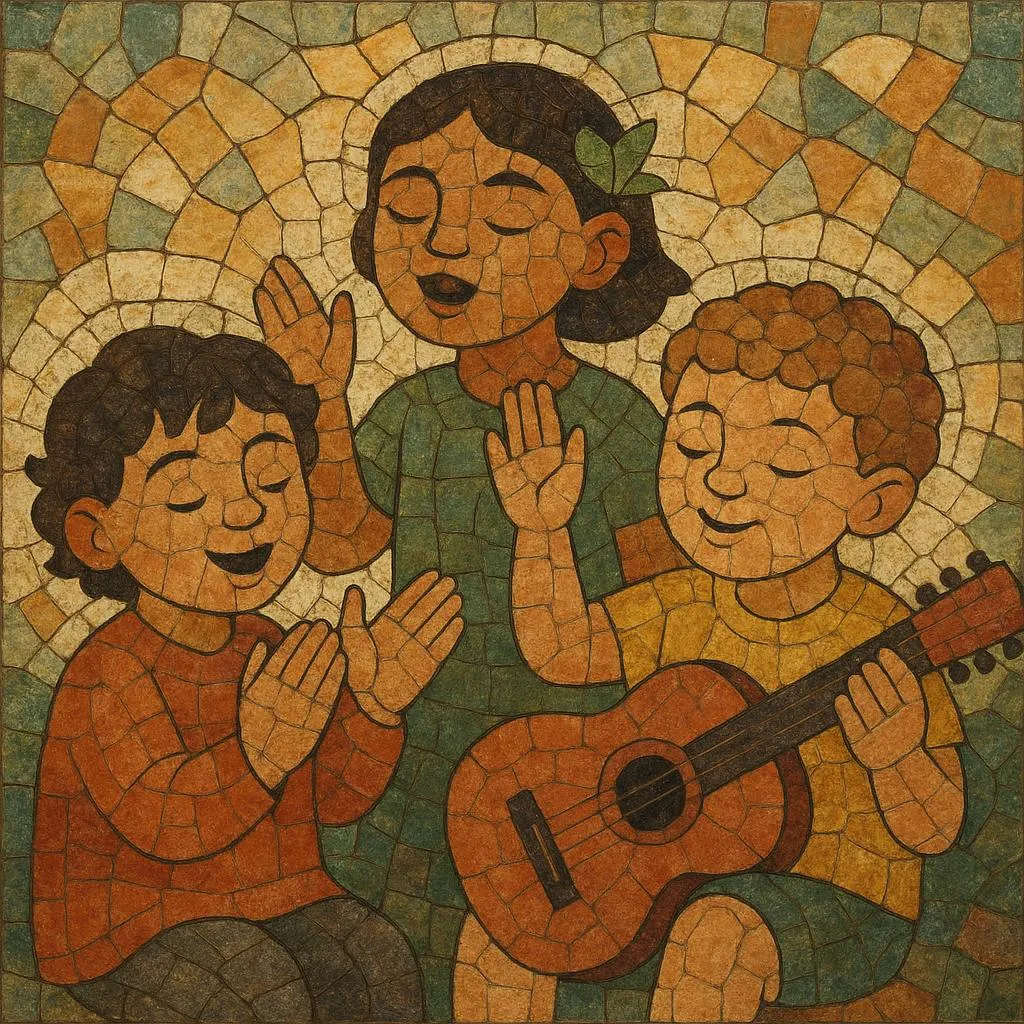
Waiata mō tamariki literally means “songs for children” in te reo Māori. It denotes Māori-language children’s music created to entertain, soothe, and teach tamariki (children), often through actions, repetition, and simple, memorable melodies.
Musically, these songs typically feature unison group singing, call-and-response, clapping or body percussion, and easy harmonic accompaniments on guitar or ukulele. Many pieces adapt traditional waiata (song) and poi/haka rhythms to child-friendly tempos, and some include taonga pūoro (traditional Māori instruments) for colour and cultural grounding.
Lyrically, waiata mō tamariki foreground vocabulary building and cultural knowledge: counting, colours, animals and manu (birds), whakapapa (kinship), kaitiakitanga (care for the environment), tikanga (customs), and everyday routines. The result is a warm, inclusive style that supports language revitalisation and early childhood learning while remaining playful and participatory.
History
Before European contact, Māori communities maintained a rich oral tradition of waiata, including oriori (lullabies), play songs, and action songs used to soothe, teach, and socialise children. These pieces emphasised clear diction, unison delivery, and memorable motifs—traits that continue to characterise waiata mō tamariki today.
Colonial-era language suppression led to a decline in the public use of te reo Māori, which also impacted children’s song practices. From the 1970s, the Māori cultural renaissance and activism for language rights catalysed renewed creation and performance of Māori-language materials for young audiences. Composers and educators began to adapt traditional waiata and craft new songs specifically for early childhood contexts.
With the establishment of Kōhanga Reo (immersion early childhood centres) in 1982, waiata mō tamariki became a core pedagogical tool: daily singing, action songs, and themed repertoire supported vocabulary acquisition, pronunciation, and tikanga. Recordings and songbooks—such as the Ngā Pihi series—helped standardise and share repertoire among whānau (families), kaiako (teachers), and kura (schools).
The 2000s and 2010s saw a surge in professionally produced albums, animated videos, and classroom resources, often blending acoustic guitar/ukulele with light percussion and taonga pūoro. Artists and brands developed bilingual and fully Māori sets designed for both entertainment and structured learning. Streaming platforms and social media further amplified reach, while initiatives around Māori Language Week and broader language revitalisation kept waiata mō tamariki central to Aotearoa New Zealand’s contemporary cultural life.



