Your digging level
Description
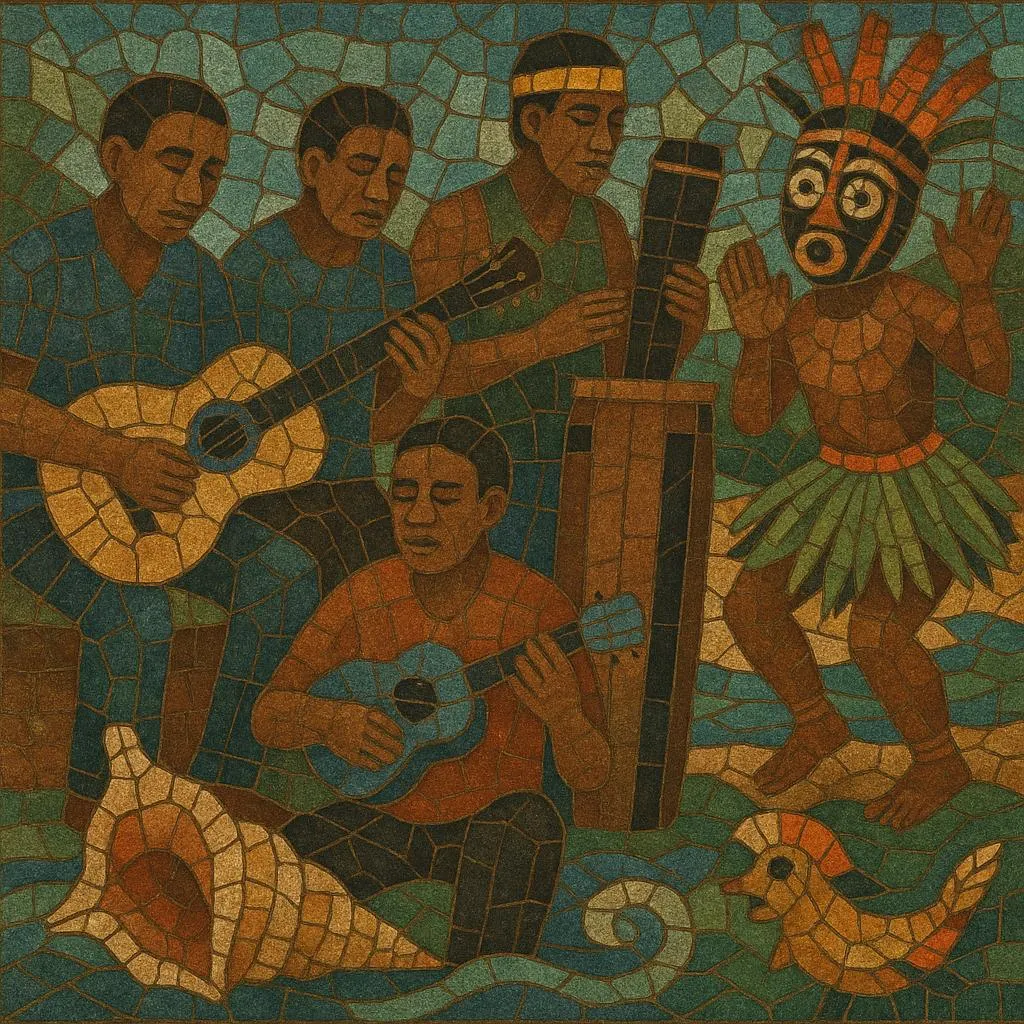
Vanuatu music encompasses a rich spectrum of kastom (customary) forms—masked-dance drum ensembles, women’s water percussion, panpipe and conch ensembles, and antiphonal vocal traditions—alongside 20th‑century string‑band styles, gospel choirs, and contemporary reggae-influenced pop.
Traditional repertoires center on slit‑drum (tam‑tam) orchestras and ritual dances tied to grade‑taking (status) ceremonies, land‑diving seasons, and community festivals. In the 20th century, guitars, ukuleles, and tea‑chest/box basses formed string bands that fused local melodies and languages with influences from hymnody, Hawaiian/country guitar idioms, and later reggae, creating the warm, harmonized Pacific sound now associated with urban and village life alike.
History
Ni‑Vanuatu music has deep precolonial roots across the archipelago, with each island group developing distinct repertoires, dance costumes, and instrument sets. Slit‑drum (tam‑tam) ensembles, conch trumpets, panpipes, and rattles support masked dances and grade‑taking ceremonies (e.g., on Ambrym and Malekula). Call‑and‑response and antiphonal textures are common, and songs are closely tied to place, clan histories, cultivation cycles, and rites of passage.
From the mid‑19th century, Christian missions introduced congregational singing and part‑song harmony. Hymnody and psalmody interwove with local vocal aesthetics, producing powerful village choirs and bilingual repertoires in Bislama and local languages. These choral idioms spread widely and became foundational to modern religious and community music in Vanuatu.
Contact with Hawaiian music, country, and maritime guitar traditions sparked the emergence of Pacific string bands—small ensembles of guitars, ukulele, and improvised basses—by the early 20th century. Ni‑Vanuatu string bands localized these sounds with island rhythms, yodel‑style ornaments, and vernacular lyrics. By the late 20th century they were the sonic emblem of village gatherings, radio, and social dances across the islands.
From the 1980s onward, reggae and roots reggae aesthetics permeated urban scenes (Port Vila, Luganville), joining gospel, choir, and string‑band traditions. Studios and festivals fostered new songwriting in Bislama and indigenous languages, while heritage troupes revitalized kastom performances (e.g., women’s water music in the Banks/Torres islands). Today, Vanuatu music moves fluidly between ceremony, church, and stage, balancing cultural guardianship with modern Pacific pop.
Decide whether you are creating a traditional kastom piece (for dance/ritual), a village string‑band song, or a contemporary gospel/reggae‑tinged track. Each has different instrumentation and performance etiquette.